Jean-Luc Demaret G
« A perfect family day on the Semois. The welcome at Kayak Semois Ardenne is warm, the equipment is spotless (the kayaks are modern and clean), and the free shuttle system is superbly organised. A must-visit in the Ardennes! »
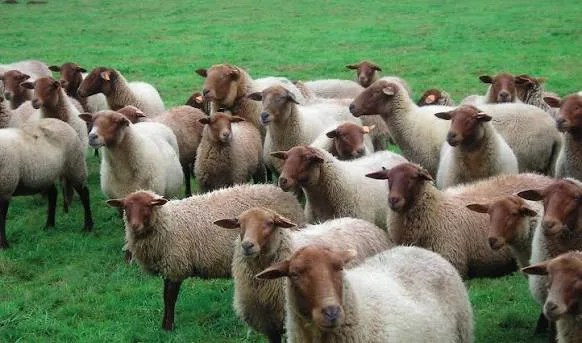
At the heart of the Semois, in Vresse-sur-Semois, an island reserve becomes the kingdom of a small flock of Ardennes Red Sheep every summer. A rare meeting of nature conservation and living heritage — best admired from your kayak.
Some places only reveal themselves from the water. Bohan Island, set on the Semois at the southern tip of the province of Namur, is one of them. Discreet, wild and closed to walkers, it nonetheless shelters one of the loveliest symbols of the Ardennes throughout the warm season: a small flock of red sheep grazing peacefully between the arms of the river. Behind this pastoral image lies a genuine conservation project, run by the King Baudouin Foundation, within a valley designated Natura 2000.
For kayakers paddling down the Semois between Alle-sur-Semois and Bohan, the island is both a landmark and a moment out of time: you glide by in silence, you watch, and you leave without a trace. This article tells its story, explains the ecological role of its sheep, and shares the best way to discover it — with respect for a place that does not belong to us.
Bohan Island belongs to the King Baudouin Foundation (KBF), which keeps it in its natural state as a spawning ground for fish and a nesting area for birds. It is managed by the Fund for the Islands of the Semois, created within the Foundation thanks to the generosity of donors. This fund cares for three islands in the valley: Bohan Island and the Vanne Cunin Island, both at Vresse-sur-Semois, as well as the "Montclar, poète" island at Poupehan, in the municipality of Bouillon.
All three islands are part of the European Natura 2000 network, which protects the continent's most valuable habitats and species. On the Semois, this means preserved banks, quiet spawning grounds and refuges for wildlife that tourist pressure might otherwise disturb. Bohan Island also borders the Membre-Bohan nature reserve, renowned for its outstanding biodiversity, on one of the wildest stretches of the entire valley.
Preserving an island does not mean leaving it to its own devices. Without intervention, open habitats close over: brambles, nettles and above all young spruces gradually reclaim the ground, smothering herbaceous plants and impoverishing biodiversity. This is exactly where the sheep come in.
Since 2017, sheep eco-grazing has been documented on Bohan Island. Each year, like a small summer transhumance, a flock of Ardennes Red Sheep crosses the Semois to reach the island. The animals stay there from late June to late October, before returning to their breeder's shelter for the winter. For the 2026 edition, the King Baudouin Foundation marks "ten years" of this revived tradition.
The principle of eco-grazing is as simple as it is effective. By grazing, the sheep act as natural lawnmowers, sometimes nicknamed "zero-carbon lawnmowers":
They maintain open habitats with no machinery or fuel, in places where a brushcutter would be hard to bring in — and noisy for wildlife.
They slow the woodland comeback (notably young spruces) that closes over the banks and grasslands.
They keep invasive exotic plants in check, such as Himalayan balsam and Japanese knotweed, the scourges of the Semois banks.
By reopening the habitat, they encourage the return of biologically valuable grasses, and with them insects and birds.
To spend the warm season on the island, the flock has a wooden shelter that provides shade in the heat and protection during the sometimes sudden floods of the Semois. Everything is designed so that the animals' presence serves nature without ever constraining it.
The choice of breed is no accident. The Ardennes Red Sheep — also called Ardennais Roux in French, or Ardense Voskop in Dutch, literally "Ardennes fox-head" — is a hardy heritage sheep breed from southern Belgium, historically found on both sides of the border, as far as the German Eifel.
It is recognisable by its distinctive silhouette: the lamb is born red, then develops a beige-russet fleece at around three months, while its head and legs stay red and free of wool. Robust, frugal and of a lively, wary temperament, it makes do with sparse forage and the morning dew. It is remarkably resistant to cold, parasites and disease, and thrives on poor, damp ground and meagre meadows — in short, the ideal animal for an island at the mercy of the river's moods.
And yet the breed very nearly disappeared: almost extinct in the Ardennes by the late 1950s, it was safeguarded in Flanders under the name Ardense Voskop, then reintroduced in Wallonia from the late 1980s onwards. Still classified as "endangered" today, it has only a limited number of breeders and purebred animals. To see it grazing on Bohan Island is therefore also to witness, on a small scale, the survival of an Ardennes genetic heritage.
The finest way to approach the island remains the river itself. The Alle-sur-Semois to Bohan route, around 17 km (3 to 4 hours), is one of the wildest descents of the Namur Semois: dense forests, steep escarpments, and long stretches far from any road. It crosses the Membre-Bohan nature reserve and rounds the spectacular loop of the "Jambon de la Semois" (the Semois Ham), a meander where the river almost folds back on itself. Bohan marks the end of the route, where a shuttle brings paddlers back to Alle.
As you slide along the island, you may glimpse the sheep among the foliage, and you pass the information boards set up on the banks, which explain the ecological role of the flock. Those same boards recall one essential rule.
This coexistence of leisure and conservation sums up the spirit of the valley perfectly: enjoying exceptional nature because you respect it, not at its expense.
Each year, the arrival of the sheep is also the occasion for an educational day bringing together the school of Bohan and neighbouring villages. The programme of past editions has included: the flock's crossing to the island, learning about its role and the local flora, observing the fish of the Semois, explaining river management and animal monitoring, or even building nesting boxes. From a few dozen pupils in its early days, the event has gathered close to eighty in recent editions.
What makes the story of Bohan Island singular is its conservation model. The island is neither a public park nor municipal property: it is supported by a named fund, the Fund for the Islands of the Semois, hosted by the King Baudouin Foundation and sustained by the generosity of private donors. In practice, individuals attached to the valley have chosen to fund the lasting protection of these islands, rather than see them built on, exploited or left to scrub.
The fund now cares for three islands on the Semois: Bohan Island and the Vanne Cunin Island, both at Vresse-sur-Semois, and the "Montclar, poète" island at Poupehan (municipality of Bouillon). Each plays the role of a refuge islet: spawning grounds for fish sheltered from the main current, nesting sites for waterbirds, and reservoirs of wild flora. Eco-grazing by Ardennes Red Sheep is just one link in this patient management, which blends science, volunteering and citizen funding. For the kayaker, it is a fine lesson: the beauty you pass through is no accident, but the fruit of a commitment.
The last Belgian village before the French border, Bohan brings the Semois Valley to a beautiful close. You reach it after one of the deepest, most wooded stretches of the river, where the Semois leaves the villages behind and plunges into the forest. The Membre–Bohan sector is, moreover, classified as a nature reserve for its biodiversity: slope forests, rocks, wet meadows and meanders compose a landscape of rare integrity, miles from any major road.
Around the island, there is plenty to extend the discovery: strolling through the village of Bohan and its hamlets, walking along the banks, or reaching the listed villages of the Vresse-sur-Semois municipality — Laforêt, Mouzaive, Membre — renowned for their Ardennes heritage. The entire valley is a playground for eco-tourism: people come for the calm, the gentle class-I water, the forests and the preserved wildlife. Bohan Island and its sheep are its miniature symbol: here, you do not "consume" nature, you pass through it with care. That is exactly the mindset we uphold on each of our descents of the Semois.
Sources & further reading: King Baudouin Foundation — Bohan Island · FRB Heritage — The island's sheep · The Ardennes Red Sheep · Vresse-sur-Semois Tourism. Independent editorial article by KayakSemois-Ardenne; Bohan Island is managed by the King Baudouin Foundation.
Experience the wildest part of the Semois on the Alle to Bohan route, along the meanders, forests and nature reserves. Return shuttle included.
🛶 Discover the descent of the SemoisNoté 4.6/5 sur 1282 avis
« A perfect family day on the Semois. The welcome at Kayak Semois Ardenne is warm, the equipment is spotless (the kayaks are modern and clean), and the free shuttle system is superbly organised. A must-visit in the Ardennes! »
« Beautiful kayak trip on the Semois starting from Vresse! Very friendly staff and excellent shuttle service. The riverside campsites along the Semois are also a must for nature lovers. »
« Superb 11 km kayak descent starting from Alle-sur-Semois. The wild nature of the Ardennes is magnificent in the spring sunshine. Very competitive prices compared to the competition. We'll be back! »
« Wonderful experience! The kayak tour on the Semois was perfectly organised. The team is very helpful and speaks good German. The scenery of the Belgian Ardennes is simply breathtaking. »
« Excellent kayak rental service and great campsite on the banks of the Semois. The prices are very fair and the atmosphere is friendly and family-oriented. The little terrace bar is perfect for a refreshing drink after the effort. »
« A fantastic last-minute welcome even though we hadn't booked in the middle of August. Life jackets and waterproof barrels are provided free of charge. Very safe descents, ideal with children! »
« Top-tier kayak rental on the Semois river. Extremely friendly staff, well-maintained kayaks, and a reliable shuttle. The viewpoints along the river are absolutely stunning. Highly recommend this local business! »