Game gastronomy · Semois Valley

Ardennes game: the science of sauces, the secret of the civet with chocolate

From Escoffier's Grand Veneur sauce to the molecular binding with dark chocolate: a culinary journey into the heart of the game cookery of the Belgian and French Ardennes — seasons, recipes, tables and traditions.

🦌 Deer · Doe · Wild boar · Roe deer 🍫 Binding with lecithin 🎺 Bouillon Hunting Festival 🎧 Audio story included

The Ardennes autumn, prime season of the hunting table

Autumn and winter are a period of very high attendance for the restaurant trade in the Ardennes massif, on both the Belgian and French sides. This seasonal appeal rests on a dual dynamic: the search for a game cuisine of absolute technical rigour, and attendance at large-scale folkloric events.

For the tourism professional, the restaurateur, the food-industry craftsman as for the curious gourmet, understanding this ecosystem means crossing several fields of knowledge: the official hunting calendars, which determine the freshness of supply; the physico-chemical mechanisms of the classic sauces, which transform a wild and powerful meat into a dish of high gastronomy; the little-known trick of binding with dark chocolate, inherited from the chemistry of emulsions; and finally the events that animate the Semois valley at the first cold snap.

Game is no ordinary meat. Venison — deer, doe, roe deer, wild boar — is characterised by dense muscle fibres, a low fat content and a high concentration of heme iron. The result is a pronounced wild taste and a characteristic astringency that all the cook's art consists in balancing. This complete guide takes you, step by step, from the forest to the plate, by way of the invisible laboratory of the saucepan. To place these products in the wider panorama of the terroir, you may also read our feature on Ardennes specialties.

Regulatory framework and seasonality of game in the Ardennes massif

The planning of gastronomic stays and the supply of restaurants with fresh meat depend closely on the official hunting calendars. The Ardennes massif, shared between Wallonia and the French department of Ardennes, is subject to two distinct sets of legislation.

The five-year regulation in Wallonia (2025-2030)

In Wallonia, the management of wild fauna is governed by a strict five-year plan adopted by the Walloon Government. This text sets the dates for opening, closing and suspending the hunt in order to guarantee a rigorous forest-game balance. The periods vary according to species and the techniques used, mainly distinguishing stalking or the high seat — individual, silent methods, practised at dawn or dusk — and the drive hunt, a collective method that drives the game towards a line of posted shooters.

The drive hunt for big game is generally allowed from 1 October to 31 January. Deer and doe are hunted by drive from 1 October to 31 January, but the deadline is brought forward to 31 December for large antlered stags; stalking and the high seat open as early as 21 September. The roe deer has a specific summer opening for bucks (from 15 April to 15 May, then from 15 July to 15 August), while females and young are only huntable in autumn. The wild boar, owing to its prolificacy and its impact on crops — and the sanitary pressure linked to African Swine Fever — may be stalked all year round, with drive hunts in woodland from 1 October to 31 January.

For small game, the hare season runs from 1 October to 31 December; pheasant and rabbit are huntable from 1 October to 31 January; the woodcock enjoys a shifted period, from 1 November to 15 January.

The prefectural directives in the French Ardennes

In France, the Departmental Directorate of Territories of the Ardennes and the Departmental Hunters' Federation regulate the practice through an annual prefectural decree. The general opening of hunting with the gun and on the wing is set from mid-September to the end of February. The drive hunt for big game (wild boar, deer, roe deer, fallow deer) runs from 1 October to 28 February. For reasons of public safety and the preservation of biodiversity, however, drive hunts are limited to 20 days per season on the same territory, with a maximum of two days per week, and the calendars must be filed before 15 September with the authorities.

This difference in calendar has a concrete consequence for the gourmet: the month of February remains an interesting window on the French side, when the Walloon season closes. The freshness of the venison served in a restaurant depends directly on these dates; a chef who announces "fresh" deer in March is working either with quality frozen stock or with farmed animals — which is nothing dishonourable, but worth knowing.

Synthetic comparison of hunting calendars — big and small game (Wallonia / French Ardennes).
SpeciesTechniqueSeason in Wallonia (BE)Season in the Ardennes (FR)
Deer / DoeStalking & high seat21/09 – 31/01 (large antlered stag: until 31/12)Specific opening on 01/10
Deer / DoeDrive hunt01/10 – 31/01 (large antlered stag: until 31/12)01/10 – 28/02 (max 20 days/season, 2 days/week)
Roe deerStalking & high seatBuck: 15/04–15/05, 15/07–15/08, 01/10–31/12 · Female & young: 01/10–31/12General opening mid-September
Roe deerDrive hunt01/10 – 31/1201/10 – 28/02 (max 20 days/season, 2 days/week)
Wild boarStalking & high seatAll year01/08 – 18/09 (by individual authorisation)
Wild boarDrive huntWoodland: 01/10–31/01 · Plain: 01/08–31/0101/10 – 28/02 (max 20 days/season, 2 days/week)
Fallow deerDrive hunt01/10 – 31/0101/10 – 28/02 (max 20 days/season, 2 days/week)
HareWalked-up01/10 – 31/1226/09 – 31/12 (municipal management plan)
WoodcockPointing dog01/11 – 15/0119/09 – 20/02 (ministerial decree)

Beyond the dates, these calendars tell a philosophy: that of a measured harvest, aligned with the biological cycles of the species and the carrying capacity of the forest. It is the same logic of strict seasonality that we find on the plate, where game appears only a few months a year — a rarity that constitutes all its gastronomic and tourist value.
The science of forest sauces and the evolution of the Grand Veneur

The art of game sauces rests on a simple yet formidably technical idea: balancing the aromatic power of the venison through the controlled interplay of acidity, richness and sweet-savoury notes.

From the medieval poivrade to modern standards

The poivrade sauce — sausso pebrado in Provençal — forms the historical keystone of game sauces. Of French origin, it dates back to the Middle Ages, when it was bound with toasted bread soaked in sour meat broth. The cooks of old made it with grains of paradise, before the use of black pepper took hold in the 15th century. Its modern structure stabilised at the end of the 19th century under the influence of chef Jean-Baptiste Reboul, who codified the use of a mirepoix of vegetables (carrots, onions, shallots) sweated with bacon or raw ham, deglazed with vinegar and red wine, then moistened with a brown veal or game stock, before the final addition of cracked black pepper.

Technically, the poivrade is a sharp and lively sauce. The black pepper is added during the last minutes of the reduction, to preserve its volatile essential oils — notably the terpenes responsible for its fragrance — and to avoid the excessive release of piperine, which is highly bitter and occurs during prolonged boiling. This seemingly trivial detail separates a vibrant poivrade from a heavily bitter sauce.

The Grand Veneur sauce: the molecular balance of Auguste Escoffier

While the poivrade is ideal for braised cuts or very strong game, it proves too aggressive for noble roasted cuts such as a doe fillet or a venison fillet. To soften this strength, Auguste Escoffier codified in Le Guide Culinaire (1903) the prestigious Grand Veneur sauce. Where historical recipes bound the sauce with fresh hare blood, the modern Escoffier process rests on a rigorous transformation of the texture and flavour profile of the poivrade. For each litre of light poivrade — preferably made with a fumet of game carcasses — the recipe prescribes the addition of about two decilitres of redcurrant (or cranberry) jelly and two and a half decilitres of thick cream.

The magic is physico-chemical. The cream brings fats that coat the proteins of the meat and modify the perception of astringency at a haptic level: the lipids act as a sensory insulator that softens the bitterness of the deer and doe. At the same time, the red-fruit jelly introduces a sweet-sour balance: the simple sugars — fructose and glucose — soften the harshness of the vinegar and the pepper, while the natural malic and citric acids of the redcurrants bring a freshness that prevents the palate from being saturated by the fat. This synergy creates a stable, glossy and creamy emulsion, emblematic of the great Ardennes hunting tables.

The great game sauces: composition, additions and sensory role.
SauceBase & reductionSpecific additionsTexture & role
PoivradeWine vinegar, red wine, mirepoix, veal or game stockCracked black pepper at the endSharp, spicy, fluid; excites the palate and cuts the fat
Grand VeneurLight poivrade filtered with carcass fumetRedcurrant (or cranberry) jelly + thick creamThick, velvety; sugar and fat mask the bitterness
VenaisonClassic poivrade, reducedRedcurrant jelly onlyFluid, sweet-sour, glossy; fruity without the heaviness of cream
ChasseurPoivrade or reduced game stockSautéed button mushrooms + tomato pasteRustic, textured; forest notes and umami

Mastering these four sauces means having a complete palette: the poivrade to awaken, the venaison to add fruit, the chasseur to add rusticity, the Grand Veneur to ennoble. All start from the same base — a sour reduction and a concentrated stock — and differ by the final touch. It is precisely in that final touch that the best-kept secret of the Ardennes chefs hides.

The secret of chocolate, told in audio

Before diving into the chemistry of the emulsion, take a few minutes to listen to this narrated story: it explains simply why a square of dark chocolate transforms a game sauce.

Audio story · English

Why do we put chocolate in game?

Narrated audio story: the chemistry of emulsions explained simply — how the lecithin in dark chocolate binds, stabilises and brings shine to the sauce of a venison or wild boar civet, without ever making the plate sweet.

The chefs' secret trick: molecular binding with dark chocolate

The success of a venison or wild boar civet rests on the texture of its sauce: it must be perfectly bound, coating and glossy, without the slightest grainy sediment.

Traditionally, civets were bound with the animal's blood. But, besides the constraints of supply and hygiene — food-safety standards are strict — blood is thermally unstable: its proteins coagulate irreversibly above a certain temperature, which makes reheating the dish extremely delicate, at the risk of a "split" sauce. This is where the Ardennes chefs' trick comes in: using dark chocolate with at least 70% cocoa to make this binding at the end of cooking. Far from a cook's whim, this gesture rests on principles of organic chemistry and emulsion physics that are well documented.

The mechanism of cocoa lecithin

Dark chocolate naturally contains cocoa butter — the lipid phase — and dry cocoa solids — the solid phase — stabilised during manufacture by lecithin. This lecithin is an amphiphilic phospholipid: a molecule with a dual personality, endowed with a head that loves water and tails that love fat. When you stir the chocolate into the simmering sauce of the civet, it acts as a natural emulsifier. Its polar, hydrophilic head binds to the aqueous phase of the sauce — the red-wine reduction of the marinade and the meat stock — while its lipophilic fatty-acid tails bind to the fatty phase: the searing butter, the melted fat of the lardons and the cocoa butter of the chocolate itself.

This molecular phenomenon lowers the interfacial tension between water and oil. By whisking the sauce gently off the heat, the fat droplets disperse evenly without ever coalescing, that is, without re-merging into greasy patches. The sauce thus acquires an incomparable shine and a silky, stable texture that perfectly withstands successive reheating without ever splitting — a decisive advantage in professional kitchens, where a simmered dish is rarely served the second it is finished.

The icing on the civet: the tannins and the roasted profile of the 70% chocolate bring a woody depth that matches the full-bodied red wine of the marinade, while masking the residual acidity of the tomato and the wine. And contrary to intuition, at that dose the chocolate does not sweeten the plate and leaves no perceptible chocolate note: it works in the shadows.

Remember. 30 g of 70% dark chocolate is enough to bind a civet for six people. You add it off the heat, while whisking. Never boil after binding. The result: a glossy, stable sauce, with no sweet taste — the discreet signature of the Ardennes hunting kitchens.

The recipe: traditional venison civet with chocolate

Made according to the rules of the art, the civet requires slow, low-temperature cooking to break down the collagen of the deer shoulder or neck — second-category meats, dense in connective tissue — into soluble gelatin, guaranteeing absolute tenderness.

  1. 1. The marinade — 12 to 24 hrs chilled Fully immerse 1.2 kg of deer in 5 cm cubes in a bottle of full-bodied red wine, with carrots, onions, garlic, juniper berries, cloves and bouquet garni. Do not salt at this stage. The tartaric acid of the wine relaxes the muscle fibres; the absence of salt prevents the premature loss of intracellular water that would dry out the meat.
  2. 2. Searing & dusting Carefully drain and pat the meat dry. Sear it over high heat, in small batches, in 100 g of butter and a dash of oil — searing too much at once would make it boil in its own juices. Dust with two spoonfuls of flour, toast lightly, deglaze with the cognac and add a spoonful of tomato paste. It is the Maillard reaction that colours the meat and develops the grilled aromas; the flour gelatinises and provides a first binding.
  3. 3. The slow cooking Moisten with the strained, pre-boiled marinade, then 3 dl of game stock or concentrated beef stock. Cover and simmer over very low heat for 3 hours, or bake at low temperature for 7 to 8 hours. The aim: to slowly break down the collagen into gelatin, without ever letting the meat boil — which would harden the actin and myosin and make the flesh dry.
  4. 4. The final binding & finishing Off the heat, add three teaspoons of cranberry or redcurrant jelly, then whisk in 30 g of 70% dark chocolate gently: the lecithin emulsifies the sauce and makes it shine. Finish with 250 g of separately sautéed button mushrooms and 200 g of golden smoked bacon lardons. Season only now.
Condensed technical sheet — physico-chemical objectives of each step.
StepKey gesturePhysico-chemical objective
MarinadeImmersion 12-24 hrs, no saltRelaxation of fibres by tartaric acid; retention of cell water
SearingStrong searing + dustingMaillard reaction; first binding with starch
Slow cookingGentle simmer, coveredBreakdown of collagen into gelatin without hardening the proteins
BindingChocolate off the heat, whiskedEmulsion by lecithin; shine and stability when reheated

Serve this civet piping hot, accompanied by potatoes, croquettes or a celeriac purée, and a glass of full-bodied red echoing the marinade. It is exactly this type of dish, simmered by the rules, that you find on the autumn menus of the valley's restaurants — often declined as roe deer, wild boar or hare depending on the catch.

Gallery: from game to plate

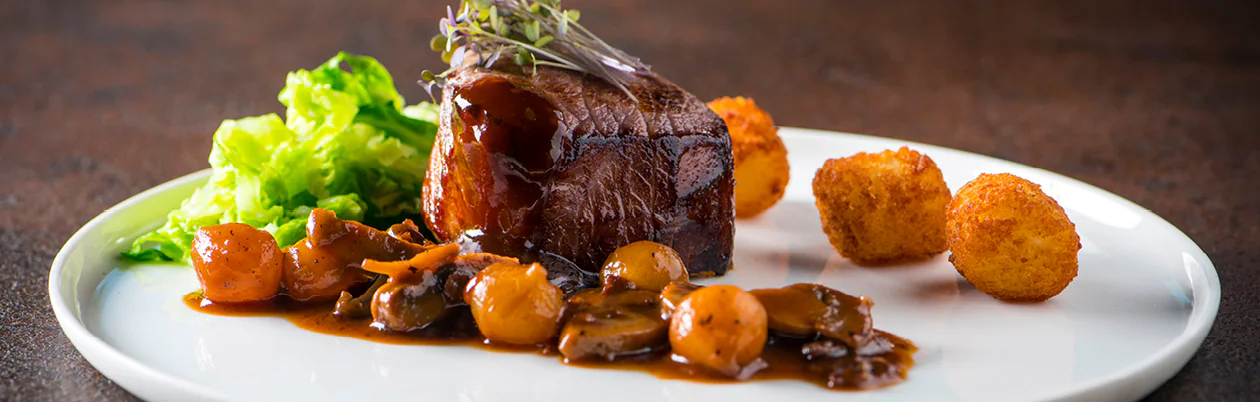
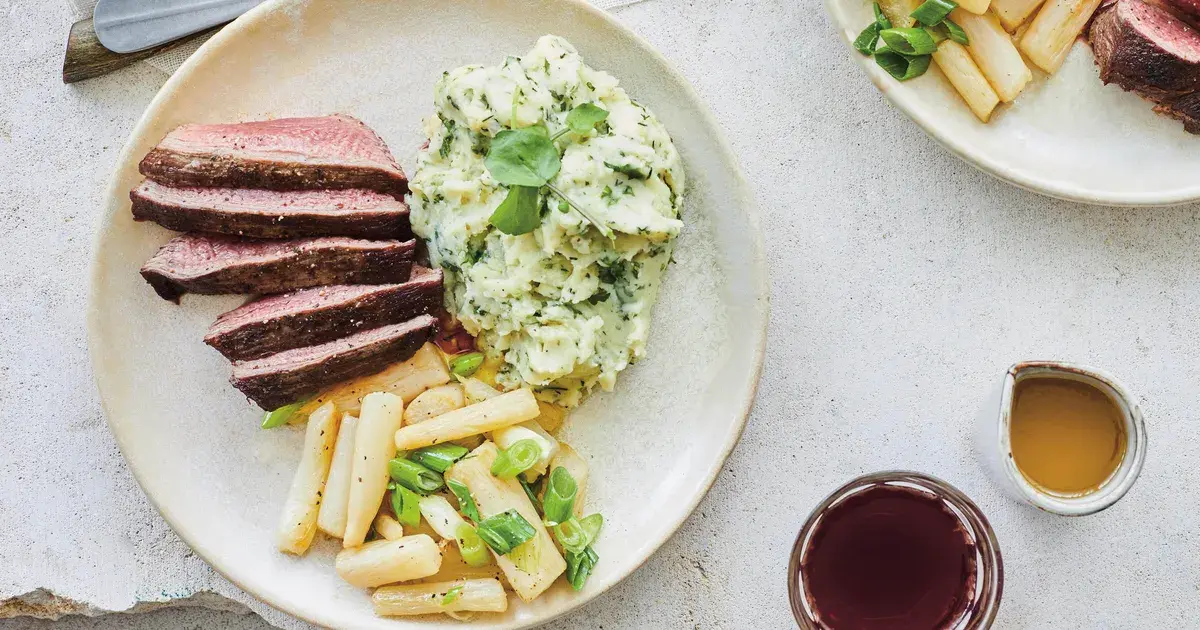
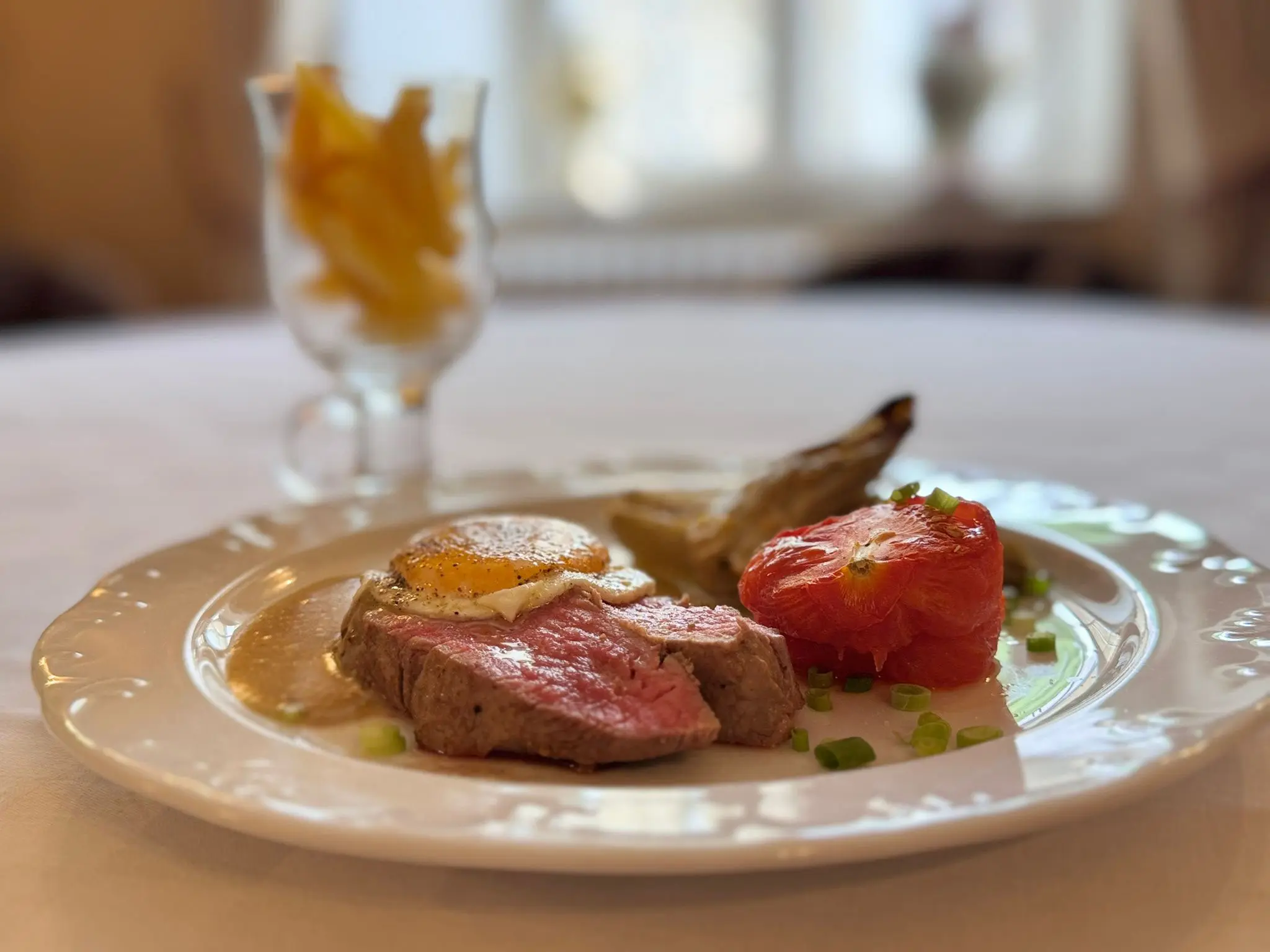
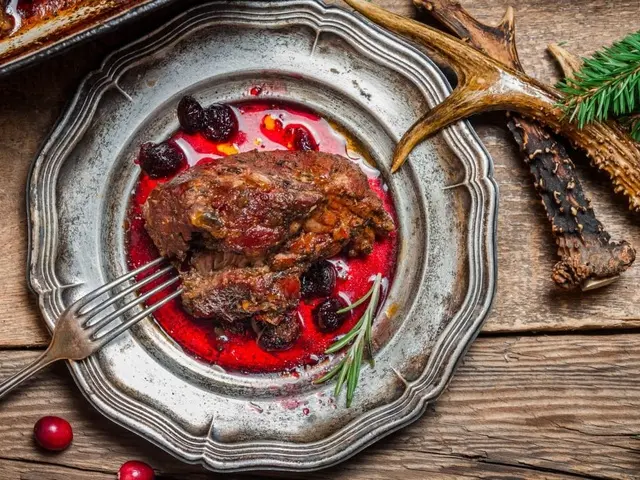
Four images of Ardennes craftsmanship: plating of venison, forest sauces and the precise moment of binding with chocolate.

The Hunting Festival and the Great Game Fair of Bouillon

To capture the weekend tourist traffic in early November, the town of Bouillon, dominated by its medieval fortress overlooking the Semois, hosts an event of international scope.

Traditionally held on 10 and 11 November, this event has become an institution that draws hunting enthusiasts, gourmets and families in search of authentic Ardennes traditions. Its protocol, both folkloric and religious, is paced by precise highlights.

The course of the festivities

The great game market opens as early as 10 a.m., in the town centre and under the large heated marquee near the Pont de Liège. The butchers' stalls overflow with whole or cut carcasses of wild boar, deer and roe deer, as well as pâtés, terrines and cured meats. The craftspeople also offer country cheeses, mulled wine and "hunting beer", a cuvée brewed exclusively for the occasion. On 10 November at 2.30 p.m., a folkloric procession made up of the gastronomic brotherhoods, hunters in ceremonial dress and hunting teams sets off from the Bastion du Dauphin to cross the medieval town towards the church square.

At the heart of the event resounds the art of the hunting-horn players, recognised by UNESCO as a Masterpiece of the Intangible Cultural Heritage of Humanity: renowned ensembles continuously enliven the streets and the market. On 11 November at 10 a.m., a solemn patriotic mass is enhanced by the hunting-horn players, whose serenades make the church's acoustics vibrate. The day closes at 3 p.m. with the blessing of the animals on the church square: hunting dogs, horses and falconry birds are presented to the priest, a symbol of the Ardennes people's respect for nature.

Official programme of the Bouillon Hunting Festival (10-11 November).
Date & timePlaceActivityInterest
10 & 11 Nov. from 10 a.m.Town centre & marquee (Pont de Liège)Game market & artisan refreshment standsFresh cut game, cured meats, hunting beer
10 Nov. at 2.30 p.m.Start at the Bastion du DauphinProcession of brotherhoods & teamsGreat folkloric street spectacle
11 Nov. at 10 a.m.Church of BouillonPatriotic mass & hunting-horn playersUnique acoustic experience (UNESCO heritage)
11 Nov. at 3 p.m.Church squareBlessing of the animalsHighlight of Ardennes folklore

For the visitor, this weekend is the ideal opportunity to combine a bountiful market, living spectacle and discovery of heritage. Many extend their stay with a descent of the Semois in finer weather, or with a visit to the fortress that dominates the river bend.

A gastronomic route along the Semois

The Semois valley and its deep forests form the epicentre of Ardennes game gastronomy. The local chefs showcase the wild produce in an ultra-short supply chain, through a network of high-level tables.

The Auberge de la Ferme (Rochehaut)

Run by chef Michel Boreux and his family, the Auberge de la Ferme in Rochehaut is a benchmark of terroir cuisine, built around a unique agritourism ecosystem: its own livestock, a game park for awareness, and a microbrewery. At its gourmet restaurant, l'Épi d'Or, the tasting menu strictly follows the seasons. In winter, the signature dish showcases pink-served doe fillet, with a Grand Veneur sauce of great finesse, celeriac, winter truffle and panisse. The family's estate also extends to l'Épisode, at the Domaine de Waillimont, where chef Jordan Boreux offers a cuisine of emotion in the heart of a 14-hectare forest estate.

La Ferronnière (Bouillon)

Nestled on the heights of Bouillon, in a characterful house offering a sweeping view of the fortress, La Ferronnière offers an intimate experience. Chef Wim Philips works alone in the kitchen, which leads him to compose seasonal menus of great precision, pairing Belgian terroir produce with contemporary trends. His autumn menu gives pride of place to the game of our forests, marrying the à la minute smoked Semois trout with medallions of doe and deer.

Le Gastronome (Paliseul)

On the road linking Bouillon, Le Gastronome is a table doubly noted by the guides. Taken over by the duo Jean Vrijdaghs and Sébastien Hankard, the establishment preaches a human and authentic philosophy: breads kneaded with flour from the Moulin de Vencimont, vegetables from the Terracines micro-farm, hand-crafted ceramic tableware. In the hunting season, the chefs elevate big game with deeply worked sauces, where well-dosed touches of acidity awaken the richness of the venison.

Major gastronomic tables of the Ardennes Semois (game orientation).
EstablishmentPlace & chefCulinary orientationPrice range
L'Épi d'Or (Auberge de la Ferme)Rochehaut — Michel BoreuxVertical ecosystem; doe fillet, Grand Veneur, truffleTasting menu ~€65
La FerronnièreBouillon — Wim PhilipsIntimate signature cuisine; autumn gameDécouverte €70, lunch €35-39
Le GastronomePaliseul — J. Vrijdaghs & S. HankardAward-winning; tradition-innovation, ultra-short chainsGourmand from €60, from €85
L'Épisode (Waillimont)Herbeumont — Jordan BoreuxCuisine of emotion, wild nature (14 ha estate)Menus 3 to 9 courses
L'Échappée BelleBohanBold fusion; doe tataki, magret with mango~€75
La Table du BoutchiVresse-sur-SemoisSeasonal market cuisine; forest game in autumn~€35
La Faim de LoupBohanGrilled game on lava stone at the table~€58
Le Relais de VresseVresse-sur-SemoisTraditional Ardennes cuisine; game in seasonTerroir menu ~€36

From an award-winning table to the convivial inn, this range allows you to compose an à la carte culinary route, according to budget and mood. For a complete overview, also consult our selection of gourmet restaurants in the Ardennes.

Le Fumet des Ardennes and the tradition of terroir cured meats

Beyond the tables, the valorisation of wild fauna rests on a tradition of cured meats of great scientific rigour.

Based in Vresse-sur-Semois, with a direct short-chain supply from Corbion, the establishment Le Fumet des Ardennes is the guardian of the production of Ardennes Ham PGI and of cured wild-game products — sausages, "colliers" and "pipes d'Ardenne". The manufacture of dry and smoked cured meats follows four critical biochemical stages that transform raw protein into a product of great microbiological stability and complex aromatic richness.

🧂

1. Salting

The salt, rubbed in dry or applied in brine, lowers the water activity in the meat. By depriving micro-organisms of free water, it prevents the growth of bacteria and initiates dehydration.

❄️

2. Cold maturing

Endogenous enzymatic reactions — lipolysis and proteolysis — release amino acids and volatile fatty acids, precursors of the aromas of the matured ham, and give a melting texture.

🔥

3. Cold smoking

Exclusively cold, over beech and oak sawdust (resinous wood is forbidden). Phenols and organic acids settle on the surface, extending shelf life through their antioxidant and bactericidal action.

4. Ageing

From six weeks for fine sausages to more than nine months for whole bone-in hams. This controlled dehydration concentrates the flavours and sets the balance point of the true Ardennes Ham.

This craftsmanship echoes that of the sauces: in both cases, tradition rests on an intuitive — then scientific — understanding of biochemistry. From the smokehouse to the saucepan, it is the same intelligence of the product that expresses itself.

Frequently asked questions about game gastronomy in the Ardennes

When is the game season in the Ardennes?

The peak season for big game runs from autumn to winter. In Wallonia, the drive hunt is generally allowed from 1 October to 31 January; in the French Ardennes, it runs from 1 October to 28 February. So it is from October to February that the restaurants of the Semois valley serve the freshest venison, with a peak in November around the great game fairs.

What is the difference between a poivrade sauce and a Grand Veneur sauce?

The poivrade is a sharp, lively sauce based on red wine, vinegar, mirepoix and cracked pepper: it excites the palate and cuts the fat of slow-cooked dishes. The Grand Veneur is a softened poivrade: Escoffier adds redcurrant or cranberry jelly and cream, which masks the bitterness of the deer and gives a velvety, glossy texture, ideal for noble roasted cuts.

Why do you put dark chocolate in a venison or wild boar civet?

Dark chocolate contains lecithin, a natural emulsifier that binds the aqueous phase (wine, stock) and the fatty phase (butter, bacon) of the sauce. Added off the heat, it lowers the tension between water and oil, stabilises the emulsion and produces a glossy, silky sauce that withstands reheating without splitting. Its roasted tannins add depth without sweetening or giving a perceptible chocolate taste.

Which chocolate should you use to bind a game sauce?

Dark chocolate with at least 70% cocoa, without excessive added sugar. Count about 30 grams for a civet for six people. At that concentration, the cocoa brings its tannins and lecithin without dominating the plate: the sauce gains in binding and shine, not in sweetness.

How do you stop a game sauce from splitting or curdling?

Never let a bound sauce boil. The historical binding with blood coagulates above a certain temperature; the binding with chocolate is far more stable. Whisk the chocolate in off the heat, optionally finish with cold butter, and always reheat over very low heat. The lecithin emulsion tolerates several reheatings, which is invaluable in professional kitchens.

Where can you taste game in the Semois valley?

The valley boasts exceptional tables: the Auberge de la Ferme and its restaurant l'Épi d'Or in Rochehaut, La Ferronnière in Bouillon, the award-winning Le Gastronome in Paliseul, or L'Échappée Belle and La Faim de Loup in Bohan. During the hunting season, they all showcase local big game in an ultra-short supply chain, with deeply worked sauces.

What is the Bouillon Hunting Festival?

It is the region's great game event, traditionally held on 10 and 11 November in Bouillon. On the programme: a great game market, a folkloric procession of the brotherhoods and hunting teams, the art of the hunting-horn players (recognised by UNESCO as intangible cultural heritage), a patriotic mass and the blessing of the animals. A weekend of very high attendance.

What is Ardennes Ham PGI?

It is a cured meat protected by a Protected Geographical Indication. Its production follows four biochemical stages: salting (lowering the water activity), cold maturing (lipolysis and proteolysis for aroma), cold smoking over beech and oak wood (never resinous wood), then ageing from six weeks to nine months. The result: a firm texture, a long shelf life and an inimitable aroma.

Is game meat good for you?

Venison (deer, doe, roe deer, wild boar) is lean meat, low in fat and rich in heme iron and protein. Coming from wild animals fed in the forest, it fits a logic of short supply chains and strict seasonality. Its pronounced flavour and astringency are tamed by the acid-fat-sweet balance of the great classic sauces.

Which wine should you serve with a civet or a Grand Veneur sauce?

A full-bodied, tannic red, echoing the marinade wine: a structured Bordeaux, a Côtes-du-Rhône, or a cellar wine with woody notes that dialogue with the tannins of the chocolate and the depth of the venison. The aim is to embrace the aromatic power of the game without crushing it.

A living heritage, between wild nature and haute cuisine

Game gastronomy in the Ardennes goes far beyond a mere seasonal ritual: it asserts itself as a pillar of the cultural, ecological and economic identity of a cross-border territory. The attendance recorded each autumn testifies to a growing interest in a cuisine of strict seasonality, valorising wild produce through methods of great technical precision.

The science of sauces, carried by the heritage of Escoffier and the Grand Veneur, brings to light the classic genius of cooks in marrying acidity, lipids and sugars to tame the power of venison. The integration of the chemistry of emulsions — illustrated by the clever use of dark chocolate and its lecithin — shows how culinary tradition absorbs scientific knowledge to simplify the work of the brigades while guaranteeing shine and stability.

Between the forest that feeds, the river that quenches and the craftsmanship of people, the Semois valley offers, in autumn and winter, a rare synthesis of landscape, fauna and plate — the perfect illustration of the word "terroir".

Experience the Ardennes, from the table to the river

Extend the tasting with a kayak trip on the Semois or a discovery of the terroir: in the Ardennes, flavour is experienced as much on the plate as in nature.

★★★★★ 🏆 KSA 🏆

Rated 4.6/5 based on 1,282 reviews

Google Reviews

Recommended Business
4.6
Based on 1,282 reviews