Art. 19Forestry Code – bans bivouac
155 kmCondroz-Famenne Art Trails
€6,000/yrbivouac area management cost
Max 4 tentscapacity per official area
Max 2 nightsstay per DNF area
≥ 2,500 mdistance from drivable road

Multi-disciplinary expertise

The Ardennes: a laboratory for outdoor tourism in Europe

Since the early 2010s, the Belgian Ardennes have undergone a profound structural mutation: the traditional grassy pitch is making way for a complex equation between conservation forestry legislation, high-end glamping, a network of official bivouac areas, and citizen collaborative innovations.

Understanding this ecosystem requires a multidisciplinary approach: exegesis of legal texts, analysis of the business models of the 3 commercial segments, assessment of biological and meteorological risks, and technical mastery of gear adapted to the Ardennes biome.

"The Belgian Ardennes position themselves today as a full-scale laboratory for all of Europe, an experimental space modeling the coexistence between post-industrial society and the forest ecosystem."
⚖️ Forestry Code Art.19 🌙 Legal DNF bivouac ✨ Huttopia Glamping 🎨 155 km Art Trails 🌱 Welcome to My Garden 🧥 Merino three-layer system 🐗 Wildlife safety ⛈️ Lightning protocol
Ardennes Camping – 1
Ardennes Camping – 2
Ardennes Camping – 3
Ardennes Camping – 4

Our establishment

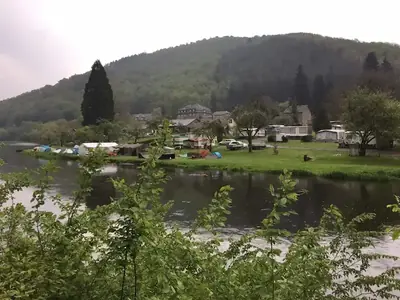
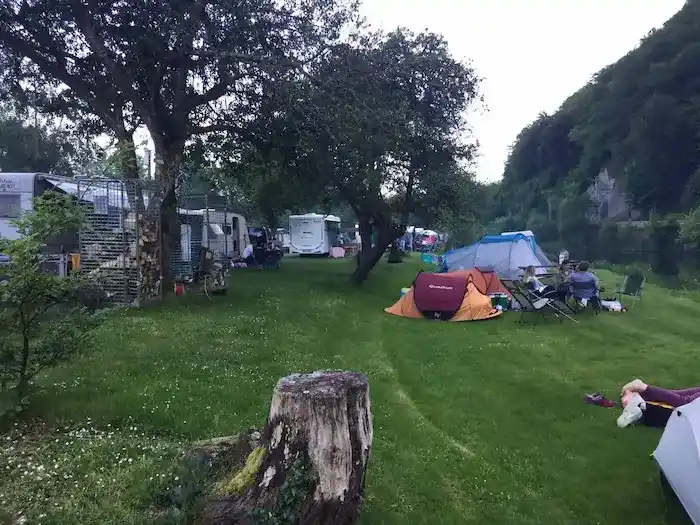
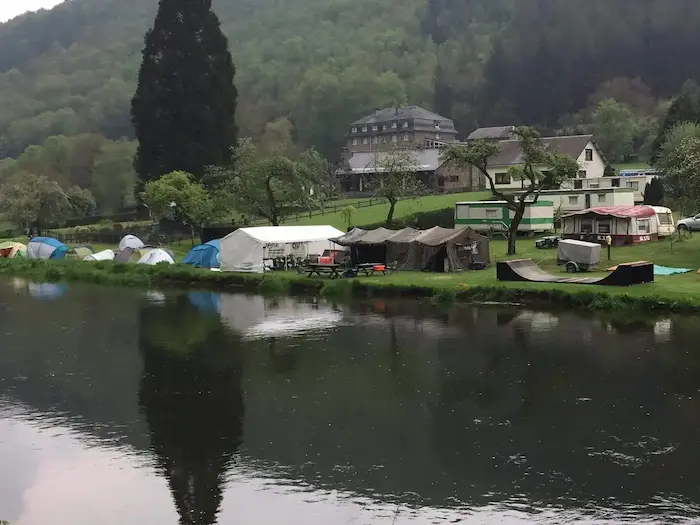
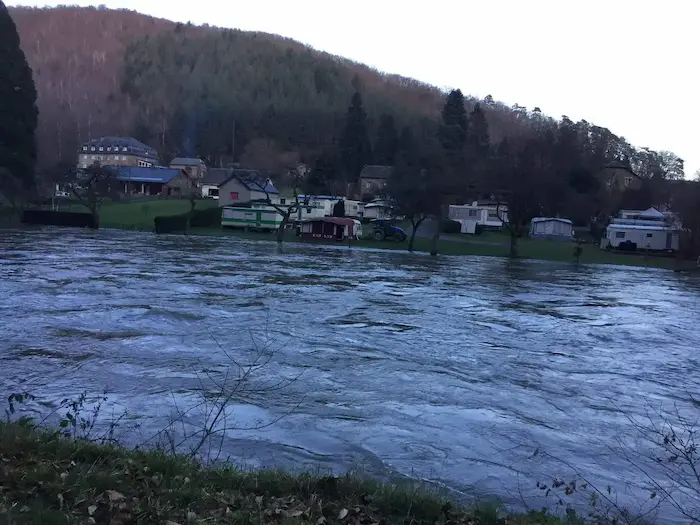
Semois Ardenne Campsite

Semois riverside · Vresse-sur-Semois · Walloon caravanning permit

4.7
/ 5 · 624 reviews

Visual Documentation

Ardennes Camping & Bivouac – Gallery

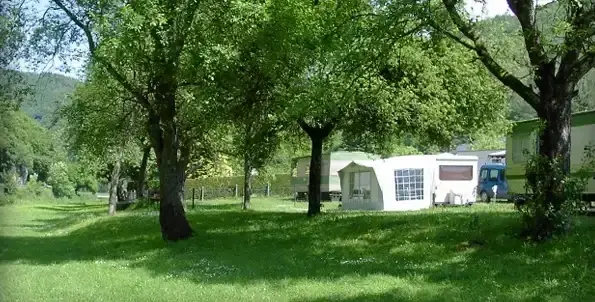
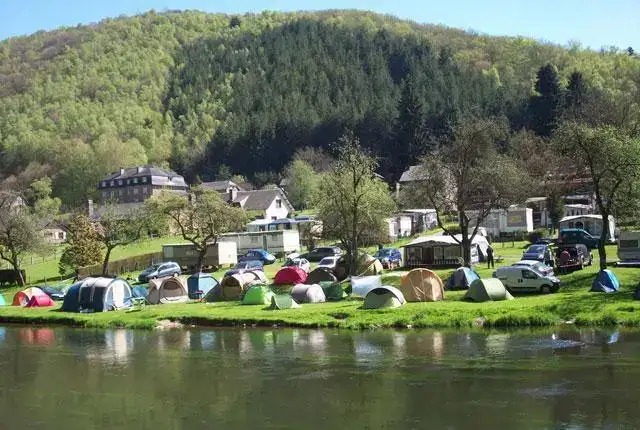
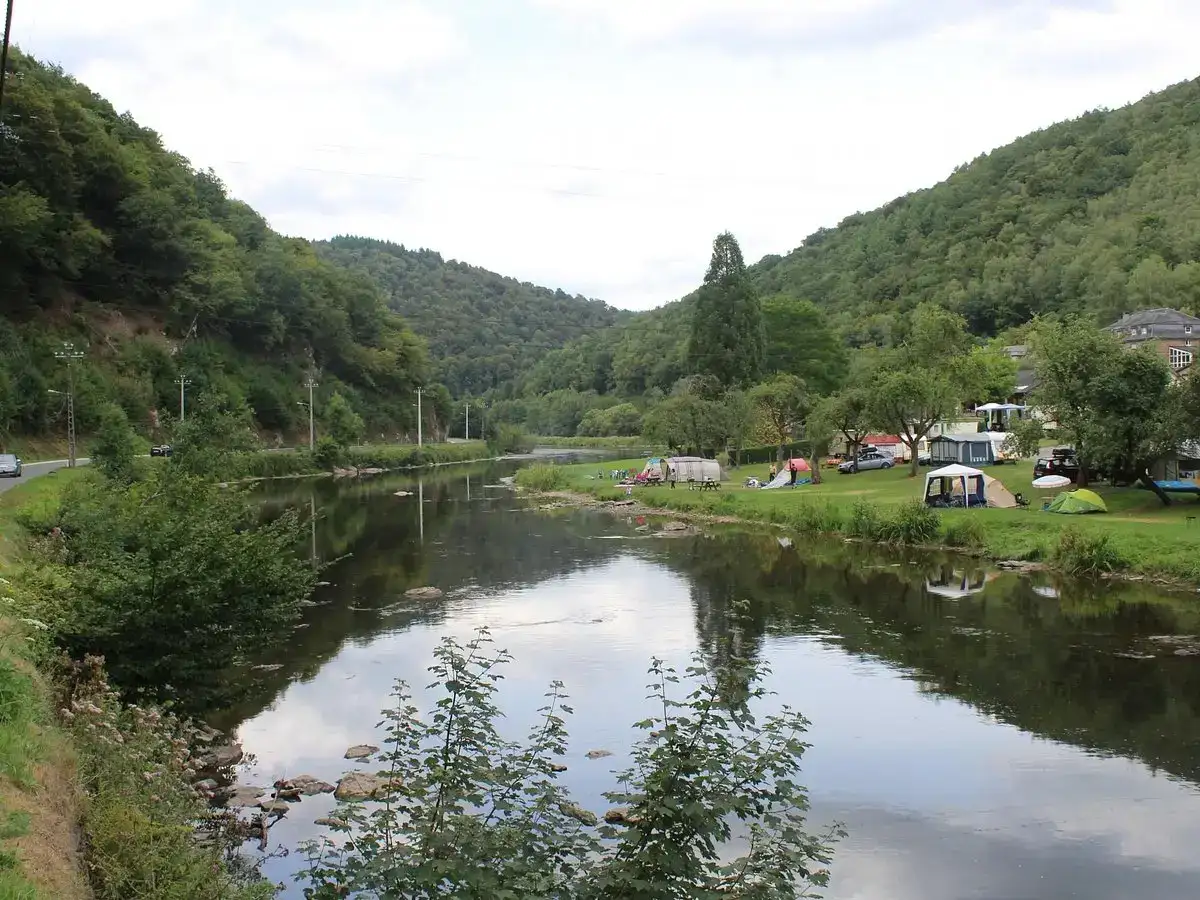
Camping along the Semois river – Belgian Ardennes
Legal bivouac on an official DNF area in the Walloon forest
Wood & Canvas Glamping – Huttopia Vallée de la Semois
Condroz-Famenne Art Trails – bivouac and Land Art
Escapardenne Eislek Trail – Ardennes hiking
Winter bivouac gear – Ardennes
Gastronomic family camping – Val de l'Aisne
Glamping resort in the Ardennes forests

Sourced legal expertise

The legal framework for camping in Wallonia

Camping in the Ardennes is governed by dense legal architecture. Mastery of these texts is a prerequisite for any commercial or recreational endeavor.

2008 Walloon Forestry Code – Art. 19

🚫 General ban in state forests

Article 19 lays down a strict and unequivocal principle: temporary residence (camping, wild bivouac) is formally prohibited in any public Walloon forest over 20 ha. Motivations: protecting wildlife reproductive cycles, preventing root soil compaction, reducing wildfires (climate change context), and fighting litter pollution.

Walloon Tourism Code – Art. D 249/1

🚫 Bans on public domain

Camping is forbidden on public roads (except motorhome areas), within a 100 m radius of drinking water catchments, and in all sites classified by competent authorities. Municipalities can issue supplementary police regulations prohibiting camping across their entire public domain.

Forestry Code Art. 3 par. 2 – DNF Exception

✅ Recognized official bivouac areas

The only legal exemption to the forest ban is the creation of official bivouac areas recognized and marked by the DNF (Art. 12 procedure). These areas remain fragile: they "hang by a thread" according to field actors, and can be revoked in case of chronic user misconduct.

Local urban planning regulations

✅ Private property – tolerated family use

On their own property, a citizen can pitch a tent for occasional, non-commercial family use without an urban planning permit. This is the legal foundation of the "Welcome to My Garden" network (host's private garden). Commercial camping on private land requires a caravanning permit (March 4, 1991 decree).

March 4, 1991 Decree – Caravanning permit

⚠️ Commercial exploitation – strict conditions

Any tourist exploitation with tents, caravans, motorhomes, or residential caravans requires a caravanning permit or CGT authorization (articles D 202+, Walloon Tourism Code). CGT authorization exempts from the urban planning permit. Requirements: pitch area, camper/sanitary ratio, PRM accessibility, landscaping.

Forestry Code Art. 12 – DNF Procedure

⚠️ Bivouac area creation – complete file

Deliberately heavy procedure: applicant identity, detailed infrastructure plan, 1/10,000–1/25,000 map, written owner consent, formal municipal council approval, free access declaration, target audience description, and maintenance modalities. Annual management cost: about €6,000 (20 man-days/year). Minimum distance from drivable road: 2,500 m.

Legal status by land type in Wallonia

Land type Camping legal status Conditions & Exceptions Legislative reference
State / public forest 🚫 Forbidden (temporary residence) Allowed only on official DNF bivouac areas. Max 2 nights. 2008 Forestry Code (Art. 19 & Art. 3, 2°)
Public domain / public road 🚫 Forbidden Specific motorhome areas or punctual mayor exemption (events). Tourism Code (Art. D 249/1)
Classified site / water catchment 🚫 Absolutely forbidden No exceptions possible – heritage and public health protection. Tourism Code (Art. D 249/1)
Private property / garden ✅ Tolerated (family setting) No urban permit if family use, occasional, non-commercial. Local urban regulations
Commercial land ✅ Allowed under conditions Caravanning permit + CGT authorization (exempts urban permit). March 4, 1991 Decree

Unified DNF Regulation

The Walloon Bivouacker's Charter

Mandatory trilingual sign (fr / nl / de) on each site with the official logo of the Walloon bivouac network. Non-compliance has already led to permanent area closures.

1

Strict time window

Tent pitching allowed only between 4 PM (or 5 PM depending on local decrees) and 10 AM the next day. Guarantees the natural landscape vocation of the site during the day.

2

🗓️

Maximum 2 consecutive nights

Residency duration is capped at 2 nights on a single site to prevent areas from transforming into sedentary and free holiday resorts.

3

🔥

Fires banned on almost all sites

Double reason: growing wildfire risk and ecological degradation linked to dead wood collection (micro-habitat for saproxylic insects). Only isobutane gas stoves are allowed.

4

♻️

Zero waste – Leave No Trace

No bins on site (deliberate DNF choice). Take all your waste back, including "biodegradables" (citrus peels take months to decompose on cold acidic soils). Dig "cat holes" for human waste.

5

📱

Mandatory reservation (QR code)

Following post-pandemic saturation, prior reservation via QR code on the entrance sign is required. Capacity management (often 4 tents max). Alternatives proposed if full.

6

🚗

Slow mobility exclusively

Motorized vehicles (vans, motorhomes, roof tents) physically prohibited. Reserved for hikers, cyclists, and horseback riders traveling in complete autonomy.

Market analysis

The 3 segments of Ardennes commercial camping

The market has undergone a radical segmentation of its offerings, ranging from international aquatic resorts to glamping with almost invisible landscape integration.

Le Val de l'Aisne – Belgian Ardennes 🍽️ Segment 1 – Family & Gastronomic
★★★★ 4.2/5 · 1,100+ Google reviews · 96% Facebook

Le Val de l'Aisne

Blier · Between Durbuy & La Roche

The paragon of premium family camping. Sanitary facilities in closed buildings with underfloor heating — a decisive competitive advantage allowing year-round opening. Gastronomic brasserie-restaurant (wild game, Trappist beers) rated 10/10 by some clients. Wooden chalets, Safari Tents, motorhome pitches overlooking carp fishing ponds.

Open year-roundArdennes gameChalet 138Birds of prey showsFishing ponds
Huttopia Vallée de la Semois – Belgian Ardennes 🌿 Segment 2 – High Integration Glamping
★★★★ 4.6/5 · Certified Huttopia Standard

Huttopia Vallée de la Semois

Vresse-sur-Semois · 13 ha · 180 pitches

Business model targeting an upper-middle-class urban clientele seeking aesthetics and nature without friction. Wood & Canvas Tents (Trapper with stove, Cosy Canadian on stilts, Bonaventure for couples), PRM glass chalets, Gypsy Caravans. E-MTB (100 km autonomy) and VTTAE (50 km) rentals. Little Trappers program (Land Art, cabins). Life Center with morning bakery. Partnerships for 500 km of trails + 22 km canoe.

Full PRME-MTBKids Land ArtNatural materialsSemois riverside
Sandaya / BestCamp / Floreal – Belgian Ardennes 🌍 Segment 3 – Massive International Resorts
★★★★ Variables · NL · DE · FR Targets

Sandaya / BestCamp / Floreal

Tellin · Semois · La Roche · Houffalize

Moving away from traditional camping to resemble autonomous resorts. Indoor tropical water parks, professional kids clubs, night entertainment, internal shops. Premium multi-room mobile homes. The Ardennes forest serves as a "backdrop" — the goal is to maximize average spending by keeping the client within the perimeter. Aggressive promotional offers (21 nights -30%).

Tropical poolInternational NL/DEPremium mobile homes24/7 AnimationSandaya · BestCamp · Floreal

Comparative Matrix of the 3 Segments

Criterion 🍽️ Family / Gastronomic 🌿 High Integration Glamping 🌍 Massive Resorts
Target National families, foodies, anglers, winter seniors Upper-middle-class urbanites, slow tourism, aesthetes International (NL, DE, FR), continuous animation
Sanitary facilities Closed buildings, underfloor heating Wood integrated into landscape, baby & PRM areas Large capacity – mass hospitality standards
Flagship lodging Wooden chalets, Safari Tents, motorhome pitches Trapper Tents (stove), Gypsy caravans, Glass chalets Multi-room mobile homes, standardized bungalows
Ancillary revenues Renowned gastronomic brasserie E-MTB rentals, light local catering Water parks, shops, kids clubs
Opening Year-round (thanks to underfloor heating) Extended seasonal Mainly seasonal
Philosophy Intergenerational loyalty Nature immersion, minimal footprint Maximize spend/stay in closed site

European tourism innovation

The Condroz-Famenne Art Trails

A concept without equal in Europe: the fusion of long-distance hiking and an open-air Land Art museum, integrated with a network of official bivouacs.

Condroz-Famenne Art Trails

A 155 km marked loop crossing 7 Walloon municipalities (Assesse, Ciney, Gesves, Hamois, Havelange, Ohey, Somme-Leuze). Over 55 monumental artworks of Land Art and street art created in situ by international artists turn the forest landscape into a permanent gallery. Iconic installations: "Aeropiano" (a structure playing with the wind), "Transhumance", "The Great Parade".

7 official bivouac areas (Braibant, Bethléem…) and 6 artistic wooden shelters with poetic design. Capacity strictly limited to 4 tents/area. Organized groups formally forbidden to preserve the tranquility of contemplation. Reservation via sentiersdart.be is now mandatory.

Discover the Art Trails →
155 kmTotal loop
7 townsCrossed
55+In situ artworks
7Bivouac areas
6Art shelters
4 tentsMax per area
Condroz-Famenne Art Trails – Walloon Land Art and bivouac

Other major bivouac routes in the Ardennes

Escapardenne Eislek Trail

🏆 Escapardenne Eislek Trail

"Leading Quality Trails" label – Cross-border route Belgium ↔ Luxembourg. Belgian stages: Clervaux → Houffalize → Nadrin via the Two Ourthes Nature Park. Rated moderate to difficult, significant elevation changes, spectacular panoramas over entrenched valleys.

Entre Lesse et Lomme Crossing

🌲 Entre Lesse et Lomme Crossing

Historic multi-day circuit buried deep in the forest massif of the Luxembourg province. The first Belgian route to have conceptualized specific bivouac areas. Prior online reservation mandatory to avoid saturation. 3 Fontaines Campsite (Maissin) as partner alternative.

High Fens (Hautes Fagnes)

❄️ High Fens (Hautes Fagnes)

Peat plateau culminating at Signal de Botrange with subalpine/Scandinavian conditions. Extremely fragile and flammable ecosystem: zero tolerance for wild bivouacking. Fall back on peripheral accommodations (Warfa Lake Gîte, Kaleo Eupen, Moulin Campsite in Malmedy).

Collaborative innovation

Welcome to My Garden – The disruptive legal alternative

Faced with chronic saturation of bivouac areas and the ban on wild camping, a Belgian citizen network has emerged as the most elegant answer to the equation.

🌱

Welcome to My Garden (WTMG)

Founded in spring 2020 by Manon and Dries, a pair of Belgian cycle-travelers, in direct response to pandemic restrictions. Concept: altruistic citizens provide a demarcated space in their private garden free of charge to hikers and cyclists for one night. Legal because it is based on the Tourism Code's tolerance for family and private use.

Unlike Couchsurfing or WarmShowers, the host has no preparation obligation (no room, no sheets, no shared meals) — only the grassy land is provided. This drastically reduces the host's mental load while offering maximum autonomy to the camper in a legal and secure setting.

Business model: 100% free and volunteer-run, exclusively funded by voluntary donations from "superfans". IT architecture and interactive map hosted without advertising or data monetization.

🇧🇪 Founded in Belgium 2020 ✅ 100% Legal 🚲 Slow mobility only 🆓 Completely free 🤝 Collaborative economy

WTMG vs Alternatives Comparison

Legality in Wallonia✅ WTMG · ✅ Commercial · ✅ DNF Areas
Burden on hostWTMG = Minimal · Couchsurfing = High
Cost for travelerWTMG = €0 · DNF Bivouac = €0 · Camping = €11+
Ecological impactWTMG = None · Wild = High · Commercial = Managed
Visit welcometomygarden.org →

Interactive map with all available hosts in Belgium

Thermal engineering

Technical gear for the Ardennes biome

The Ardennes are subject to a degraded oceanic climate: heavy rainfall, saturating humidity, violent thermal amplitudes (-5°C at night in spring, 5°C mid-August). Technical mastery of equipment is not a luxury — it's a condition of survival.

The three-layer clothing system

🔴

Layer 1 – Base: Merino Wool

The miracle fiber of Ardennes bivouacking. Insulates even when 30% saturated with water. Releases light exothermic heat when absorbing moisture. Antibacterial keratin properties (prevents odors on multi-day treks). NEVER use cotton: a hydrophilic fiber that retains water, loses its insulating power, and causes deadly cooling through accelerated thermal conduction.

🔵

Layer 2 – Mid-layer: Micro-fleece or Compressible Down

Captures a layer of still air heated by metabolism. For static bivouacs in the evening, add ski overalls or specific fleece pants. Natural down (best weight/heat ratio) or synthetic fibers (retains insulation when wet — better suited for the humid Ardennes).

🟣

Layer 3 – Shell: Hardshell Gore-Tex or Softshell

Impenetrable barrier against the penetrating humidity of the Ardennes. Hardshell: breathable-waterproof membrane ≥ 10,000 mm water column. Softshell: strict windbreaker to limit thermal losses by convection. Sealed seams mandatory, DWR treatment maintained regularly.

CategoryTechnical GearArdennes Biome Reason
Sleeping Synthetic bag (comfort T° < 5°C) + Pad R-value > 3 Synthetic insulates even when soaked. Ground absorbs heat 60x faster than air.
Clothing Merino + Micro-fleece + Hardshell Gore-Tex ≥ 10,000 mm Sweat management + blocking convection (wind) and conduction (rain).
Footwear Mid-high GORE-TEX, lug sole for mud, sealed seams Ligament support on slippery shale/clay. DWR maintained for waterproofing.
Cooking Isobutane stove + titanium pot + sub-micron water filter Optimal weight/calorie ratio. Animal contamination of Ardennes streams.
Safety Headlamp (battery kept inside sleeping bag), redundant fire Cold destroys lithium battery life. Humidity annihilates tinder.
Shelter Freestanding 3-season dome tent + footprint Low aerodynamic profile for gusts. Footprint smaller than tent.
Navigation Offline mapping app (Altituderando, Komoot) Failing cellular network coverage at the bottom of shale valleys.
Hygiene "Cat holes" at regulatory distance from waterways Absence of toilets on isolated DNF sites. Leave No Trace standard.

⚠️ The ISO 23537 standard defines sleeping bag temperatures. Base your purchase on the "comfort temperature" — never the "limit temperature" or "extreme temperature".

Risk Management – Medical & Ethological Expertise

Safety in the Ardennes forest: the 4 major risks

🕷️

Ticks & Lyme Disease (priority risk)

Main vector: Ixodes ricinus. Peak activity: April–October (= full peak tourist season). Transmits: Lyme borreliosis (Borrelia burgdorferi) + tick-borne encephalitis + anaplasmosis. Prophylaxis: light-colored covering clothing (visual detection), skin repellents, full body inspection at the end of the day. Treat accompanying dogs (effective vectors into the campsite).

In case of bite: immediate mechanical extraction (tick twister without torsion). NEVER use ether, alcohol, or flame (reflex regurgitation → Borrelia inoculation). Log date and location. Monitor for 1 month: erythema migrans = medical emergency → immediate antibiotic therapy. Report via the CITIQUE app.

⚕️ Biological risk #1 in Walloon forests
🐗

Wild Boars (Sus scrofa) – Survival Ethology

A fundamentally fearful and peaceful animal, but dangerous if cornered, injured (hunting, road collision), or if it is a sow with piglets. Crepuscular/nocturnal feeding: maximum exposure for bivouackers on the edge of dense cover.

Close confrontation protocol: complete immobilization → never run away (pursuit reflex) → no sudden movements → slow controlled backing up without turning your back → leave an escape route for the animal. Absolute prevention: no food or organic waste left in the open at the bivouac.

🌙 Peak activity at dusk / night
⛈️

Lightning – Diverging protocols by habitat

The high Ardennes plateaus favor the rapid formation of air mass thunderstorms.

✅ Motorhome / Van
  • Faraday cage: current passes through the metal body to the ground
  • Stay in the driver's cabin
  • Do not touch internal metal structures
  • Retract roof antennas – no external awning
❌ Tent – Zero Protection
  • Synthetic fabric + alu/carbon poles = lightning attraction in open terrain
  • Evacuate to closed vehicle or masonry building
  • If impossible: flee ridges, isolated trees, waterways
  • Crouch with feet together, dry foam pad on the ground
🎯

Hunting & Deer Rut (Oct.–Jan.)

The deer rutting season (mid-September to end of October) is subject to ministerial decrees forbidding all human traffic in vast sectors (e.g., Nassogne and Saint-Hubert cantonments, trails closed 24/7). Intense driven hunts from October to the end of January.

Zones to check before any autumn stay:

🔴 RED
Hunt confirmed
Access forbidden
🟠 ORANGE
Possible hunting
Neon clothes mandatory
🟢 GREEN
Clear
Normal circulation
Risk peak: 9 AM–12 PM and 2 PM–5 PM

"Soothe the Forest" Campaign – Wallonia Tourism / DNF / FFRandonnée

The 2025 Hiker's Charter

Compliance is vital to the very survival of bivouacking in Wallonia. Chronic misconduct (illegal fires, litter, alcohol-fueled parties) has already led to permanent closures of bivouac areas.

🧹

Absolute Leave No Trace

No litter whatsoever, even "biodegradable". Citrus peels take months to decompose on acidic Ardennes soils and alter their chemistry.

👣

Stay on marked trails

No unofficial shortcuts. Every off-trail trek hydraulically compacts the soil and suffocates tree root systems.

🔥

Fire = potential offense

Fires and cigarette butts are criminalized. Dropping a butt during dry periods can spark a forest fire in highly draining shale massifs.

🐦

Respectful distance observation

Observe wildlife and domestic herds in silence, without feeding or intrusive approaches. Dogs kept strictly on leash.

🤝

Cohabitation and courtesy

Share the space with mountain bikers, horse riders, forest rangers. Close agricultural gates behind you. Limit noise pollution (music, shouting).

🌿

Botanical integrity

Do not pick flowers, move minerals, or collect dead wood (crucial micro-habitat for saproxylic insects).

Frequently Asked Questions

FAQ – Belgian Ardennes Camping & Bivouac

Is camping forbidden in Walloon forests?

Yes. Article 19 of the 2008 Walloon Forestry Code formally forbids temporary residence in all public state forests over 20 hectares. The only legal exception is access to official bivouac areas recognized by the DNF under Article 3 paragraph 2. This ban is not arbitrary: it protects wildlife breeding cycles, prevents root soil compaction, and reduces fire risks amid climate change.

What is the maximum stay at a bivouac area in Wallonia?

The Walloon bivouacker's charter limits stays to a maximum of 2 consecutive nights on the same site (recent update – some sources still say 1 night, check locally). Pitching tents is allowed between 4 PM (or 5 PM) and 10 AM. QR code reservations are often mandatory, capacity is frequently limited to 4 tents. Slow mobility only.

What is "Welcome to My Garden" and how does it work in Belgium?

"Welcome to My Garden" is a collaborative network founded in 2020 by Manon and Dries. Citizens provide a free spot in their private garden to hikers and cyclists for one night. Legal because it relies on tolerance for private family use. 100% free, funded by "superfan" donations. Unlike Couchsurfing, the host has no obligation to prepare anything – only the ground is provided. Interactive map on welcometomygarden.org.

What are the 3 segments of commercial camping in the Ardennes?

(1) Family & Gastronomic (e.g., Le Val de l'Aisne): underfloor heated sanitary blocks, year-round opening, renowned gastronomic brasserie (4.2/5, 1,100 reviews). (2) High Integration Glamping (e.g., Huttopia Semois): Wood & Canvas tents, sustainable materials, PRM, E-MTBs, slow tourism focus. (3) Massive International Resorts (e.g., Sandaya, BestCamp, Floreal): water parks, kids clubs, premium mobile homes, NL/DE/FR targets.

What are the Condroz-Famenne Art Trails?

A major tourism innovation: a 155 km marked loop crossing 7 Walloon municipalities, dotted with 55+ monumental Land Art works created in situ by international artists. 7 official bivouac areas and 6 wooden art shelters, capacity limited to 4 tents/area, organized groups forbidden, mandatory reservation on sentiersdart.be.

Which sleeping bag should I choose for camping in the Belgian Ardennes?

Base your choice on the "comfort temperature" (ISO 23537 standard) — never on limit or extreme ratings. Opt for a synthetic bag with comfort < 5°C minimum (synthetic retains insulation when wet, crucial in the Ardennes). Pair it with an R-value > 3 sleeping pad (the ground absorbs heat 60x faster than air).

How to handle a wild boar encounter in the Ardennes forest?

In case of close confrontation: never run away (triggers pursuit reflex), do not make sudden movements, stay completely still, then back away slowly without turning your back, leaving an escape path for the animal. Prevention: no food left out at the bivouac, daytime travel on marked trails only, dogs on leash.

Does a tent protect against lightning in the Ardennes?

No. A tent (synthetic fabric + aluminum poles) offers zero protection from lightning and is actually an attraction point in open fields. During a storm, evacuate to a closed metal-body vehicle (Faraday cage) or masonry building. If impossible: flee ridges and lone trees, crouch down with feet together in a depression, insulated from the ground by a dry foam pad.

Why should you never put ether on a tick in the Ardennes?

Applying chemicals (ether, alcohol, oil, flame) before extracting a tick causes a reflex regurgitation of the tick's infected stomach contents into the host's bloodstream, exponentially increasing the risk of Borrelia (Lyme disease) inoculation. Only immediate mechanical extraction with a specific tick twister, without twisting, is medically recommended.

Can you build a campfire in the Belgian Ardennes?

On almost all official DNF bivouac areas: no. Open fires are banned to prevent wildfires and protect dead wood (habitat for saproxylic insects). Only isobutane gas stoves are permitted. On the rare sites with secured fire pits: dead ground wood only. During droughts, even gas stoves may be banned by local decree.

Complete your stay in the Ardennes

🌲

Ready for your Ardennes immersion?

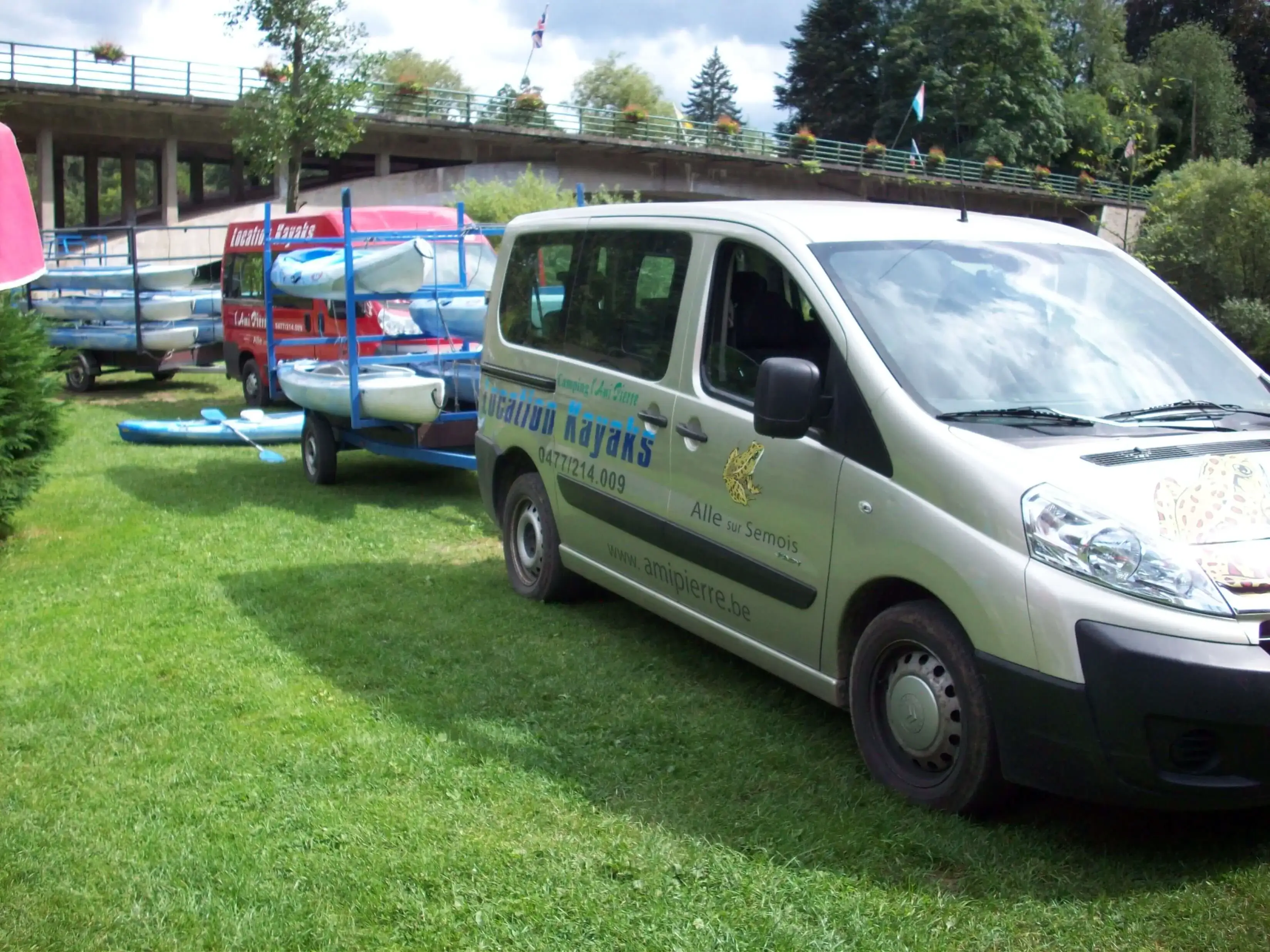
Our riverside campsite in Vresse-sur-Semois: from €11/night, Walloon caravanning permit, direct kayak access, dogs admitted free 365 days a year.

🏕️ Book the campsite 🛶 Book a kayak 🐕 Dogs admitted
4.6/5
Based on 1,356 customer reviews
🏆
Excellence
2024
Verified Reviews
100%
N
Nathalie Frédéric

Very good, cheap and very friendly welcome. Thank you, because for my first time kayaking, I love it. I recommend it. See you next time 👍🙂

M
Marlène Régibo

Contrary to other published opinions, we were very well received, the team is very friendly and the kayak rental is cheaper here than elsewhere. We recommend Kayak Ardenne!

K
Konrad

Fantastic campsite, affordable prices and adorable staff!

L
Lauranne Arimont

Top, very friendly and good service. Correct prices.

L
Loan

We stayed 1 night in a tent and did the 11km kayak descent. Helpful and super friendly staff. Perfect organization for arrival on the Semois and reception after the descent. Thanks for everything!

K
Kelly Watillon

We were able to enjoy this day thanks to the lady at the kayak bar! Without knowing it, we hadn't booked. She found a last minute solution! Top thanks again! Thanks to her and also to the drivers who brought us back.

A
Arthur Pinter

Excellent kayak rental on the Semois. Different routes possible for short or long distance depending on the wish. The staff is very friendly and advises you perfectly!

L
Laurie Rainbow

Magnificent canoe descent (17km), the service is very good, we wait little even at arrival thanks to the driver and his wife who willingly answer our questions and calls. In addition, the small cafe with terrace is very pleasant. The night at the campsite was perfect.