★★★★★
Very good, cheap and very friendly welcome. Thank you, because for my first time kayaking, I love it. I recommend it. See you next time 👍🙂
Missing for over a century, Ciconia nigra spontaneously recolonized the Belgian Ardennes starting in 1989. A portrait of a discreet and indicator species, its extreme ecological requirements, and the regulatory arsenal (Natura 2000, quiet zones, kayak flows) that ensures its return.
Scientific monitoring
The monitoring of the black stork in the Semois benefits from the most modern technologies. Thanks to the placement of GPS trackers on chicks in the nest, scientists from Natagora and the DNF can track migration routes and local territory use in real time. In 2025, three new individuals were equipped, strengthening the European database on the species.
Since the Semois valley is shared between Belgium and France, cooperation projects (Avesnois Regional Nature Park, Interreg, PNVS Bird Trail in Chiny) harmonize management practices on both sides of the administrative border. The bird is gradually becoming a symbol of local pride, encouraging residents and tourists to adopt respectful behaviors.
Audio story · 6 min · English
The Black Stork of the Semois Valley
Historical dynamics
In the 19th century, the black stork was considered extinct in Belgium, a victim of the destruction of its nests and intensive forestry favoring conifers over old broadleaved high forests. Its return, which began timidly in the 1970s and was confirmed by the first proof of nesting in 1989, is part of a recolonization movement on a European scale, driven by populations from Eastern Europe.
Although numbers are constantly increasing, the black stork remains a species with a low population density. Each pair requires a considerable home range, often exceeding 100 km². In France, the breeding population was estimated between 70 and 90 pairs in 2019, illustrating the persistent fragility of a bird that remains vulnerable to the slightest disturbance of its habitat.
The species produces only one brood per year. The success of this brood depends on the availability of food resources in May-June. A summer that is too dry or, conversely, major spring floods like those of 2021, can compromise access to fishing areas.
| Indicator | Value |
|---|---|
| Return to Wallonia | 1989 – 1st proof of nesting |
| France population (2019) | 70 to 90 breeding pairs |
| Foraging radius | Up to 12 km around the nest |
| Home range | ~ 800 ha (Côte-d'Or) |
| EU Trend | Moderate but steady increase |
| Brood | 1 only / year |
Habitat & ecological requirements
The Semois Valley offers a topographical and forest configuration that meets the most specific requirements of the species. Statistical analysis of 60 Belgian nests reveals striking constants that make it possible to model favorable sites and guide conservation measures.
The average altitude of nesting sites in Belgium is 439 meters. The nests are never installed in the valley bottom but preferentially at the level of the upper slope break on steep slopes. The black stork seeks height to facilitate its take-offs and take advantage of thermal updrafts.
Marked preference for South-East exposures. The nest, massive and damp, must catch the first rays of the sun in order to dry quickly in the morning. No nesting has been observed on due North slopes in Belgian studies.
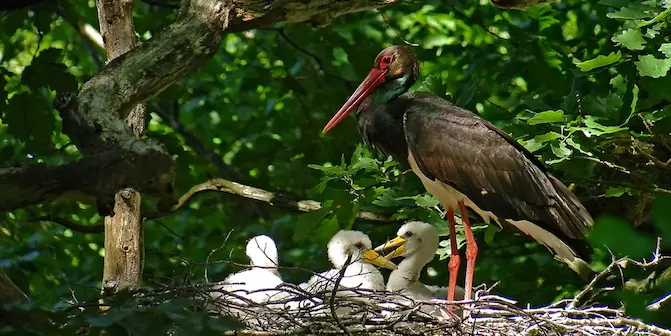
The stork nests in the heart of the massifs, at an average distance of 1,280 meters from the outer edges, in order to minimize contact with human activities. It favors old oaks and beeches presenting strong horizontal branches capable of supporting a nest nearly 2 m wide.
Small shallow streams, stream headwaters, forest ponds where it fishes by walking. The bullhead (Cottus gobio), a fish very sensitive to pollution, is a reliable indicator of the quality of a site for the black stork.
The rarity of suitable forks on large trees makes each site precious. Storks willingly reuse old raptor nests (goshawks), which imposes an integrated vision of the protection of forest avifauna.
Even if a nest is abandoned, individuals often return to the same sub-watershed. This fidelity highlights the crucial importance of long-term environmental stability.
Regulatory framework
The protection of the black stork is part of a legal arsenal built around the Birds Directive and the Natura 2000 network. The Semois Valley is home to four Natura 2000 sites of major importance, designated by decree of the Walloon Government in 2016, which cover the most sensitive nesting and foraging areas.
| Code | Site Name | Municipalities | Importance for Ciconia nigra |
|---|---|---|---|
| BE34046 | Semois Basin from Florenville to Auby | Florenville, Chiny | Foraging area and migration corridor |
| BE34057 | Upper Semois Marshes and Heinsch Wood | Arlon, Etalle, Habay | Confirmed presence, crucial stream headwaters |
| BE35038 | Semois Valley from Bouillon to Bohan | Bouillon, Vresse-sur-Semois | Slope forests, isolated nesting sites |
| BE34055 | Breuvanne Stream Valley | Chiny, Tintigny | High-value alluvial wetlands |
Forbidden to plant conifers less than 12 m from the banks of waterways, to preserve the sunlight and biodiversity of fishing areas. The spreading of fertilizers or pesticides is banned within 6 m of the bank crests. These technical margins are the direct allies of the black stork.
The Walloon administration, via the Department of Nature and Forests (DNF), supervises human interventions through:
Forestry & tranquility
The black stork is extremely timid. A simple human passage near the nest during the incubation period can cause the immediate abandonment of the brood. Silence protocols have been adopted by forest managers (DNF and private owners).
Silence must be absolute between mid-March and mid-May (laying and hatching). Ideally, restrictions extend from early March to late July (rearing of young). No felling, no logging, no firewood cutting is authorized in the quiet perimeter during this window.
A quiet perimeter of 300 meters is established around each occupied nest. Outside the breeding season, tree marking in a radius of 150 to 200 m must remain limited to the strict minimum so as not to alter the stand structure that protects the nest from prevailing winds and predation.
The regulations now require the systematic conservation of any tree bearing an eyrie (nest) of a black stork, even dead or declining. The rarity of suitable forks makes each site a precious heritage.
By protecting the black stork, we protect a whole procession: forest raptors, fish sensitive to pollution (bullhead), amphibians in forest ponds, insects in riparian forests. It is one of the most effective indicator species of the Ardennes forest.
Tourism & navigation
The success of the black stork also depends on the management of tourist pressure, in particular kayak navigation, very popular between Chiny, Bouillon, and Vresse-sur-Semois. The regulations, oriented towards user safety, play a major ecological role by preserving the calm of the river.
If the flow measured at the Membre-sur-Semois station drops below 2.2 m³/s (red phase), kayaking is prohibited. This prevents the trampling of the riverbed by stranded kayakers, which is destructive for fish habitats and disruptive to the birds' feeding.
| Period | Authorized times | Conservation objective |
|---|---|---|
| March 16 → June 15 | 09:30 – 19:00 | Protection of the early nesting period |
| June 16 → October 15 | 09:30 – 20:00 | Management of the high tourist season |
| October 16 → March 15 | 09:30 – 17:00 | Winter rest and late migrants |
🛶 Responsible user behavior
It is strictly forbidden to disembark outside the marked zones, often located near urban centers. The wildest stretches (between Alle and Membre, for example) must remain free of any human intrusion on the banks. Maintain a safe distance from the banks and rocky ledges.
National Park
The recent creation of the Semois Valley National Park (PNVS) marks a decisive step in the protection strategy for the black stork. The park does not just apply existing regulations; it initiates large-scale restoration projects and directly supports the species as an "umbrella species".
The PNVS aims to dedicate at least 10% of the surface of public broadleaved forests to the status of strict reserve. All forestry operations and human circulation are prohibited there – the trees can reach advanced stages of senescence without the risk of being felled.
The park is working on the concept of a dark infrastructure (trame noire), aiming to reduce artificial light pollution. Although the black stork is diurnal, the quality of its prey (amphibians, insects) depends on darkness. Turning off unnecessary lights restores a functional ecosystem over the entire circadian cycle.
Planting native vegetation buffers along the banks, removing physical obstacles (obsolete dams), creating more than 30 forest ponds – all direct support measures for the food resources of the stork.
Photo Gallery
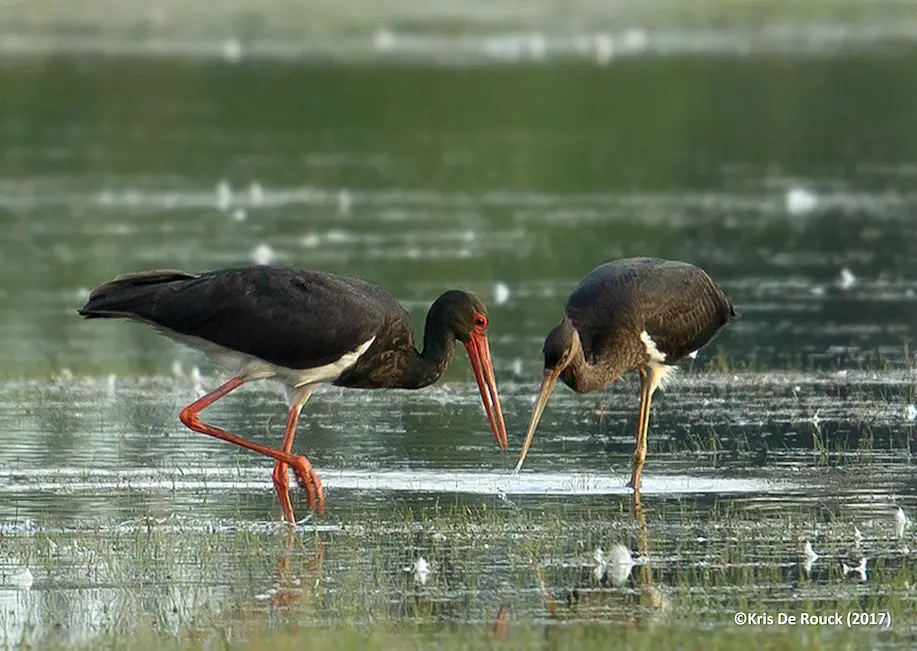
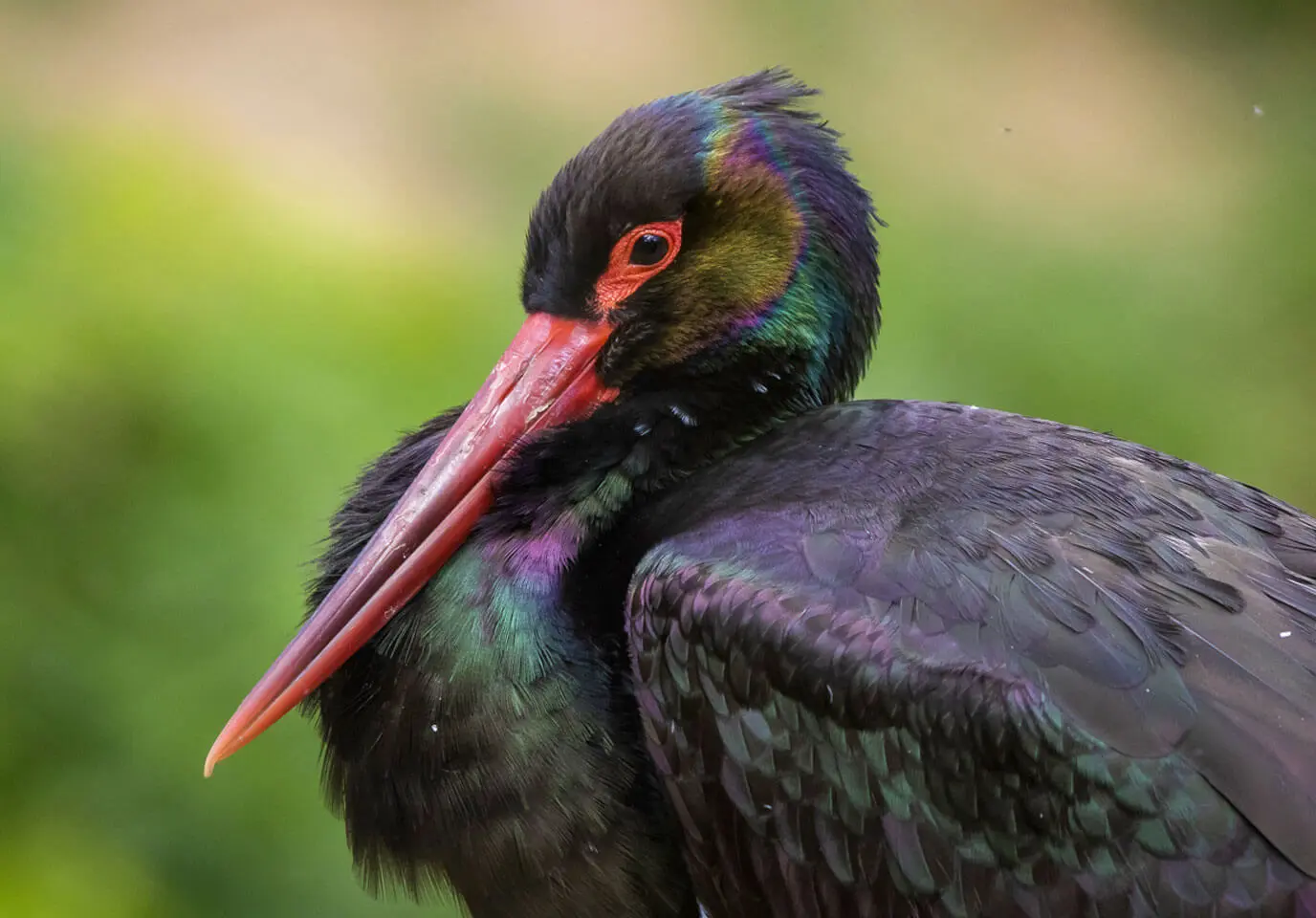
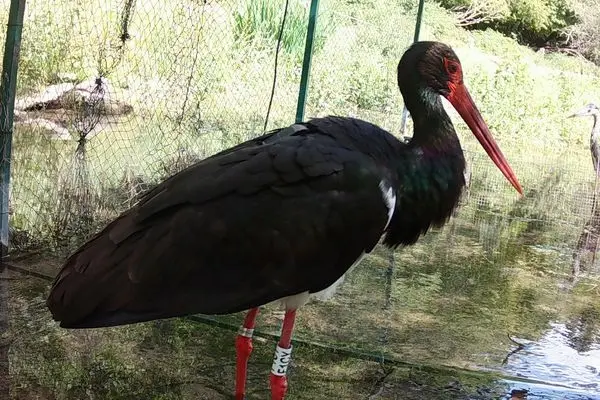
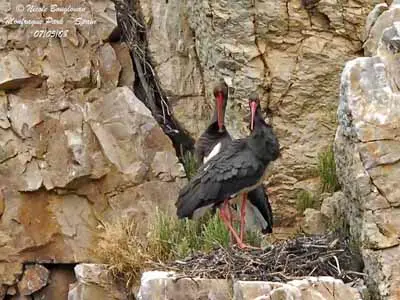
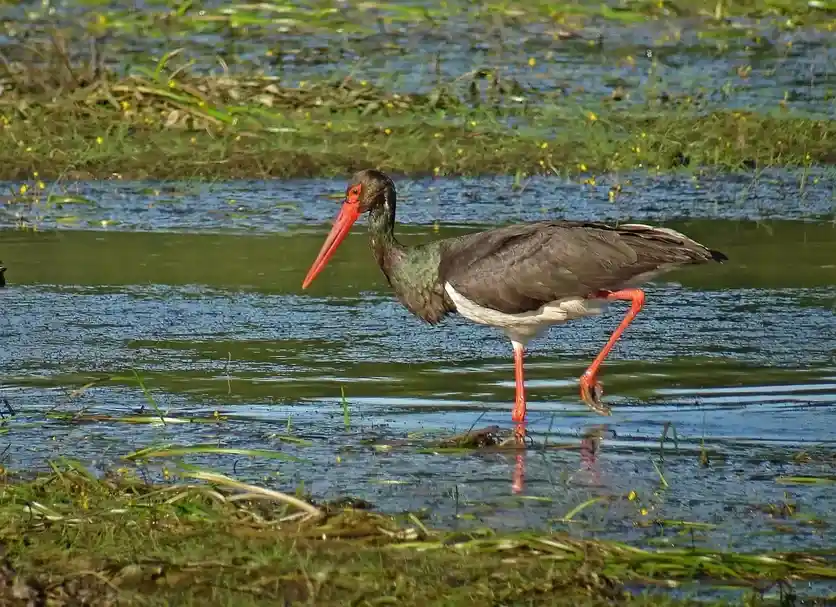
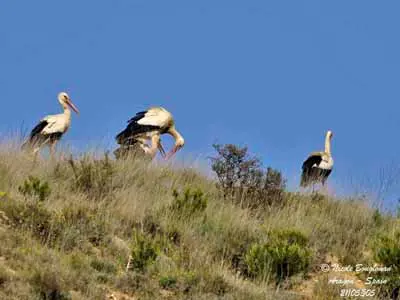
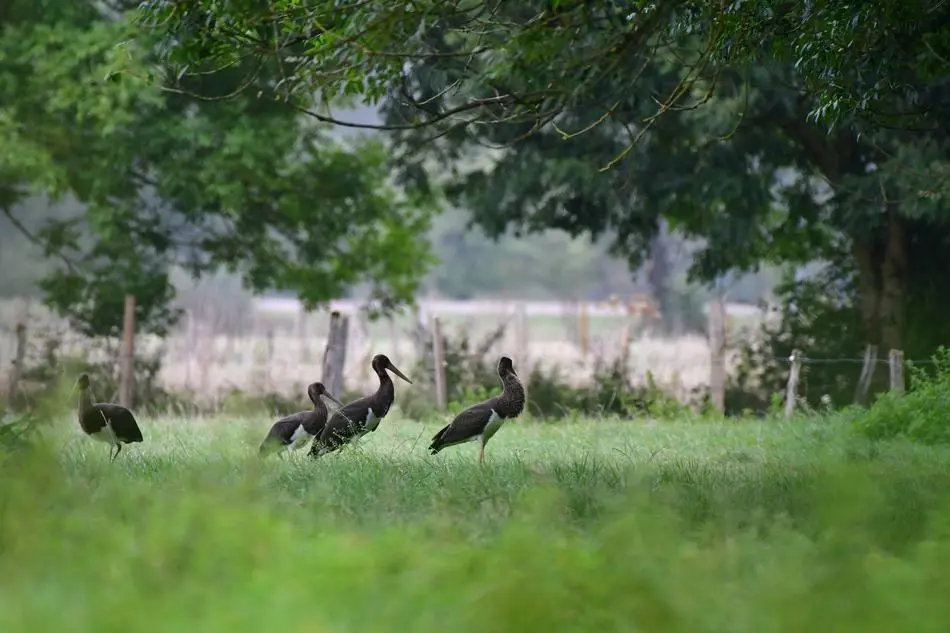
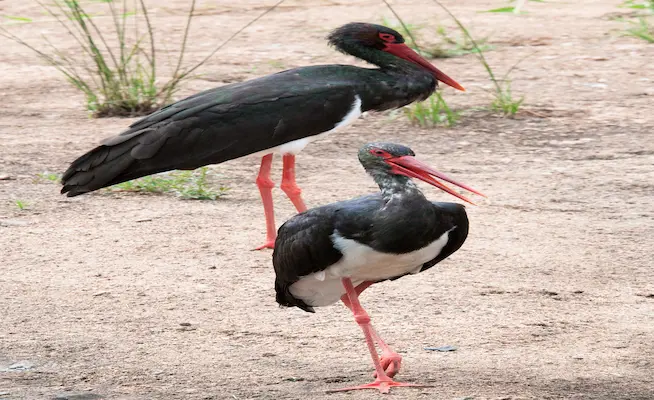
Portraits of Ciconia nigra in its Ardennes habitat: forest streams, old broadleaved high forests, wooded ridges and preserved riparian forests.
Persistent challenges
Despite a solid regulatory framework and a positive population dynamic, several threats still weigh on the black stork in the Semois Valley.
Prolonged droughts reduce the flow of headwater streams, drying out essential fishing areas. Conversely, episodes of extreme precipitation can destroy nests or make the water too murky for sight fishing.
The increase in populations of certain predators (pine marten, raven) can affect breeding success, especially if the nests are made more visible by poorly managed forestry operations nearby.
The growing pressure for the development of outdoor recreation (mountain biking, off-trail hiking, drones) represents a constant challenge for maintaining the quiet zones indispensable to the species.
Frequently Asked Questions
The first confirmed proof of nesting in Wallonia dates back to 1989, after more than a century of absence. This spontaneous return is part of a European recolonization movement driven from Eastern European populations. There was no artificial reintroduction: the species benefited from the improvement in the quality of forest massifs and the implementation of strict protections.
Unlike its cousin the white stork, which nests in open environments and close to humans, the black stork (Ciconia nigra) is extremely discreet. It shuns human presence, nests in the heart of large forest massifs, far from the edges, and requires unpolluted waterways to feed. Its plumage is black with green and purple highlights, with a white belly, a red beak, and red legs.
Belgian studies on 60 nests indicate an average altitude of 439 m, a preferential South-East exposure, and an average distance to the edges of 1,280 m. The black stork chooses solid forks on old oaks or beeches capable of supporting a nest almost 2 m wide. The nests are never installed in the valley bottom but at the level of the upper slope break.
It is a strict protection perimeter established around each occupied nest. Within a 300 m radius, no forestry operations (felling, logging, firewood cutting) are allowed during the breeding season. The critical period runs from mid-March to mid-May (laying and hatching), ideally from early March to late July. A simple human passage can provoke the immediate abandonment of the brood.
No, provided the regulations are respected. Navigation is forbidden when the flow rate at Membre-sur-Semois drops below 2.2 m³/s (red phase): this prevents the trampling of the riverbed and preserves the pools of water where the stork fishes. The schedules (09:30-19:00 in mid-season, 09:30-20:00 in summer) guarantee calm periods at sunrise and sunset. It is strictly forbidden to disembark outside the marked zones: the wild stretches remain free of any human intrusion on the banks.
Four major sites: BE34046 (Semois Basin from Florenville to Auby – migration corridor), BE34057 (Upper Semois Marshes and Heinsch Wood – crucial stream headwaters), BE35038 (Semois Valley from Bouillon to Bohan – heart of nesting), and BE34055 (Breuvanne Stream Valley – alluvial wetlands). All were designated by decree of the Walloon Government in 2016.
The PNVS aims to dedicate at least 10% of the surface of public broadleaved forests to the status of strict reserve (no exploitation or human circulation). It restores the "dark network" (reducing light pollution), the riparian forest, removes physical obstacles for the free movement of fish, and has created more than 30 forest ponds. These measures support the black stork as an "umbrella species".
Its diet is almost exclusively piscivorous, supplemented by amphibians and aquatic insects. It fishes in small, shallow streams, stream headwaters, and forest ponds. The bullhead (Cottus gobio), a fish very sensitive to pollution, is a reliable indicator of the quality of a site for the black stork. A pair can forage up to 12 km around the nest.
In France, the breeding population was estimated between 70 and 90 pairs in 2019. In Wallonia, the population has been slowly progressing since 1989 but remains at a low density – each pair requires a considerable home range (~800 ha in Côte-d'Or). The European trend is moderately but constantly increasing, without ever reaching that of the white stork.
Thanks to the placement of GPS trackers on chicks in the nest, Natagora and the DNF track migration routes and territory use in real time. These studies revealed that young birds do not always accompany their parents and explore vast areas before choosing their nesting site. In 2025, three new individuals were equipped, strengthening the European database on the species.
🖤
Going down the Semois by kayak means sharing the river with the black stork. We respect flow thresholds, schedules, and wild stretches. Nautical base in Vresse-sur-Semois, starting at €18 all-in.
Very good, cheap and very friendly welcome. Thank you, because for my first time kayaking, I love it. I recommend it. See you next time 👍🙂
Contrary to other published opinions, we were very well received, the team is very friendly and the kayak rental is cheaper here than elsewhere. We recommend Kayak Ardenne!
Fantastic campsite, affordable prices and adorable staff!
Top, very friendly and good service. Correct prices.
We stayed 1 night in a tent and did the 11km kayak descent. Helpful and super friendly staff. Perfect organization for arrival on the Semois and reception after the descent. Thanks for everything!
We were able to enjoy this day thanks to the lady at the kayak bar! Without knowing it, we hadn't booked. She found a last minute solution! Top thanks again!
Excellent kayak rental on the Semois. Different routes possible for short or long distance depending on the wish. The staff is very friendly and advises you perfectly!
Magnificent canoe descent (17km), the service is very good, we wait little even at arrival thanks to the driver and his wife. In addition, the small cafe with terrace is very pleasant.