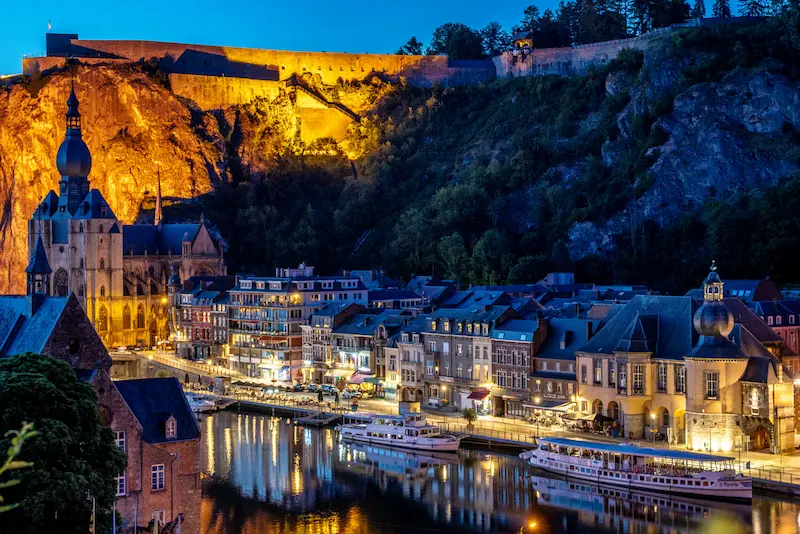
Namur Pearl of the Confluence & Capital of Wallonia
Immerse yourself in the fascinating history of the political capital of Wallonia. Between the majestic limestone fortress of its Citadel, the avant-garde redevelopment of the Grognon, the sweep of its cable car, and the richness of its local terroir, discover a Mosan city of enduring charm.
A Strategic Fortress that became Capital of the Heart
As the official Capital of Wallonia since the historic year of 1986, the city of Namur occupies a geostrategic, political, and cultural position of the first order in Belgium and at the very heart of Western Europe.
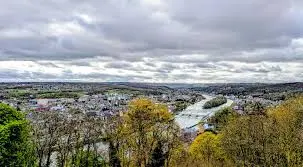
Situated at the spectacular confluence of the Sambre and Meuse, this unique geographic configuration — tracing a rocky promontory in the shape of a "pig\'s snout" that gave the founding district of the Grognon its historical name — has shaped the millenary destiny of the city since Gallo-Roman times. Initially an impregnable military fortress hotly contested by European empires (from the Spanish and Austrians to the troops of Louis XIV and Vauban), Namur is today a vibrant, welcoming city. Here, the preservation of historical heritage articulates in perfect symbose with modern urban innovation.
Visitor amenities, coordinated by the official tourism organ Visit Namur, ensure a smooth, multimodal experience. The city notably deploys an extensive shared bicycle network called « Li Bia Vélo ». This public-private partnership provides over 250 bicycles across 25 strategic stations throughout the city center, Jambes, Salzinnes, and Saint-Servais.
These initiatives, coupled with the construction of the new cyclo-pedestrian footbridge L\'Enjambée (which directly links Jambes to the historical center), reflect a clear institutional commitment to sustainable tourism. Public transport supports this structure excellently: bus lines operated by the TEC (such as line 3 linking the train station to the Citadel) and rail links operated by the SNCB (serving stations in Namur, Jambes, Dave, and Flawinne) ensure easy accessibility for national and international travelers.
For further details on local geography and organization, feel free to consult the official page of the Province of Namur, which represents an excellent semantic resource to plan a comprehensive and unforgettable stay in the ardennese region.
The Historic Citadel
The legendary "Termite Mound of Europe" with 4 km of secret underground galleries, reinforced by Coehoorn and Vauban over centuries.
The Panoramic Cable Car
A spectacular scenic flight connecting the historic old town to the summit of the Citadel in under 7 minutes.
Walloon Folklore & Heritage
The unique stilt-walkers (recognized by UNESCO), the Royal Moncrabeau confrerie, and the lively Fêtes de Wallonie.
The Citadel of Namur: The Termite Mound of Europe
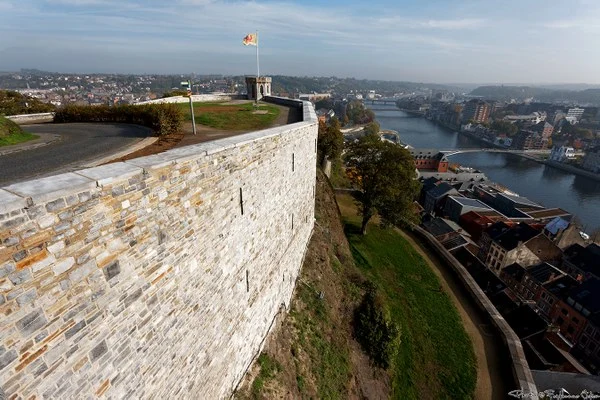
Perched majestically above the confluence on a steep rocky spur, the Citadel of Namur is one of the largest and best-preserved historical fortifications in Europe, reflecting over two thousand years of defensive military history.
Fortified since Roman times, the rocky spur became the seat of power of the Counts of Namur during the Middle Ages. Over the centuries, the fortress was constantly expanded to withstand the latest siege tactics and heavy artillery. Two of the greatest military engineers in history left their mark here: the Dutch engineer Menno van Coehoorn and his legendary French rival Vauban, who redesigned the citadel after a famous siege in 1692 in the service of Louis XIV. The complex was nicknamed by Napoleon Bonaparte as the "termite mound of Europe" due to the massive network of underground tunnels carved deep into the limestone rock.
While climbing to the summit was once a physical challenge, access has been beautifully modernized by the inauguration of the new cable car on May 8, 2021. Crossing the river Sambre from Place Maurice Servais in the pedestrian old town to the Esplanade of the Citadel, this modern cable car developed by POMA offers a quiet, panoramic flight of only 7 minutes.
However, the history of cable transport in Namur was marked by dramatic challenges. As early as 1898, a pioneer funicular railway linked the town to the top near the Grand Hôtel, but ceased operation in 1907 due to high maintenance costs. In 1956, a first aerial cabin cable car was opened and became a true icon, until its emergency closure in 1997 due to a 53-ton rock that threatened to fall. In 2002, an arson attack destroyed the lower station. The reopening in 2021 has definitely healed this urban scar.
At the top, visitors discover the Terra Nova Visitor Center in a former barracks from the Dutch era. It hosts a highly interactive exhibition on the military history of Namur. It is also the starting point for the spectacular guided tour of the Underground Galleries: a 500-meter underground walk enhanced by 3D projections and light effects.
Parfum Guy Delforge: Art and Scent Creation in the Felsen
In the old casemates that once served as powder magazines, the famous local perfumer Guy Delforge set up his prestigious creation workshop in 1990. Here, fine scents mature under ideal, constant temperature conditions deep inside the rocks, protected from light.
Right next to it is La Vieille Forge, a historic military forge that now houses the workshop of ceramic artist Véronique Henri. Visitors can purchase her handcrafted stoneware and terracotta creations, notably her famous sculptures *« les Namureux »* representing stylized couples.
Architecturally, Le Pavillon stands out, designed by the world-famous Namur architect Patrick Genard. This futuristic wooden building was the official Belgian pavilion at the Milan Expo in 2015 and now serves as an exhibition space for digital art and technology.
| Citadel Attraction | Duration | PMR Access | Adult Rate | Highlight |
|---|---|---|---|---|
| Terra Nova Visitor Center | 1h00 | Full | €6.00 | Multilingual audio guides included in the ticket price |
| Underground Galleries | 1h30 | On request (Joëlette) | €14.00 | 3D light projections on the historic rock walls |
| Parfum Guy Delforge | 0h45 | Partial | Free access | Fragrance maturation in the heart of fortress casemates |
| Le Pavillon (Digital) | 1h15 | Full | Varies per expo | Former Belgian pavilion of the Milan Expo 2015 |
The Museums of Namur: Art, Heritage & Subversion
Namur stands out for the modern approach of its cultural institutions. Its museums offer immersive, interactive, and emotional tours that bring history to life.
 Decorative Arts
Les Bateliers (Groesbeeck - de Croix)
Housed in a magnificent 18th-century townhouse from the Enlightenment (Jean-Baptiste Chermanne, 1751), this museum showcases the luxurious lifestyle of the aristocracy. Thanks to a modern narrative layout, historical objects are presented in vivid scenes of daily life. The museum opens onto a geometric French garden.
Discover civic history ➔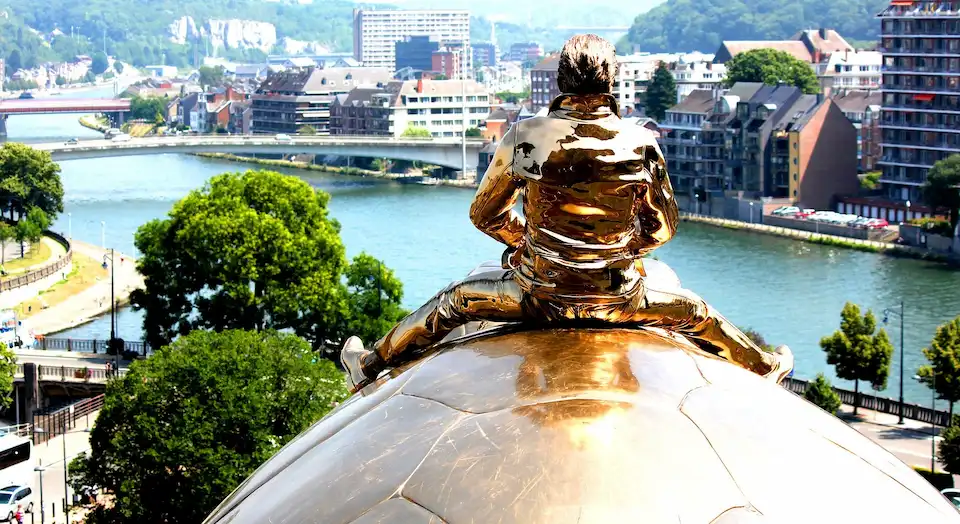 Provocative & Satirical
The Félicien Rops Museum
Dedicated to the provocative work of Félicien Rops (1833-1898), this museum in the old town explores themes of eroticism, death, and social satire. Rops\' collaborations with literary giants such as Baudelaire are central. The museum carries out internationally acclaimed research and digitization projects.
Rops culture guide ➔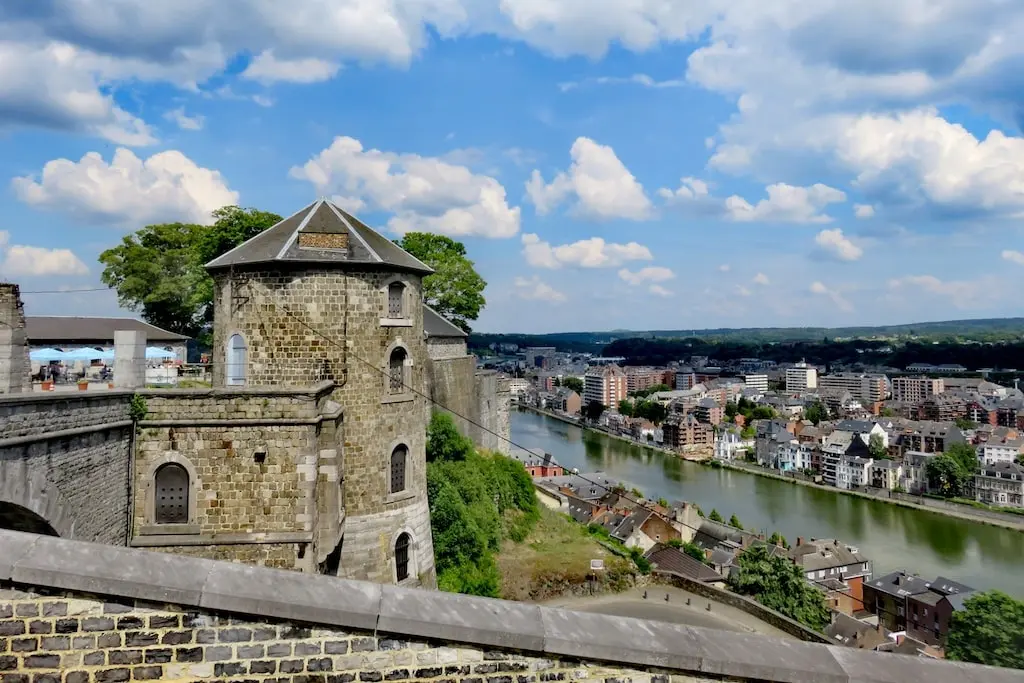 Medieval Art
TreM.a (Museum of Ancient Mosan Art)
Located in the elegant Hôtel de Gaiffier d\'Hestroy (18th c.), the TreM.a houses one of the most significant medieval art collections in Northern Europe. The highlight is the legendary Treasure of Oignies (13th c.), created by Hugo d\'Oignies, which is listed among the seven wonders of Belgium. It also preserves the world\'s largest collection of paintings by Henri Bles, the pioneer of Renaissance landscape painting.
Discover TreM.a collection ➔Just outside the city, in Wépion, the **Strawberry Museum** complements this offer, documenting the rich history of the culture of this red fruit, often referred to as "the red gold of the Meuse".
Architecture along the Meuse: A Stone History Book
Every cobbled street in the old town of Namur tells a story of civic power, baroque splendor of the Counter-Reformation, or modern urban regeneration.
The Meat Hall (Halle al\'Chair) & the UNESCO-Listed Belfry
Standing on the left bank of the Sambre is the former **Vleeshuis** (Halle al\'Chair), a beautiful brick and limestone building erected between 1588 and 1590 under the order of King Philip II of Spain. Designed by Conrad II of Nuremberg and Bastien Sion, it originally centralized the meat market for sanitary reasons. Today, it houses the tourism office ("Visit Namur").
Nearby, the **Belfry of Namur** (also called Tour Saint-Jacques) illustrates a fascinating example of functional reuse. Built in the 14th century as a defense tower for the city wall, it was saved when the walls were demolished. In 1746, it was crowned with a baroque bulbous roof and became the town\'s official civil belfry, and was inscribed on the UNESCO World Heritage List in 1999.
Saint-Loup Church: Baroque Splendor
Erected by the Jesuits between 1621 and 1645 according to plans by Pieter Huyssens, **Saint-Loup Church** is a major masterpiece of counter-reformation baroque architecture in Europe. Its marble columns and finely carved stone vaults famously impressed French poet Charles Baudelaire during his stay in 1866.
The Parliament of Wallonia: Democracy in a Historic Hospice
Facing the Citadel on the historic site of the Grognon, the seat of the **Parliament of Wallonia** occupies the former **Hospice Saint-Gilles**. This large hospital complex from the 13th century was beautifully renovated in 1998, converting the women\'s former dormitory into the plenary chamber of the region\'s representatives.
The Confluence Project & NID
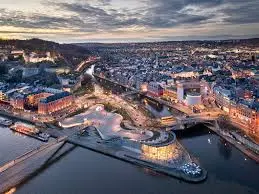
The recent redevelopment of the Grognon has returned the surface space to pedestrians. It includes an underground parking lot with 670 spaces, the footbridge **L\'Enjambée** to Jambes, and the modern **NID** (Namur Intelligente et Durable) building, informing citizens on smart city technologies and sustainable mobility.
Folklore & Living Traditions in Namur
In Namur, folklore is not just a show for tourist postcards, but a living civic passion that unites generations and structures the festive calendar.
The Stilt Combats (UNESCO World Heritage)
The stilt combat (joute sur échasses) in Namur is an athletic and combat-based tradition dating back over 600 years (first recorded on December 8, 1411). It opposes two historical factions: the **Mélans** (yellow and black stilts, representing the old town center) and the **Avresses** (red and white stilts, representing the suburbs and surrounding villages).
This combat follows strict rules: stilt-walkers try to knock their opponents down using shoulder and stilt blocks. The combat takes place annually during the Fêtes de Wallonie on Place Saint-Aubain before thousands of spectators. The winner receives the **Golden Stilt** (Échasse d\'Or). Since 2022, women also participate in their own competition for the **Diamond Stilt**.
The Royale Moncrabeau (The 40 Molons)
Founded in 1843, the Royale Moncrabeau is the oldest philanthropic and folkloric association in Wallonia. Dressed in colorful costumes, the "Molons" play satirical music and sing traditional songs in the Walloon dialect to raise money for charity.
Major Events: Namur en Mai & FolkNam
Namur is well known for its street festivals. The **Namur en Mai** festival (Festival des Arts Forains) transforms the old town in May into a giant open-air theater with over 130 free performances by acrobats, actors, and circuses, attracting massive crowds.
In April, the **FolkNam** association organizes the major **Day of Folklore and Traditions** featuring a festive parade of historical giants, traditional music groups, and local confreries.
Terroir & Gastronomy from Namur
A visit to the Wallonian capital is incomplete without tasting its culinary specialties. The terroir of the province of Namur offers fine, traditional culinary delights.
 Historic Snack
The Avisance of Namur
This savory pastry specialty dates back to the Middle Ages, when pilgrims needed a portable, nutritious meal for their journeys in the Ardennes. They wrapped a pork sausage in dough and baked it. Today, local bakers make the Avisance with golden puff pastry, eaten hot or cold.
Soft Caramel
The Biétrumé of Namur
Created in 1954 by the renowned *Maison des Desserts* in the city center, the **Biétrumé** is the typical soft caramel of Namur. Prepared with fresh cream and butter, it is filled with roasted hazelnuts and almonds. It was named after Jean-Biétrumé Picar (1704-1753), a legendary local jester.
Local Terroir
The Wépion Strawberries & Petits-Gris
The **Wépion Strawberries** benefit from a perfect microclimate on the hillsides of the Meuse and are famous for their intense sweet aroma. Another local standard is the **Petits-Gris** (snails) cooked traditionally with garlic butter, parsley, and white wine — a classic symbol of Walloon art de vivre.
Frequently Asked Questions (FAQ) - Namur
Why is the historical district named the Grognon?
The Grognon, the cradle of Namur, owes its name to its shape resembling a "pig\'s snout" (groin de porc). This spur lies at the confluence of the Meuse and Sambre rivers and was the site of the earliest Roman and medieval settlements.
What is the most famous modern artwork at the Citadel?
It is the monumental gilded bronze sculpture « Searching for Utopia » by the Flemish artist Jan Fabre in 2015. It depicts the artist riding a giant sea turtle, overlooking the Meuse valley.
Which folklore of Namur is recognized by UNESCO?
It is the joutes sur échasses (stilt combats) of Namur, which were inscribed in December 2021 on the UNESCO Representative List of the Intangible Cultural Heritage of Humanity. The tournament is held annually during the Fêtes de Wallonie.
Ready to Navigate in the Heart of the Belgian Ardennes?
After exploring the Walloon capital Namur, we invite you to an unforgettable outdoor adventure by kayak and camping along the most beautiful wild river in the Ardennes: the Semois!