The Ultimate Guide to
20 Ardennes
Specialties

From smoked charcuterie to washed-rind cheeses, and century-old pastries—an encyclopedic exploration of the Ardennes terroir, told by those who bring it to life.

🥩 Charcuterie 🧀 Cheeses 🥐 Pastries 🌿 PGI & PDO 📍 Local Producers

A terroir shaped by forests and seasons

Nestled between the Meuse river and the hills of the Grande Hagne, the Belgian Ardennes has developed, over centuries, an incomparably rich gastronomy. The winter cold, the damp undergrowth, and the generous pastures have shaped a cuisine rooted in necessity: preserving, smoking, fermenting.

Today, these ancestral techniques have been elevated to an art form. Protected Geographical Indications (PGI) and Protected Designations of Origin (PDO) guarantee the authenticity of products that have conquered all of Europe. This guide takes you on a journey to discover the 20 must-try Ardennes specialties.

🌿 4 products under European labels
Ardennes Charcuterie & Cured Meats

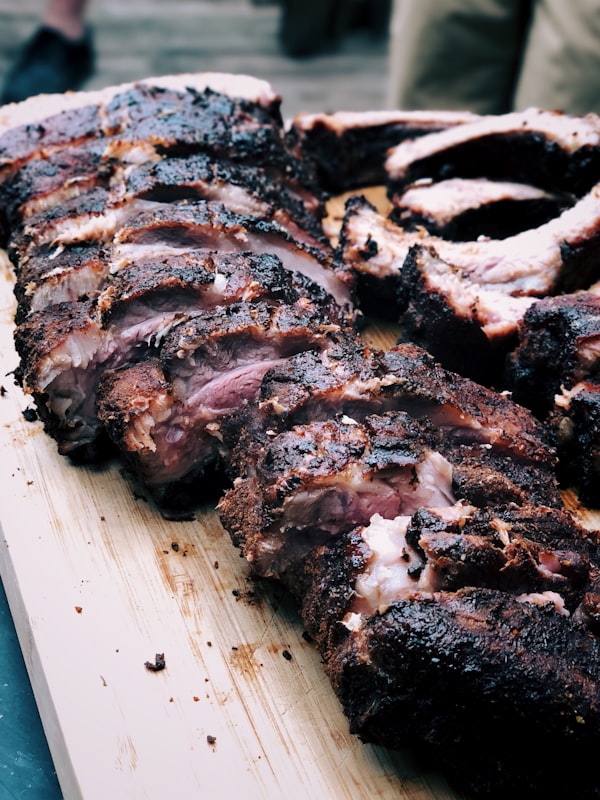
Smoking and curing are the DNA of Ardennes charcuterie. Beech and oak forests provide the wood that gives these cured meats their incomparable aromas. Ardennes Ham reigns supreme, but seven specialties deserve your attention.

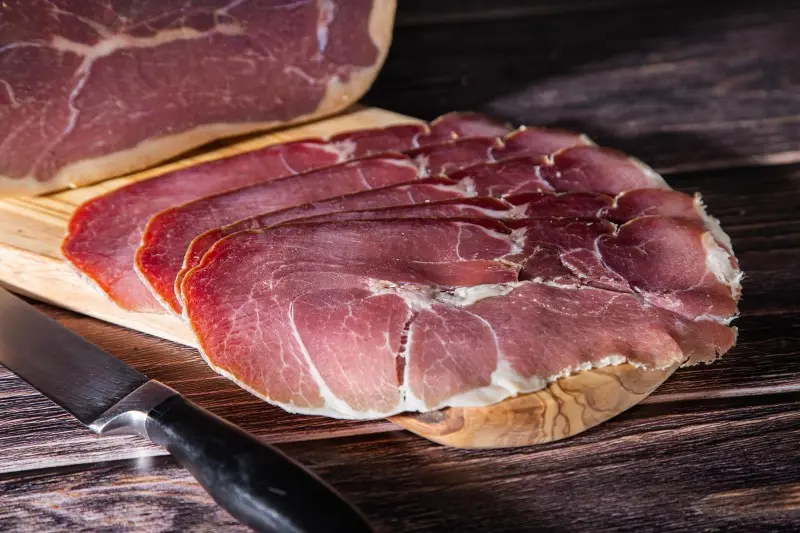
Whole aged Ardennes Ham PGI
No. 1 · European PGI · The Queen of Charcuterie

Ardennes Ham PGI

Dry-cured with coarse sea salt, smoked over Ardennes beechwood, and aged for a minimum of 3 months, Ardennes Ham has enjoyed a PGI since 1996. Its pink, marbled meat exudes a subtle forest scent, slightly smoky, with notes of hazelnut and juniper. It is best enjoyed in thin slices, accompanied by country bread or seasonal melon.

"Each ham carries within it the memory of the Ardennes: the wind on the high plateaus, the slow-smoking beechwood, the artisan's patience." — Jean-Pierre Collignon, Master Butcher in La Roche-en-Ardenne (4th generation)
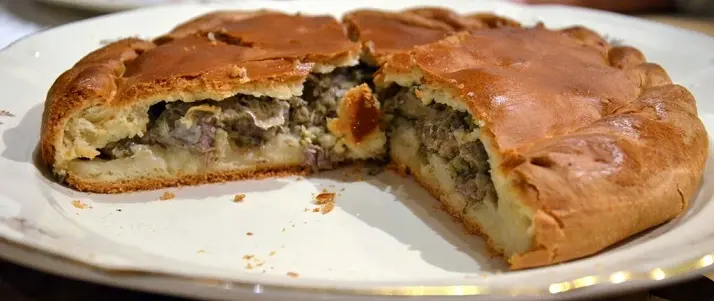
Golden Gaumais pâté in puff pastry Tradition 2

Gaumais Pâté

Gaume Pie · Luxembourg Province

Gaumais Pâté is a golden pie whose puff pastry hides a generous filling of veal and pork marinated with herbs. Unlike the Ardennes terrine pâté, the Gaumais is eaten hot, often on Sundays with family. Its delicate crust and thyme-and-bay-leaf-scented filling make it the emblem of Gaume cuisine.

A Gaumais pâté is prepared the day before to let the meat soak up the aromatics. Rushing has no place here.

— Marie Bodart, Baker & Pastry Chef, Virton
Veal & Pork Puff Pastry Eaten Hot
Grilled artisanal Ardennes pudding Artisanal 3

Ardennes Black & White Pudding

Black pudding & white pudding · Peasant tradition

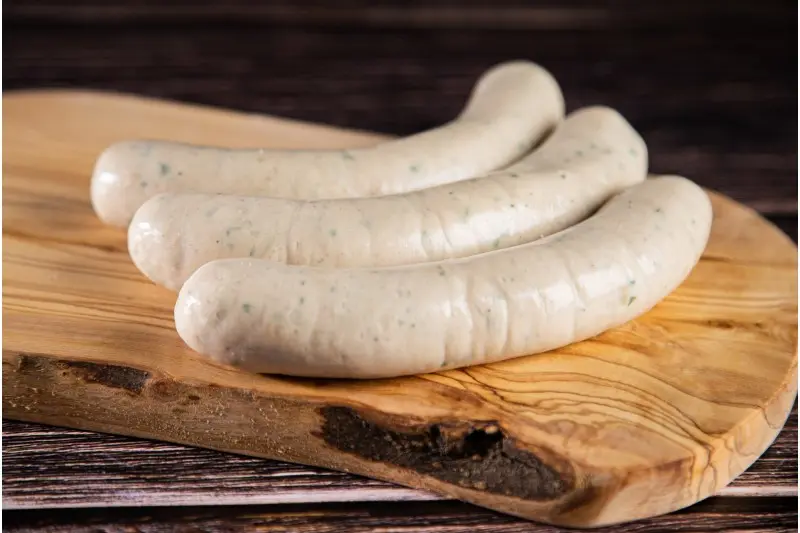
Two puddings dominate the Ardennes tradition: black pudding (boudin noir), made with pork blood, candied onions, and spices, and white pudding (boudin blanc), which is more delicate, made from white meat, eggs, and cream. Both are pan-fried in Ardennes butter and served with sautéed apples. It is a seasonal recipe, traditionally linked to the pig slaughter period.

Black pudding requires fresh blood and generous spices — pepper, allspice, nutmeg. The quality of the pork does the rest.

— Fernand Léonard, Butcher, Bertrix
Season: Autumn-Winter Pan-fried in butter
Thickly sliced smoked Ardennes bacon PGI 4

Smoked Ardennes Bacon

Smoked cured meat · PGI protected

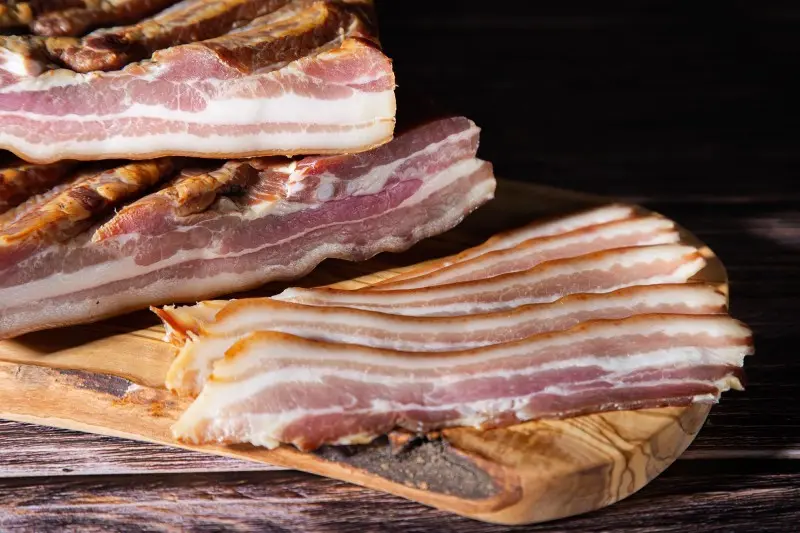
A cousin to the ham, Ardennes bacon comes from the belly or back of the pig, brined and then smoked over beechwood. Sliced thick, it forms the aromatic base of many Ardennes dishes: stews, carbonades, country omelets. Its fat is melt-in-the-mouth, and its intensely smoky taste makes it a product of real character.

Well-smoked bacon is the salt of Ardennes cooking. It is found everywhere, discreet but essential.

— Gaston Piron, Pig Farmer, Nassogne
Beechwood Brined Slow smoking
Ardennes wild boar terrine in a jar Artisanal 5

Wild Boar Terrine

Game pâté · Ardennes forests

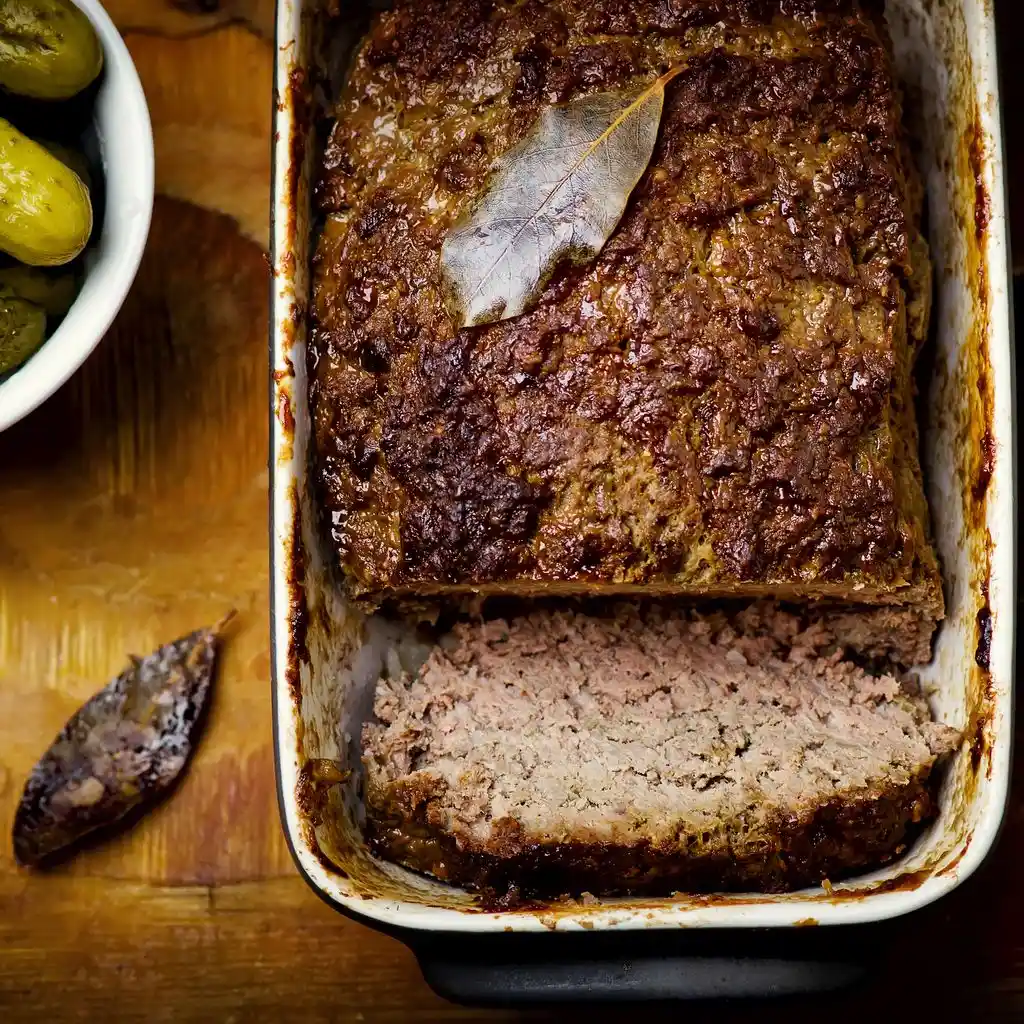
Wild boar is abundant in the Ardennes forests, and its wild, firm, and flavorful meat is perfectly suited for terrines. Marinated for 48 hours in red wine, juniper berries, and bay leaf, the meat is then minced, mixed with bacon, and cooked in a bain-marie. The terrine is served at room temperature on toasted country bread.

A wild boar hunted in the Ardennes is an animal that has grazed on chestnuts and acorns. This richness is found in the terrine.

— André Dubois, Hunter and Canner, Neufchâteau
Wild game Juniper Red wine
Hanging artisanal Ardennes sausages Artisanal 6

Ardennes Sausage

Dry, smoked, or for cooking · Great diversity

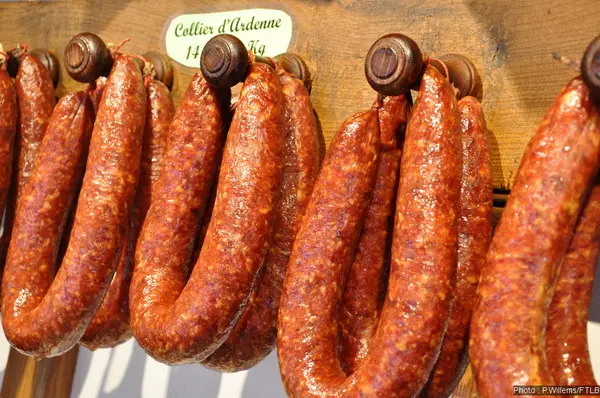
Under the name "Ardennes sausage," there is a large family of charcuterie: dry sausage to nibble as an aperitif, cooking sausage with woodland herbs, or sausage smoked over birch wood. Each butcher has their own closely guarded house recipe, with their own selection of spices and smoking time.

My dry sausage is made of Gaume black pork, dried wild garlic, and Tasmanian pepper. Every batch is different, just like the forest.

— Luc Claes, Master Butcher, Florenville
Dry / Smoked Family recipe
Finely sliced Ardennes fillet on a plate PGI 7

Ardennes Fillet PGI

Smoked pork loin · Protected since 1996

The Ardennes Fillet comes from the pork loin, defatted, salted, flavored, and smoked over beechwood. Leaner than ham, it has a firm texture and a delicate, fragrant, and slightly herbaceous taste. Sliced very thinly, it is the ideal ingredient for a charcuterie platter or refined toasts.

The fillet is the elegance of Ardennes charcuterie. Less rustic than ham, more delicate, perfect for seducing fine palates.

— Sophie Remy, Restaurateur, Bouillon
Pork loin PGI 1996 Thin slice

Ardennes & Walloon Cheeses

The lush pastures of the Ardennes and the Fagnes feed cows that produce rich and fragrant milk. Five cheeses stand out, ranging from fresh and light to full-bodied and aged.

Herve Cheese PDO with an orange rind
No. 8 · European PDO · Herve Plateau

Herve Cheese PDO

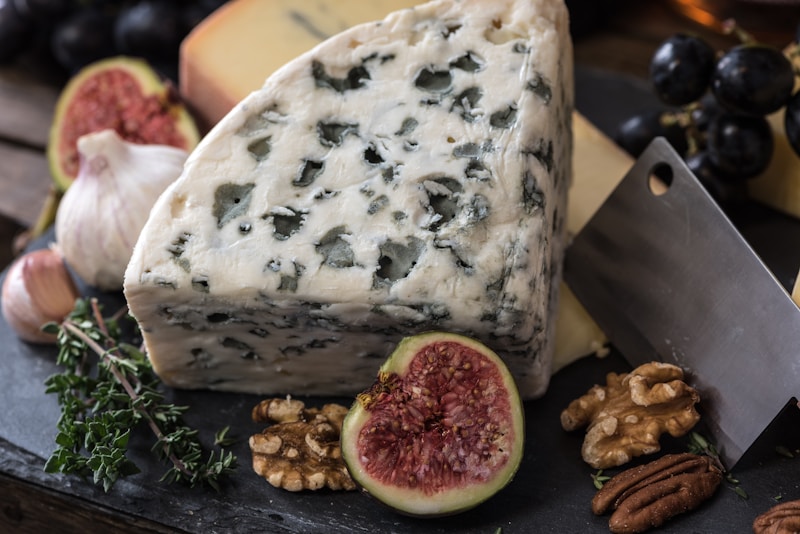
A soft, washed-rind cheese, Herve Cheese comes in small blocks of about 200g. Its orange-red rind, regularly washed in brine, encases a creamy, melting paste whose powerful aroma contrasts with its sweetness in the mouth. It exists in mild (doux), spicy/strong (piquant), and Orval beer-washed versions. It must be made exclusively with raw milk from the Pays de Herve.

"Its smell catches your attention even before you open the box — it's the promise of an explosion of flavors in the mouth. That's the authentic Herve." — Alphonse Fonteneau, Cheese Ager, Herve (3rd generation)
Belgian Maquée fresh cheese in a bowl Rural tradition 9

Ardennes Maquée

Fresh cheese · Simple tasting

Maquée is the fresh, white cheese of the Ardennes, produced on farms for centuries. Slightly tangy, it is eaten plain on buttered bread, garnished with chives and a twist of black pepper, or sweetened with brown sugar. It is the key ingredient in the tarte à l'maquée, a typically Walloon fresh cheese tart.

It's the cheese of childhood. Everyone in the Ardennes remembers having a maquée sandwich for breakfast at their grandmother's house.

— Cécile Bodart, Dairy Farmer, Tenneville
Fresh cheese Cow's milk Plain or sweet
Ardennes cheese ball Rare artisanal 10

Boulette de Romedenne

Kneaded Ardennes cheese · Namur Province

A rare, characterful artisanal cheese, Boulette de Romedenne is made from drained maquée, kneaded with salt and tarragon, then rolled into a ball and aged for a few weeks. Its texture is sticky, and its taste is full-bodied and herbaceous. It is best enjoyed with a glass of dark Ardennes beer and good rye bread.

Every ball is kneaded by hand — you have to feel the texture, not just time it. It's a know-how that cannot be industrialized.

— Paul Degrange, Last remaining producer, Philippeville
Tarragon Aged Rye bread
Vieux Chimay cheese wheel Abbey 11

Vieux-Chimay

Abbey cheese · Aged minimum 6 weeks

Produced near Scourmont Abbey (where Chimay beer originates), Vieux-Chimay is a pressed cheese washed with Trappist beer. Aged for at least 6 weeks, it develops aromas of the cellar, yeast, and hazelnut. Its amber rind and melting heart make it a remarkable cheeseboard addition, often served with walnuts and Fagnes honey.

Chimay beer and its cheese are an obvious gustatory match. One was born to accompany the other — and vice versa.

— Father Ignace, Monk and Cheesemaker, Scourmont Abbey
Trappist beer 6 wks aged Pressed cheese
Fagnes Cheese in its packaging High Fens (Hautes Fagnes) 12

Fagnes Cheese

Semi-firm cheese · Peat bog terroir

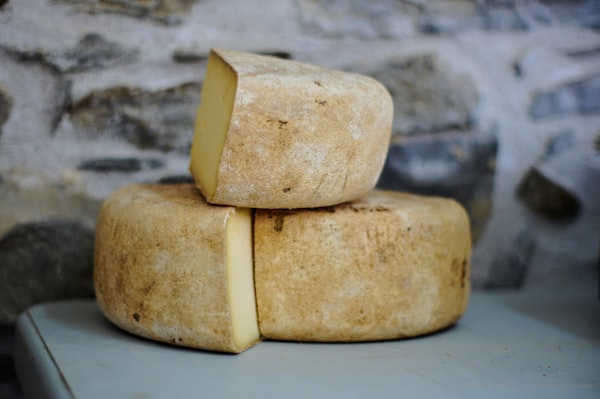
Made from the milk of cows grazing on the high plateaus of the Hautes Fagnes, this semi-firm cheese with a natural rind reflects the unique minerality of this peaty terroir. Milder than Herve, it has milky, slightly floral notes that evolve into mushroom aromas as it ages. It is well-suited for an Ardennes raclette.

The Fagnes is a landscape that feels like the end of the world. Our cows ruminate on this mysticism, and it ends up in the cheese.

— Henriette Gilles, Dairy Farmer, Malmedy
High Fens Semi-firm Raclette

Ardennes Pastries & Sweets

Beet sugar, forest honey, wheat flour, and spices from the Spice Route have forged an exceptional pastry tradition. Five sweet creations symbolize Ardennes genius.

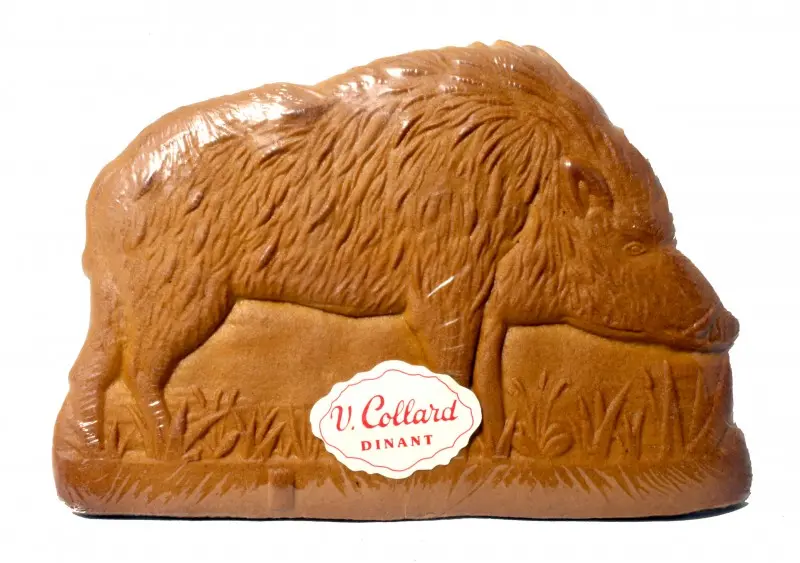
Couques de Dinant sculpted in colorful wooden molds
No. 13 · Medieval Heritage · City of Dinant

Couque de Dinant

The Couque de Dinant is an edible sculpture: a hard pastry made entirely of flour and honey, with no fat, baked in carved wooden molds representing animals, Napoleon, the Dinant Citadel, or religious scenes. Hard as a rock, it is meant to be nibbled on or kept as a work of art. Its production dates back to the Middle Ages, and the oldest molds have become true collector's items.

"The couque is the Art of Dinant. Our molds date back to 1850. Every shape tells a story about the city or its inhabitants." — Robert Jacobs, Master Couquier, Maison Jacobs, Dinant (5th generation)
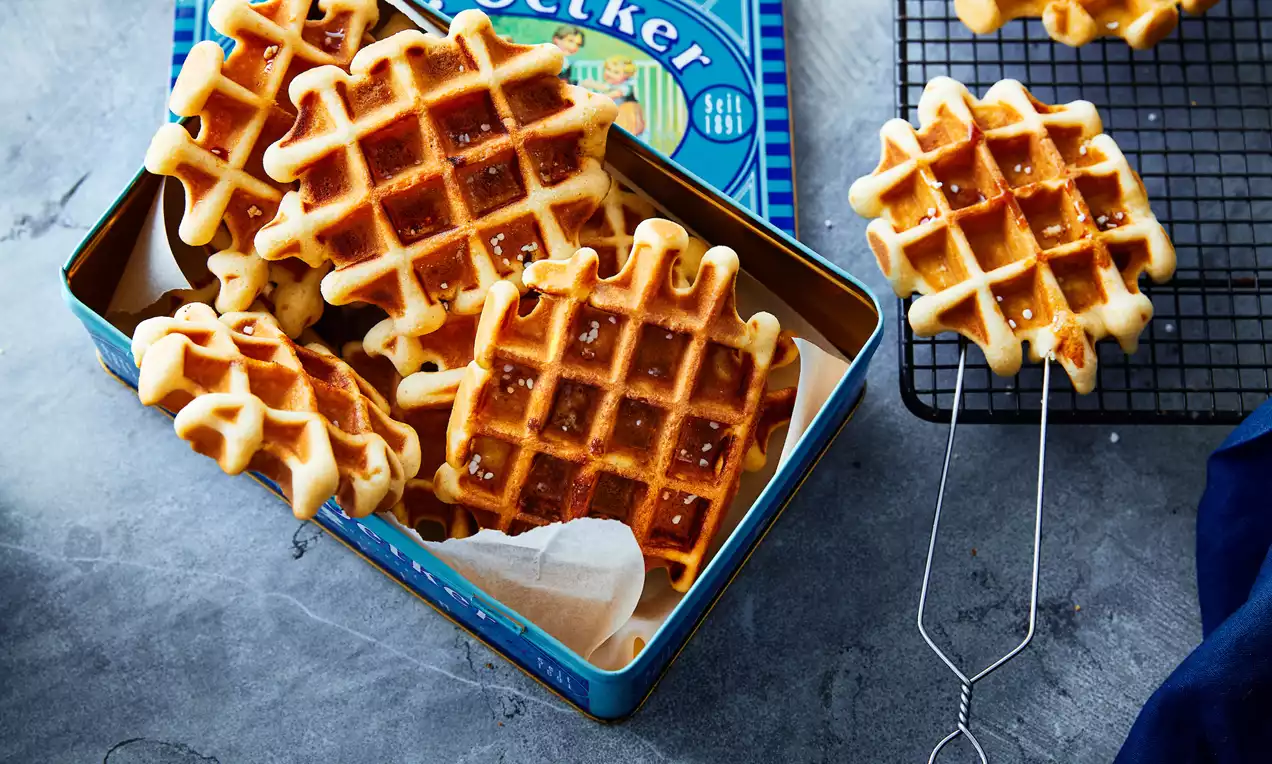
Liège waffle with caramelized pearl sugar Tradition 14

Liège Waffle

Brioche dough · Pearl sugar

The Liège Waffle is radically different from the Brussels waffle: a yeast dough rich in butter and eggs, sprinkled with pearl sugar that caramelizes upon contact with the hot iron. Dense, soft in the center, crispy on the edges, and melting thanks to the melted sugar — it is eaten plain, without whipped cream or frills. Its birth dates back to the 18th century in the kitchens of the Prince-Bishop of Liège.

Pearl sugar is the secret. It doesn't melt completely — it caramelizes in pockets. That crunch makes all the difference.

— Isabelle Pirard, Artisanal Waffle Maker, La Batte Market, Liège
Pearl sugar Brioche dough Eaten plain
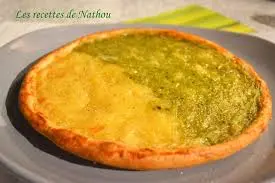
Tarte al djote with herbs and fresh cheese Namur Specialty 15

Tarte al djote

Savory cheese tart · Fosses-la-Ville specialty

The Tarte al djote ("tarte à la joutte" in Walloon, where "joutte" means garden herbs) is an open tart filled with Swiss chard (joutte), local fresh cheese, eggs, and onions. Its golden crust and creamy green filling make it a unique dish, somewhere between a savory tart and a quiche. It is the culinary emblem of the town of Fosses-la-Ville in the Namur province.

Joutte is a simple plant — chard. But combined with our local fresh cheese, it becomes something extraordinary.

— Joëlle Namèche, Baker, Fosses-la-Ville
Swiss chard Fresh cheese Walloon
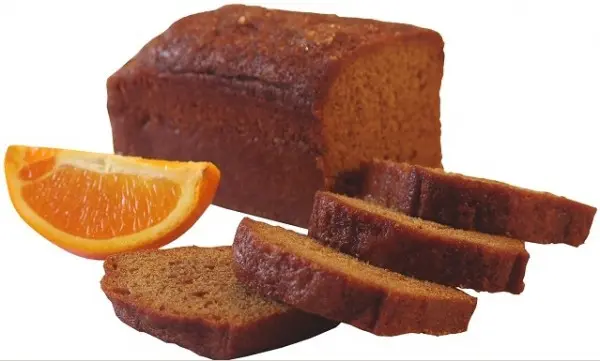
Sliced Ardennes gingerbread with honey Traditional 16

Ardennes Gingerbread

Honey, cinnamon, anise · Winter specialty

Dense and fragrant, Ardennes gingerbread is made with rye, local honey, cinnamon, green anise, and nutmeg. Its tight crumb and slightly crispy crust set it apart from industrial versions. It is enjoyed plain for breakfast, spread with salted butter, or accompanied by a glass of Peket (Liège gin). The version from Marche-en-Famenne is particularly renowned.

Gingerbread is the scent of Christmas in any season. The Ardennes honey we put in it — it comes from lindens, Fagnes blueberries, and buckwheat.

— Bernard Collin, Master Baker, Marche-en-Famenne
Local honey Rye Warm spices
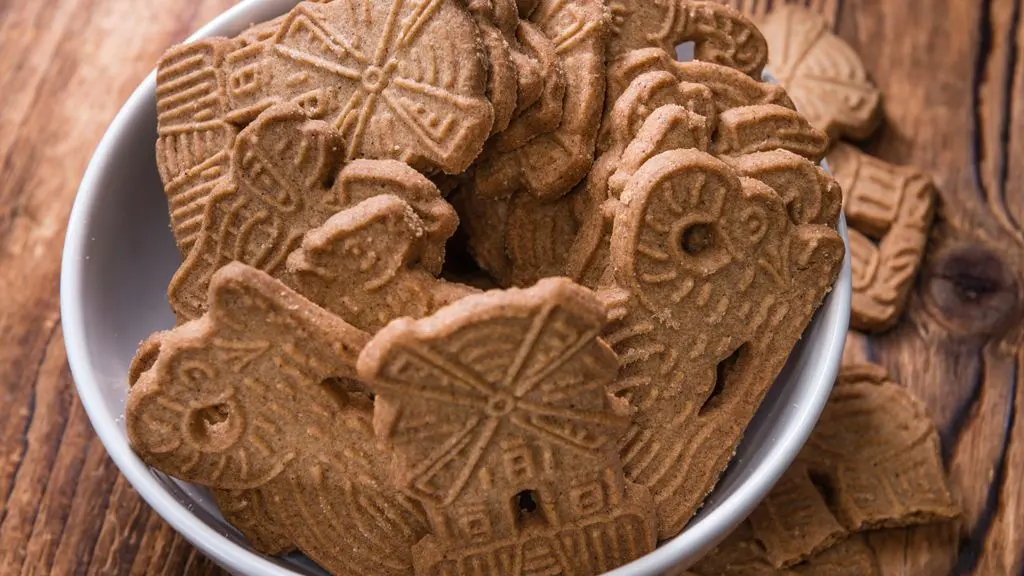
Artisanal Belgian Speculoos in a wooden mold PGI since 2011 17

Belgian Speculoos

Spiced biscuit · Cinnamon & brown sugar

Speculoos is the Belgian national biscuit par excellence. Crunchy, slightly sweetened with brown sugar, and flavored with cinnamon, cardamom, and nutmeg, it comes in a thin, crispy version (like Lotus) or a thick, soft version (artisanal). Artisanal Ardennes versions often add local honey to the dough for unmatched aromatic depth.

A good artisanal speculoos is all about balance: crunchy without being hard, sweet without being cloying, spicy without masking the brown sugar.

— Nathalie Renard, Confectioner-Biscuit Maker, Namur
Brown sugar Cinnamon Cardamom

Drinks, Honeys & Condiments

To complete the Ardennes table, three liquid or condiment products are essential: a world-renowned Trappist beer, an exceptional honey, and a multi-purpose syrup.

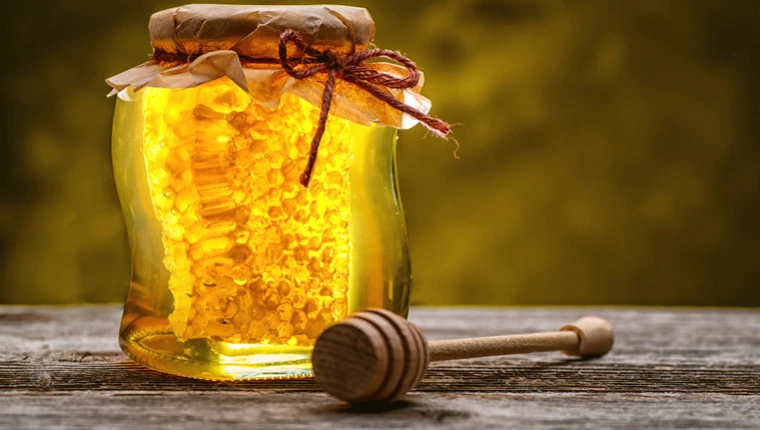
Golden Ardennes honey jar with honeycomb Beekeeping 18

Ardennes Honey

Polyfloral & heather · Forest freshness

Ardennes bees forage on heather, linden, white clover, and wildflowers of the Hautes Fagnes. Two honeys dominate: heather honey, dense, gelatinous, and highly fragrant, and Ardennes wildflower honey, which is more fluid and complex. Both are used in gingerbread, game marinades, and artisanal vinaigrettes.

Our hives are placed on the edge of the Hautes Fagnes, right where the heather explodes into bloom in August. The resulting honey is incomparable — dense, amber, with an undertone of pine resin.

— Victor Gilles, Beekeeper, Vielsalm
Heather Linden Unpasteurized
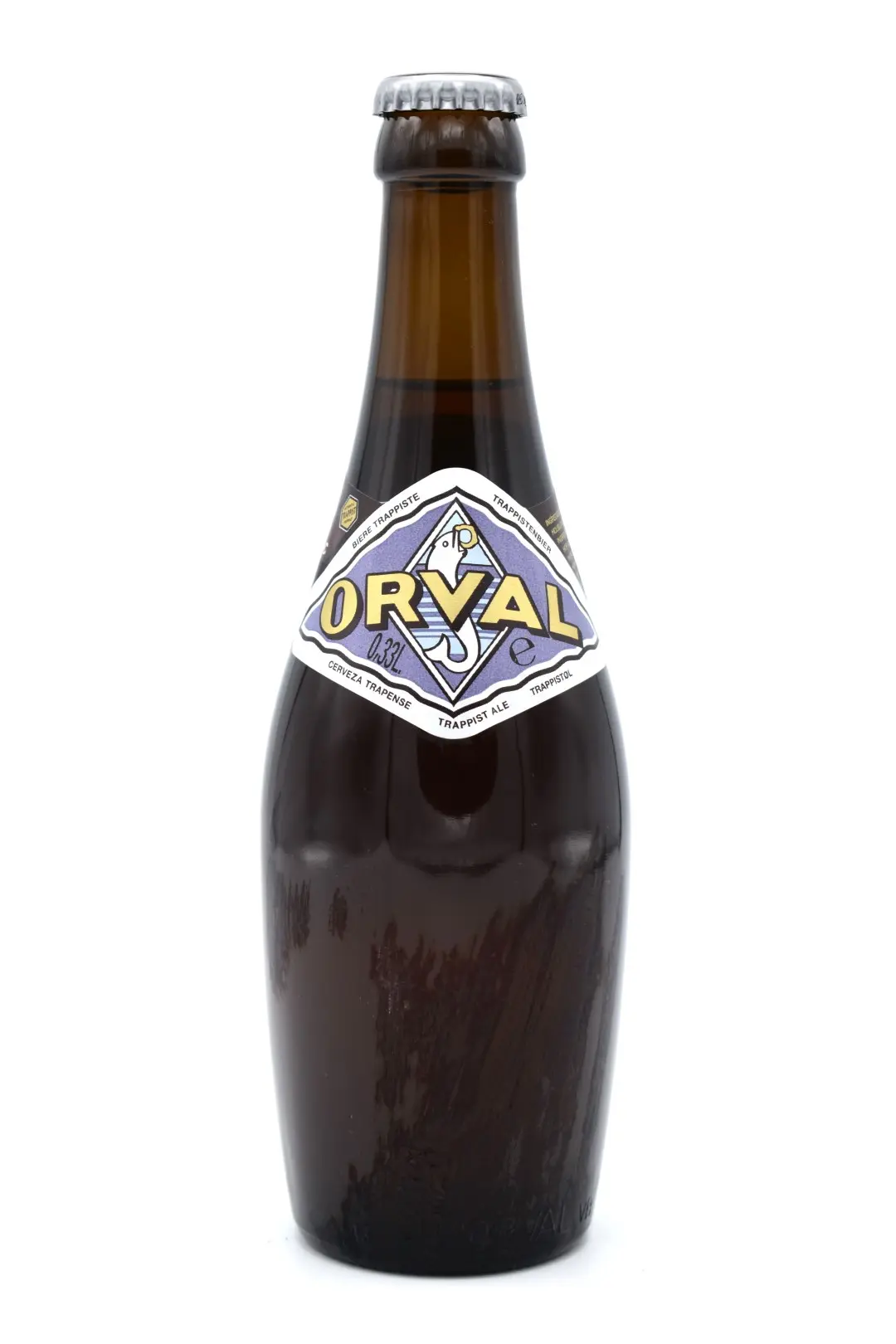
Glass of amber Orval Trappist beer with bottle
No. 19 · Trappist Beer · Orval Abbey, Gaume

Orval Trappist Beer

Produced by the Cistercian monks of Notre-Dame d'Orval Abbey since 1931, Orval beer is unique in the world: brewed with cold-added hops (dry hopping) and re-fermented in the bottle with Brettanomyces (wild yeast), it develops absolutely unique leathery, fruity, and spicy aromas over the months. At 6.2%, it is considered one of the most complex beers in the world. Profits from its sale fund the abbey's upkeep.

"Orval ages like a fine wine. At 1 year, it's a beer. At 3 years, it's a masterpiece. At 10 years, it's a mystical experience." — Brother Thomas, Monk Brewer, Notre-Dame d'Orval Abbey, Villers-devant-Orval
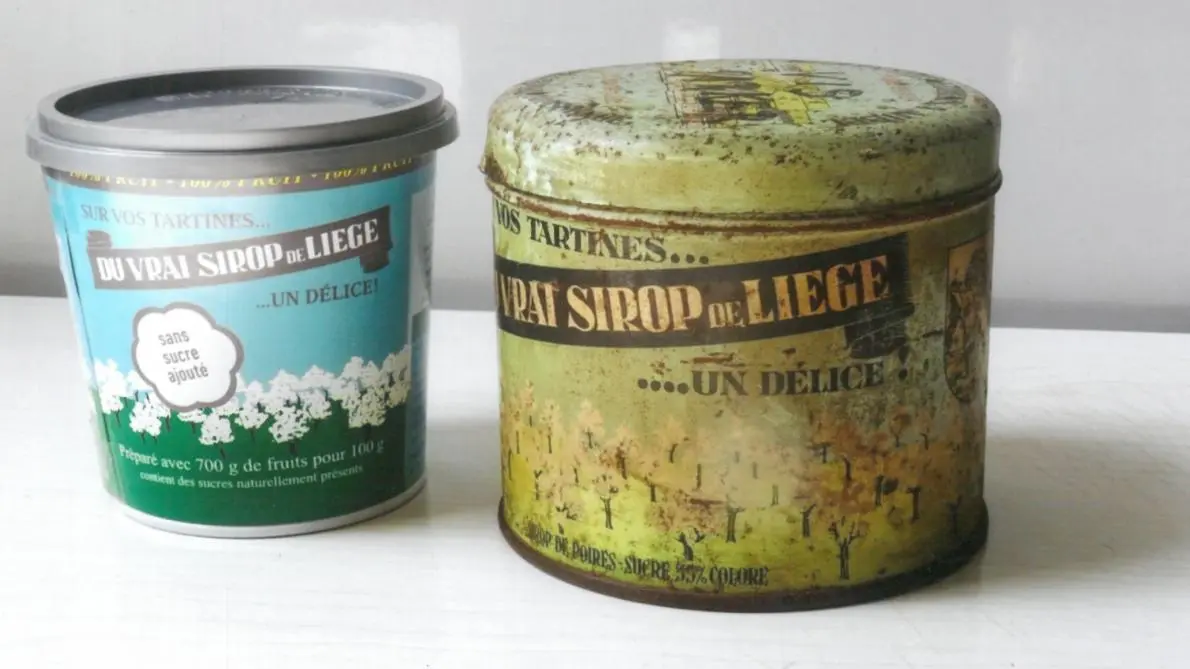
Liège syrup on a slice of bread PGI 20

Liège Syrup

Cooked fruit spread · Liège tradition

Liège Syrup, often called pear syrup, is a glossy black jam obtained by the very long cooking of pears (and sometimes apples and dates) with no added sugar or preservatives. The prolonged reduction concentrates the natural sugars and produces a smooth, deep, and slightly tangy paste. It is spread on bread, used as a marinade for game, and used to garnish the famous boulets à la liégeoise (Liège meatballs).

The syrup cooks for a minimum of six to eight hours. You have to watch, stir, and wait. You can't cheat time — that's what makes the quality.

— Christiane Lejeune, Syrup Maker, Aubel
No added sugar Pears & apples Slow cooking

The Voices of the Ardennes Terroir

Ardennes specialties aren't just products — they are biographies. Behind every smoked sausage, aged cheese, or golden waffle is an artisan whose expertise spans generations. We give them the floor.

Jean-Pierre Collignon
Master Butcher · 4th generation

"Our beechwood smoker has been running since 1898. We don't smoke with pellets here — it's wood from our forests, cut in October."
La Roche-en-Ardenne

Alphonse Fonteneau
Cheese Ager · Herve PDO

"A spicy Herve must sting your eyes when you open the box. If it doesn't sting, it means it's missing a few days in the cellar."
Herve, Pays de Herve

Robert Jacobs
Master Couquier · 5th generation

"Our pear wood couque molds... some date back to 1850. The wood holds the memory of 170 years of baking. You shouldn't wash them — just brush them."
Dinant, Namur Province

Victor Gilles
Certified organic beekeeper

"In August in the Fagnes, the entire ground turns purple with heather in bloom. Our bees work 20 hours a day. It's the most demanding honey to produce."
Vielsalm, Hautes Fagnes

Father Ignace
Monk Brewer · Scourmont Abbey

"The Brettanomyces in the Orval bottle works for months after you buy it. Each beer continues to evolve in your cellar."
Scourmont Abbey, Chimay

Isabelle Pirard
Artisanal Waffle Maker

"I've been making my Liège waffles for 30 years on the same iron. My oven has no thermostat — I can hear when the waffle is ready by the sound it makes."
La Batte Market, Liège

Frequently Asked Questions about Ardennes Specialties

Ardennes Ham has held a Protected Geographical Indication (PGI) since 1996. It must be produced, processed, and prepared in the Belgian Ardennes (provinces of Luxembourg, Namur, and Liège). Its uniqueness lies in an air-drying and beechwood smoking process, followed by a minimum aging of 3 months. Its meat is firmer and its taste smokier than Italian (Parma) or Spanish (Serrano) hams, which are never smoked.
The main cheeses associated with the Ardennes and Wallonia are Herve Cheese PDO (washed rind, intense), Maquée (fresh cheese, mild), Boulette de Romedenne (aged, full-bodied), Vieux-Chimay (washed with Trappist beer), and Fagnes Cheese (semi-firm, mineral). All are made from the milk of cows grazing in the Ardennes and Walloon pastures.
Head to the local markets in Ardennes towns: Bouillon (Saturday mornings), La Roche-en-Ardenne (Sunday mornings in season), Bastogne (Place MacAuliffe, Fridays), and Malmedy. Artisanal farms offer direct sales — look for "Vente à la ferme" (Farm Sales) signs on country roads. La Ferme de Verlaine near Libramont and the La Batte Market in Liège (Sunday mornings) are also excellent choices.
The Couque de Dinant is made entirely of flour and honey, with no fat — which makes it extremely hard. It is sculpted in wooden molds and can be kept for months. Speculoos, on the other hand, is a crumbly biscuit based on flour, butter, brown sugar, and spices (cinnamon, cardamom). One is an edible sculpture, the other is a biscuit to bite into.
Yes, absolutely. Notre-Dame d'Orval Abbey, in Gaume (Belgian Luxembourg province), is a Trappist Cistercian abbey inhabited by contemplative monks. Since 1931, an artisanal brewery has been active there, managed by professionals under the supervision of the monks. The profits from the sale of Orval beer and cheese entirely fund the life of the monastic community and the restoration work on the ruined abbey.

Come Taste the Ardennes by Kayak

The best way to understand a terroir is to experience it. Kayak down the Semois, pass through the villages where these specialties were born, and return with bags full of authentic flavors.

🚣 Book my kayak trip