Jean-Luc Demaret G
« A perfect family day on the Semois. The welcome at Kayak Semois Ardenne is warm, the equipment is spotless (the kayaks are modern and clean), and the free shuttle system is superbly organised. A must-visit in the Ardennes! »
80 meters of ephemeral woven branches. 4 woods with precise mechanical properties. An oral transmission from master to apprentice for generations. The structure that the 2021 flood failed to destroy — and the most photographed site in the Namur Ardennes.
Ephemeral Plant Engineering · European Rarity
The Pont de Claies of Laforêt is one of the last remnants of a river crossing technique once common in Europe, but which has now become an absolute rarity. Its ephemeral aspect — dismantled each autumn, reassembled each summer — is seen not as a weakness, but as a profound philosophy.
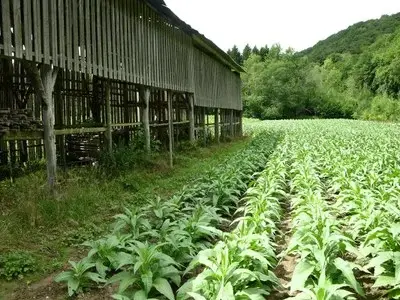
Originally, it allowed tobacco planters to quickly access fertile lands on the other side of the river without bypassing the Semois via steep paths. This practical agricultural necessity generated a plant engineering solution that became a cultural tradition, an emblem of the National Park, and the most photographed site in the Namur Ardennes.
"By not physically resisting the river during the winter floods, the bridge adopts an approach of sustainability. It is an ancient intelligence."
Visual Documentation
🌿 Secular Tradition · Precise Mechanical Properties
The choice of materials is not arbitrary. Each wood meets a specific mechanical requirement, identified and transmitted orally from generation to generation. It's the combination of these 4 woods that makes the bridge solid, flexible, and capable of enduring through the decades.
Trestles (pillars)
Chosen for its exceptional resistance in wet environments. Its natural tannins act as a biological anti-rot agent, allowing the pillars driven into the rocky bed of the Semois to withstand permanent immersion throughout the season of use.
Key property: Resistance to water and biological degradation
Trestles (pillars)
Complementary to oak, beech is used for its density and stability that it brings to the pillar structure. The oak-beech pairing offers dual mechanical qualities: chemical resistance on one side, physical robustness on the other.
Key property: Density and resistance to vertical compression
Hurdle frames + stringers
Hornbeam is the hardest wood in temperate Europe — superior to oak in hardness. Capable of supporting the continuous and repeated passage of walkers throughout the season without significant bending or wear. It ensures the structural integrity of the walkable surface.
Key property: Exceptional hardness – resistance to abrasion and fatigue
Weaving of the mats
The premier wood for weaving. The young green branches of hazel have a rare flexibility that allows for dense, tight intertwining. After drying, the structure develops a unique property: it becomes simultaneously rigid and elastic — absorbing shocks without breaking.
Key property: Flexibility + post-drying rigidity – a rare mechanical combination
🔨 Oral Transmission · Robert Dinant & Claude Delosse
Monitor the Semois water level
Assembly begins as soon as the river is low enough — usually in June. Hydrographic monitoring is crucial: too much water would make the work impossible. Check the real-time level on our site before planning your visit.
Plant the oak-beech trestles
The pillars are driven into the rocky bed. Oak provides resistance to immersion (natural tannins), beech brings density and stability. This phase is the most physically demanding.
Place the hornbeam frames and stringers
The horizontal framework is made of hornbeam, the hardest wood in temperate Europe. It must bear the accumulation of dynamic loads from walkers throughout the season.
Weave the hazel mats
The young green branches of hazel are tightly intertwined in the frames. Their natural flexibility when fresh allows for dense weaving. Drying then transforms the structure into a material that is both rigid and elastic.
Lay the 75 to 85 hurdles on the pillars
The pre-woven panels stored in cellars are placed successively on the trestles. The complete assembly of the 80-meter structure takes about 1.5 days thanks to total mastery of the techniques.
Autumn dismantling – controlled storage in cellars
Before the winter floods, each hurdle is removed and stored in the cellars of the Tourist Office. Humidity is carefully controlled: too dry = brittle branches during the next reassembly; too wet = rotting of the hazel.
It is thanks to their expertise and the unbroken chain from master to apprentice that the know-how of the Pont de Claies has crossed generations to reach us today.
During winter, the hurdles are stored in the cellars of the Vresse-sur-Semois Tourist Office. Humidity control is critical: neither too dry (the hazel branches would become brittle) nor too wet (risk of rot). A storage expertise just as precise as the construction itself.
🌊 July 2021 · Resilience Test · National Park Emblem
During the historic flood of July 2021, one of the most severe the Semois has seen in decades, the safety system of the Pont de Claies allowed the structure to split into two sections without being entirely destroyed. The integrity of the hurdles and trestles was preserved.
This counter-intuitive result illustrates the philosophy of the structure: by not resisting the river but adapting to it, the bridge survives where a rigid structure would have been swept away. The Semois Valley National Park has made it one of its major emblems for this exact reason.
📸 Viral Attraction · Namur Ardennes
The bridge's woven geometric structure and its ephemeral nature make it a unique photographic subject. People know it can only be seen a few months out of the year. Its crossing over the Semois, with reflections in the water and the Ardennes forest in the background, creates naturally photogenic compositions.
Tourism managers capitalize on this digital visibility by integrating strategic "photo spots" along the hiking trails. From a kayak, on the Alle→Vresse route, paddlers cross it while navigating, creating a unique perspective from the river itself.
🌙 Ardennes Folklore · Walk of Legends
The Walk of Legends (2 km, blue cross, from Sainte-Agathe church) immerses walkers in the imaginary Ardennes through in situ sculptures of characters from local folklore. These stories illustrate the deep and ancestral bond of the Semois inhabitants with their forest.
Mischievous and playful little beings of the Ardennes forests. Legend has it they live in old tree hollows and shale rock crevices. Benevolent towards peasants who respected the forest, they would sometimes help those in distress — repairing tools at night, guarding herds — in exchange for food left near tree stumps.
A mysterious and ambiguous guardian of places. She appears near Semois water sources on moonless nights. A protector of innocent souls according to some tales, threatening to lost travelers according to others. Her white silhouette gliding above the water has fed villagers' imagination for centuries.
An aquatic character with a long metal hook, a figure both terrifying and pedagogical. Families invoked him to keep children away from the dangerous banks of the Semois: "If you get too close, Grandpa Hook will catch you!" The Ardennes equivalent of the river bogeyman, he likely saved many children's lives.
A European archetype adapted to the Ardennes tradition. The Wild Hunter roams the deep forests at night leading a ghost pack. His presence announces a storm or misfortune for those who see him. He symbolizes the untamable power of wild nature and the respect owed to the forest.
A hybrid creature from Laforêt's local folklore, half-human, half-goat. Guardian of the boundaries between the world of men and that of forest spirits. Encountering him is a sign of passing into a space that doesn't belong to the living. Illustrates the popular spirituality of rural communities facing the mysteries of the Ardennes forest.
🥾 2 circuits + combined loop
For day-trippers, integrating the Pont de Claies into a hiking loop is the best way to discover the listed village of Laforêt. Two main circuits, which can be combined into a 7 km loop.
| Circuit | Distance | Markers | Departure | Points of Interest | Difficulty |
|---|---|---|---|---|---|
| Pont de Claies Trail | 3 km | Red rectangle | Vresse-sur-Semois | Tobacco planters' path · Valley views · Crossing the bridge | Easy |
| Walk of Legends | 2 km | Blue cross | Sainte-Agathe Church, Laforêt | 5 sculpted mythical creatures · Ardennes forest · Family friendly | Very easy |
| 🔄 Combined Loop | 7 km | Multiple | Vresse-sur-Semois | Pont de Claies + Legends + Saint-Lambert Bridge · Perfect summary | Easy – 2.5 hrs |
Departure: Vresse-sur-Semois
Village center. Follow the red rectangle markers along the Semois river. This is the old path used by tobacco planters to reach their fertile lands.
Red rectangleCrossing the Pont de Claies
80 meters of woven branches. Best time for photos is from the bank, then from the bridge looking towards the Semois. A major Instagram spot in the Namur Ardennes.
Laforêt – Walk of Legends
From Sainte-Agathe church: 2 km (blue cross) through the Ardennes forest. Meet the 5 sculpted mythical creatures: Nutons, White Lady, Grandpa Hook, Wild Hunter, and Verbouc.
Blue crossReturn: Saint-Lambert Stone Bridge
Crossing the historic Saint-Lambert stone bridge to return to the Vresse-sur-Semois bank. This bridge completes the circuit and offers a final view of the river.
Check the Semois water level before you leave: if the bridge is dismantled (winter) or if the river is flooded, the crossing may be impossible. Check our real-time indicator.
The kayak route Alle → Vresse (7 km) passes directly in front of the Pont de Claies. Link them up: paddle down in the morning, then hike the loop from Vresse in the afternoon for a complete heritage day.
🛶 Book the Alle→Vresse kayak →Frequently Asked Questions
The bridge is accessible as soon as the Semois water level drops sufficiently, usually from June. It is dismantled in autumn before the winter floods. Check our real-time flow indicator before traveling. Access is completely free.
4 woods with precise mechanical properties: Oak (resistance to immersion – natural anti-rot tannins, pillars); Beech (density and stability, pillars); Hornbeam (hardest in temperate Europe – superior to oak – for frames and stringers); Hazel (flexible young branches → dense intertwining → rigid and elastic after drying, for panel weaving).
The municipal staff of Vresse-sur-Semois and Tourist Office volunteers. The know-how is transmitted orally from master to apprentice, notably by local figures like Robert Dinant and Claude Delosse. The complete assembly of the 80-meter structure takes about 1.5 days.
During the historic flood of July 2021, the bridge split into two sections without being entirely destroyed. The flexible and ephemeral design proved its relevance: by not resisting the river but adapting to it, the structure survived where a rigid bridge would have been swept away. Builders call this an "ancient intelligence."
Start at Vresse-sur-Semois → Red rectangle path along the Semois (tobacco planters' trail) → Cross the Pont de Claies → Laforêt: Walk of Legends (2 km, blue cross, Sainte-Agathe church, 5 mythical creatures) → Return via the Saint-Lambert Bridge → Vresse. Total: 7 km, 2.5-3 hours, easy, free access.
A 2 km walk (blue cross markers) starting from Sainte-Agathe church in Laforêt. It features 5 sculpted mythical characters: the Nutons (mischievous forest beings), the White Lady (guardian of nocturnal waters), Grandpa Hook (a pedagogical aquatic character), the Wild Hunter, and the Verbouc.
Yes! The Alle → Vresse (7 km, 1.5-2 hrs) kayak route passes directly in front of the Pont de Claies. It is one of the most appreciated perspectives: admiring the 80 meters of woven branches from the water, navigating under or beside it. This route is ideal for families with children from 3-4 years old. Book your kayak →
Originally, the Pont de Claies allowed tobacco planters to quickly access fertile lands on the other side of the Semois without bypassing the river via steep paths. This practical agricultural necessity generated a plant engineering solution that became a cultural tradition, and later an emblem of the Semois Valley National Park (28,900 ha, recognized Dec. 2022).
🌉
Free access from June to autumn. Combine it with a kayak trip to see the structure from the river. Water sports base in Vresse-sur-Semois, starting at €26 all-in.
Rated 4.6/5 based on 1,282 reviews
« A perfect family day on the Semois. The welcome at Kayak Semois Ardenne is warm, the equipment is spotless (the kayaks are modern and clean), and the free shuttle system is superbly organised. A must-visit in the Ardennes! »
« Beautiful kayak trip on the Semois starting from Vresse! Very friendly staff and excellent shuttle service. The riverside campsites along the Semois are also a must for nature lovers. »
« Superb 11 km kayak descent starting from Alle-sur-Semois. The wild nature of the Ardennes is magnificent in the spring sunshine. Very competitive prices compared to the competition. We'll be back! »
« Wonderful experience! The kayak tour on the Semois was perfectly organised. The team is very helpful and speaks good German. The scenery of the Belgian Ardennes is simply breathtaking. »
« Excellent kayak rental service and great campsite on the banks of the Semois. The prices are very fair and the atmosphere is friendly and family-oriented. The little terrace bar is perfect for a refreshing drink after the effort. »
« A fantastic last-minute welcome even though we hadn't booked in the middle of August. Life jackets and waterproof barrels are provided free of charge. Very safe descents, ideal with children! »
« Top-tier kayak rental on the Semois river. Extremely friendly staff, well-maintained kayaks, and a reliable shuttle. The viewpoints along the river are absolutely stunning. Highly recommend this local business! »