Very good, cheap and very friendly welcome. Thank you, because for my first time kayaking, I love it. I recommend it. See you next time 👍🙂
📊 Official Wallonia Data 2024–2025 · Walloon Code July 2025
Outdoor Tourism
Outdoor Tourism
in Wallonia 2025
EEAT Strategic Analysis · Official Figures · Legislation · Cycle Tourism · Semois National Park
From the legislative breakthrough of the new Walloon Code (July 2025) to the 9.2 million official overnight stays, from the 3 EuroVelo routes to the 28,980 hectares of the Semois National Park: the reference guide for operators and travelers of the Walloon outdoors.
9.23 Mofficial overnight stays 2024
€3.6 Bngross value added
4.1%of Walloon GVA
+20%Dutch clientele 2025
1,000+Bienvenue Vélo operators
28,980 haSemois National Park
Official macroeconomic analysis
The Walloon outdoors in figures: a regional economic pillar
In 2025, the Walloon tourism sector is undergoing an unprecedented structural mutation, at the crossroads of sustainability requirements, major legislative reforms, and digital visibility imperatives. With 9,233,006 overnight stays recorded in 2024 and a contribution of 4.1% to the regional GVA (≈ €3.6 billion), outdoor tourism remains the main engine of Walloon economic resilience.
The remarkable growth of the Dutch clientele (+20% in 2025) highlights Wallonia's appeal as a nearby "green" destination. Dutch tourists — 19% of total overnight stays — stay an average of 4.0 to 4.3 nights in campsites, generating a more widespread local economic impact than urban hotel stays.
"Wallonia is no longer defined solely by its Ardennes landscapes, but by its ability to integrate rigorous technical standards and communication strategies aligned with Google's expectations and the need to disconnect."
Source Markets – Wallonia Overnight Stays 2025
| Market | Trend | Overnight Share | Preferred Accommodation | Stay Duration |
|---|---|---|---|---|
| 🇧🇪 Belgium | → Stable | 57% | Hotels (35%), Local (28%) | 1.6 – 3.1 nights |
| 🇳🇱 Netherlands | ↑ Rising | 19% | Campsites (35.9%), Local (28%) | 4.0 – 4.3 nights |
| 🇩🇪 Germany | ↑ Rising | 4% | Hotels (38%), Local (29%) | 1.7 – 3.1 nights |
| 🇫🇷 France | ↓ Falling | 4% | Hotels (57%), Local (18%) | 1.6 – 3.0 nights |
| 🇮🇹 Italy | ↑ Rising | < 2% | Culture & Heritage | N/A |
| 🇬🇧 United Kingdom | ↓ Falling | 1% | Hotels (71%), Local (12%) | 1.8 – 4.3 nights |
Source: Walloon Parliament – 2024 Tourism Review · Walloon Tourism Observatory 2025
Visual Documentation
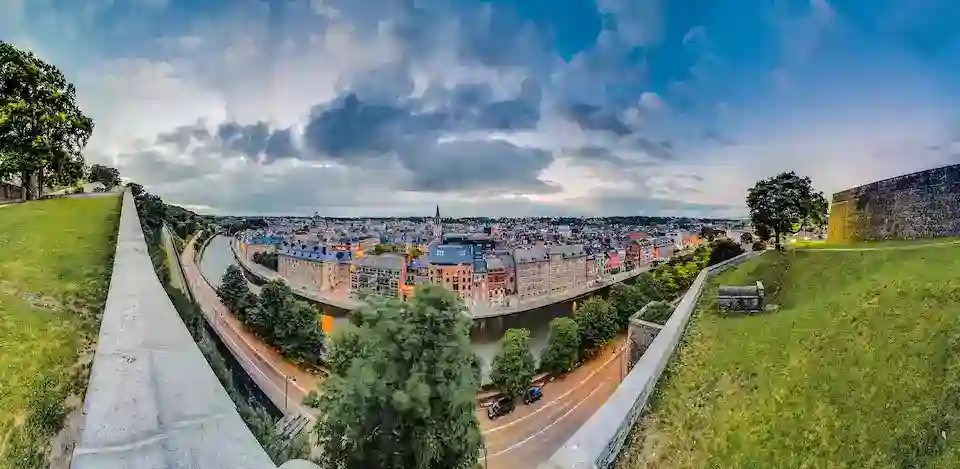
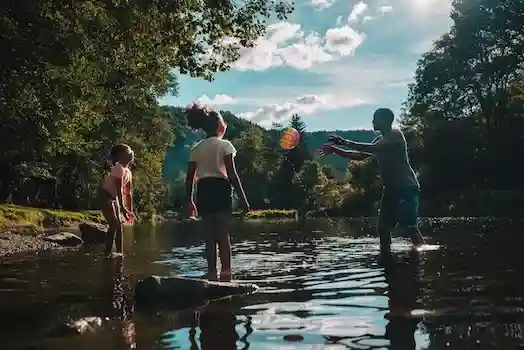
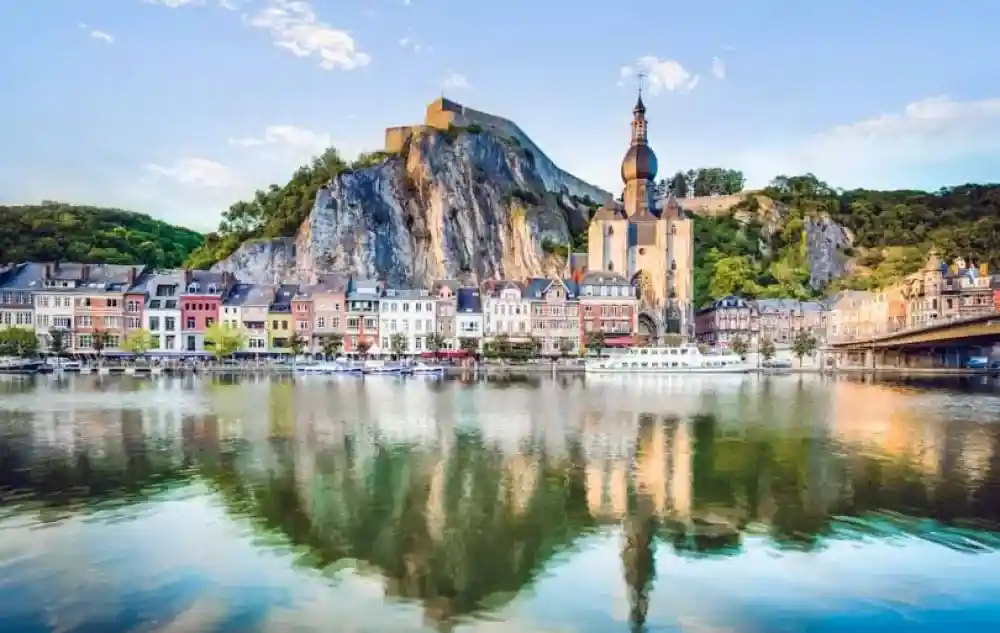
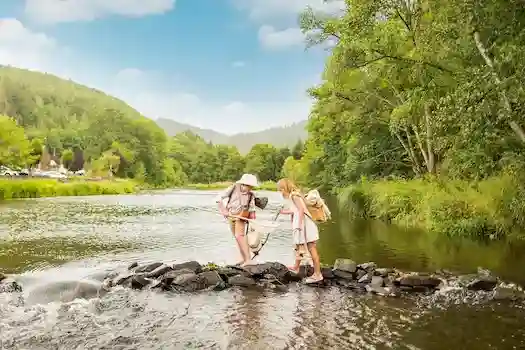
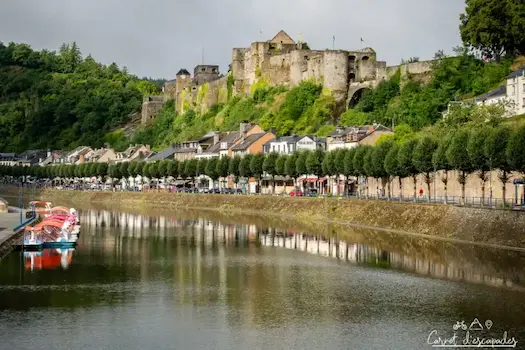
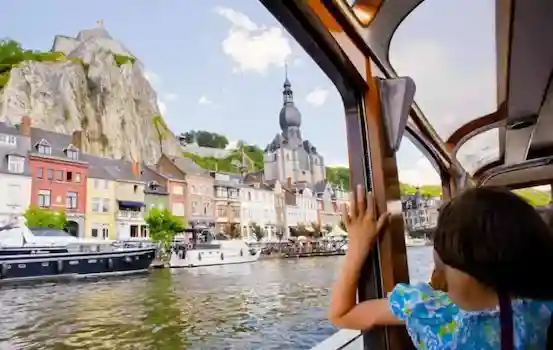
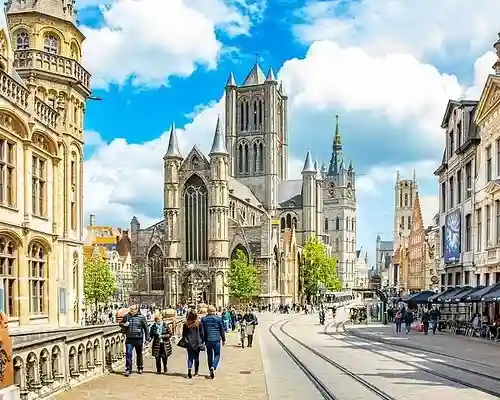
Walloon Outdoor Tourism – Gallery
⚖️ Major legislative reform · Effective July 1, 2025
The new Walloon Tourism Code 2025
July 1, 2025 marks a turning point: the new Code replaces the old operating declaration with a mandatory registration system, creates new protected designations, and abolishes star ratings for gîtes and campsites.
Main Reform · July 2025
🆕 Mandatory registration (replaces declaration)
Every accommodation (gîte, campsite, hotel, unusual) must be registered with Visit Wallonia (formerly CGT) before being rented out. Transitional regime: establishments already declared before July 2025 are deemed registered as long as their Fire Safety Certificate is valid. After this deadline, the full procedure is mandatory.
New Nomenclature
🏷️ New protected designations
Furnished Tourist Accommodation: merges rural, farm, city gîtes, and furnished holiday homes.
Guest House: replaces the term bed and breakfast (chambres d'hôtes).
Unusual Accommodation: treated as a gîte or guest house depending on services, subject to the same safety and urban planning obligations.
Certification remains optional to operate, but is an absolute prerequisite to use these designations and access subsidies.
Major Shift · End of stars for gîtes & campsites
⭐ Abolition of star ratings
End of the stars, ears of corn (épis), and keys system for all accommodations except hotels. Hotels retain the Hotel Stars Union (HSU) system. For gîtes and campsites, quality will now be conveyed by thematic labels (Green Key, Bienvenue Vélo, Camping Qualité Wallonie) and customer reviews on booking platforms.
Vigilance Point · BCE and subsidies
🏢 BCE Number – critical timeline
The enterprise number (BCE) becomes mandatory for all certification by 2030, but is required immediately for any subsidy request relating to real estate investments. Unusual accommodations (cabins, bubbles) also require a planning permit for any change of use of the building or plot.
Documents required for registration
| Document | Issuing Authority | Validity | Note |
|---|---|---|---|
| Fire Safety Certificate (ASI) | Mayor of the Municipality | 5 years | Determines the transitional regime |
| Simplified Control Certificate (ACS) | Municipality (< 10 people) | 5 years | Only for small structures |
| Electricity/gas/heating compliance certificate | Approved body | Linked to ASI | Mandatory for opening |
| Criminal Record Extract (Model 596.1) | Municipal Administration | < 6 months upon submission | Required for each registration |
Registration Procedure – Step-by-Step Guide
1
Check your transitional status
If already declared before July 2025: you are deemed registered as long as your ASI is valid. Check its expiration date (5 years) to plan for renewal.
2
Compile the complete file
ASI (Mayor, 5 years) + ACS if < 10 people + elec/gas compliance certificate + 596.1 criminal record dated less than 6 months.
3
Submit to Visit Wallonia
File with Visit Wallonia (formerly CGT). Registration alone allows you to operate, without access to protected designations or subsidies.
4
Opt for certification (optional)
Condition for protected designations (Furnished Accommodation, Guest House) and access to public aid. Obtaining the BCE is highly recommended immediately if investments are planned.
5
Anticipate the mandatory BCE in 2030
BCE enterprise number required for all certification by 2030. Anticipate: required immediately for real estate subsidies.
📊 Walloon Accommodation Data 2024
Province of Luxembourg
36%
Province of Liège
27%
Province of Namur
15%
Hainaut
12%
Walloon Brabant
10%
Distribution of ~1,128 motorhome bed-places in Wallonia
💡 Key Figures for Outdoor Hospitality 2024
Dutch clientele prefers bare pitches for 85% of their overnight stays. Rental accommodations (mobile homes, chalets) grow by +6.6% in appeal. Local accommodations (terroir) record 2.5 million overnight stays with an average duration of 2.7 nights.
Walloon Tourism Observatory
4 traveler profiles reshaping the 2025 offer
The WTO identifies a shift towards more conscious, enriching, and personalized tourism. These 4 emerging profiles dictate the investments of Walloon operators.
Skillcations – Learning on vacation
Stays combining discovery and the acquisition of practical skills: Ardennes cooking, crafts, forest survival, nature photography, cabin building. A fast-growing segment that rewards operators offering hands-on workshops led by certified experts.
Training · Immersion · CraftsWell-being & Longevity
Sustainable demand for retreats focused on mental health and innovative therapies: cryotherapy, forest meditation (sylvotherapy), forest bathing (shinrin-yoku). Wallonia, with its 500,000 hectares of forest, provides an ideal playground.
Sylvotherapy · Retreat · HealthFrolleagues & MeMooners
"Frolleagues" = hybrid friends + colleagues (30% of travel intentions). "MeMooners" = solo travelers continuously growing, especially female, demanding increased safety guarantees. Structures must adapt their common areas and security offerings.
Female Solo · Team building · MixedHurkle-Durkling & Nostalgia
Segment prioritizing total relaxation or experiences tinged with nostalgia recalling past eras. Slow-living offers, vintage accommodations, slow-paced activities. A counterpoint to sports hyperactivity.
Slow living · Retro · Total relaxation🚴 Most dynamic segment
Cycle Tourism in Wallonia: RAVeL, EuroVelo and Bienvenue Vélo
Cycle tourism is supported by the National Cycle Route Scheme (SNV) and the RAVeL network. A touring cycle tourist spends an average of €76 per day (vs €22 for a day tripper) — a local economic impact 3.5× higher.
The 3 EuroVelo routes crossing Wallonia
EuroVelo EV 3
The Pilgrims Route
Herve → Thuin. Post-industrial and river heritage. Cultural and historical route. Crossing Hainaut and converted steel basins. Very popular with pilgrims and industrial heritage lovers.
CulturalIndustrial HeritageMedium level
EuroVelo EV 5
Via Romea Francigena
Canterbury → Rome north-south axis crossing Wallonia. Millennia-old heritage and spiritual route. Highly recognized international route, attracting a diverse European clientele year-round.
SpiritualInternationalLong distance
EuroVelo EV 19
The Meuse Cycle Route
Flat and accessible route along one of Europe's most beautiful rivers. Ideal for families and beginners. Strong Dutch appeal. High proportion of dedicated paths ensuring maximum safety.
FamilyBeginnersFlat – Accessible
"Bienvenue Vélo" Label 1,000+ operators
Official Visit Wallonia label certifying establishments offering specific services to cyclists. Free membership, subject to a mandatory inspection visit. The operator commits to participating in soft mobility promotion actions.
Covered & locked secure room
Provided free of charge. Permanent shelter, locked.
Repair kit + floor pump
Minimum basic tools: tire levers, inner tube, pump.
Network maps & schedules
Junction points, RAVeL, bus/train schedules accepting bikes.
E-bike battery charging
Charging station for electric assist bicycles.
Clothing drying
Dedicated space with a heat source for wet clothes.
Meals adapted for cyclists
Caloric menus, flexible hours, packed lunches available.
📊 Key figures for Walloon cycle tourism
of the Walloon network on dedicated paths (optimal safety)
46%
daily spend of a touring cycle tourist
€76
daily spend of a day-trip cyclist
€22
national cycling attendance 2024 (despite weather)
+2%
bikes carried on Walloon Intercity trains since 2019
+156%
Bienvenue Vélo certified operators
1,000+
Sources: Visit Wallonia · Bike & Walk Network · EuroVelo Annual Report 2024
🌿 Environmental Governance
The Semois Valley National Park
Recognized at the end of 2022 across 28,980 hectares, it is both a model for biodiversity protection and a laboratory for integrated sustainable tourism in Western Europe.
Semois Valley National Park
Dual mission: protect nature (flagship species: black stork, shale cliff flora, Japanese knotweed to be eradicated) and develop sustainable tourism. Highly ambitious 2026 action program with real-time flow management to redirect visitors away from saturated sites.
Ecological restoration
20 ha of rocky ridges + 30 forest ponds + elimination of invasive species
Soft infrastructure
4 unusual bivouac areas + 3 to 5 wildlife observatories
Gateways
8 municipalities with overflow parking and thematic shuttles
Ambassador guides
30 trained guides to accompany groups and raise awareness of biological wealth
28,980 hatotal area
2022official recognition
30trained ambassador guides
22Access-i RAVeL circuits 2025
Walloon Forest Code – Rules of Coexistence (Art. 1 & Art. 35)
| Activity | Forest Code Regulation | Specific Restriction |
|---|---|---|
| 🚶 Pedestrian traffic | Allowed on roads, tracks and paths | Prohibited off marked trails |
| 🚴 Cycling traffic | Only on marked roads/tracks/paths | Strictly prohibited on unmarked paths |
| 🚗 Motor vehicles | Prohibited off public roads | Limited exemptions (medical, hunting) |
| 🔥 Bivouac & Fires | Prohibited outside designated areas | Risk of fine + fire danger |
| 🐕 Dogs | Kept on a leash at all times | Protection of wildlife (Art. 35) |
Art. 35 Walloon Forest Code: prohibits any act likely to significantly disturb the tranquility of the premises or the behavior of wild animals.
Territorial Case Study
Vresse-sur-Semois
Gateway to the National Park · 1920 Art School · Kayaking & Hiking
Nestled in a meander of the Semois, Vresse is a major gateway to the National Park and a unique cultural crossroads. Its artistic legacy dates back to the "School of Vresse" (landscape artists from 1920 around Albert Raty), translated today into an art interpretation center and thematic trails.
- 🏰Laforêt – Classified as one of the "Most Beautiful Villages of Wallonia". Historic tobacco drying sheds testifying to past agricultural prosperity.
- 🧚Nutons Trail – Legends of the little cave beings (Nutons' Holes). Fun 0.8 to 4 km circuit for families.
- 🛶Semois kayak descent – Routes from 7 km (Vresse → Alle) to 25 km (Bouillon → Alle). Flagship activity of the local outdoors.
- ⛰️Spectacular panoramas – Naglémont (340 m), Jambon Viewpoint, Pont Saint-Lambert Rock.
- 🥾GR 16 – Semois Trail + immersive experiences "In the shoes of a badger" (night observation cabins).
School of Vresse
Landscape artists since 1920
Most Beautiful Villages
Laforêt, Walloon label
7 – 25 km
Semois kayak routes
GR 16
International Semois Trail
Digital Strategy · Google 2025
The 4 EEAT pillars for outdoor operators
In 2025, appearing in top Google results is no longer just about keywords, but about demonstrating authority and reliability via EEAT criteria. "People-first" content (actual durations, precise elevation gains, rain fallback options) systematically prevails over generic content.
E
Experience – Direct experience
Google favors content written by those with direct experience. An article on Walloon cycle tourism must include original photos, personal anecdotes, GPX files tested in real conditions.
💡 Field tip: "watch out for the dark Mortehan tunnel on EV3" – this type of specific detail signals direct experience to the algorithm.
E
Expertise – Sectoral competence
Content must be produced by recognized specialists. For a Walloon outdoor site, this means: certified guides (CNB or CFAR certified), citations of environmental studies, referenced quality labels (Bienvenue Vélo, Green Key, Camping Qualité).
💡 Action: display author certification (UIAGM guide, FFCanoë Kayak level) in the bio of each article.
A
Authoritativeness – Domain authority
Authority is built by the site's reputation and links from trusted domains: institutional sites (VISITWallonia, Walloon Tourism Observatory, Walloon Parliament), specialized outdoor press, labeled associations.
💡 Priority lever: appear in the official VISITWallonia and WTO listings, which transfer their domain authority.
T
Trustworthiness – Reliability
The most important pillar according to Google 2025. Based on: transparency (full legal notices, About page, privacy policy), mandatory HTTPS, systematic citation of official sources (Statbel, Walloon Code, Walloon Parliament), and Schema.org JSON-LD structured data.
💡 Minimum standard: 3 citations to institutional sources per article · HTTPS · Legal notices · Full JSON-LD.
EEAT Workflow – High-performance tourism writing
| SEO/EEAT Element | Recommended Technical Action | Algorithmic Benefit |
|---|---|---|
| Author signature | Real name, photo, short bio, social links | Expert identification by Google |
| Structured data | Schema.org JSON-LD (Article, Place, FAQPage, HowTo, Dataset) | AI understanding, SERP rich snippets |
| Proof of experience | Homemade videos, original photos, tested GPX files, certified reviews | Differentiation from AI-generated content |
| Institutional citations | ≥ 3 official sources (Statbel, Walloon Code, Walloon Parliament, VISITWallonia) | Strengthening Trustworthiness |
| Internal linking | Link thematic articles (e.g., hiking → gear → safety) | Creation of authoritative semantic cocoon |
| People-first content | Actual walking times, precise elevations, rain fallback options, updated prices | Priority ranking over generic content |
Foresight · Sustainable Mobility
FAST 2030 Vision: Fluid, Accessible, Safe, Territorial
In 2025, nearly 75% of Walloon trips are still made by car. The FAST 2030 Vision aims to reduce the car's share by 20% in favor of active modes and public transport.
Rail-Bike Intermodality
Optimizing bike transport on trains. Creation of cycling hubs in Ardennes stations (La Roche, Bertrix, Libramont). Connection with EuroVelo routes and the RAVeL network.
+156% on Intercity trains since 2019"Gateway" Strategy
Centralizing visitor flows in reception centers on the outskirts of sensitive areas. Shuttle services and equipment rental (e-bikes, electric scooters, kayaks) from these hubs without private cars.
8 Semois National Park municipalitiesUniversal Accessibility
Developing "Access-i" certified routes for people with specific needs, families with strollers, and seniors. Along the Walloon RAVeL as a priority, with adapted markings and equipment.
22 Access-i RAVeL circuits in 2025Frequently Asked Questions
FAQ – Outdoor Tourism Wallonia 2025
How many overnight stays did Walloon tourism record in 2024?
Wallonia recorded 9,233,006 overnight stays in 2024, a slight decrease of 3.1% compared to the previous record year. Outdoor tourism contributes to 4.1% of regional GVA (≈ €3.6 billion). Dutch (+20%) and German (+13%) markets are growing strongly. Source: Walloon Parliament, 2024 tourism review.
What changes does the new Walloon Tourism Code of July 2025 bring?
The new Walloon Code (July 1, 2025) introduces: (1) mandatory registration with Visit Wallonia with a complete file (ASI, ACS, elec/gas compliance, 596.1 criminal record); (2) new protected designations (Furnished Tourist Accommodation, Guest House, Unusual Accommodation); (3) the abolition of star ratings for all accommodations except hotels (which keep the Hotel Stars Union). Establishments already declared benefit from a transitional regime.
What are the 3 EuroVelo routes crossing Wallonia?
EV3 (Pilgrims Route, Herve–Thuin, post-industrial heritage), EV5 (Via Romea Francigena, Canterbury–Rome north-south axis), EV19 (Meuse Cycle Route, flat route ideal for families/beginners). The Walloon network has 46% dedicated paths for optimal safety. A touring cycle tourist spends an average of €76/day (vs €22 for a day tripper).
What are the mandatory criteria for the Bienvenue Vélo label?
The Bienvenue Vélo label (1,000+ operators, free membership with inspection visit) requires: a covered and locked secure storage room, repair kit + floor pump, network maps (junction points, RAVeL) + schedules for bike-friendly transport. Recommended "plus" services: e-bike charging, clothing drying, adapted meals for cyclists.
What is the Semois Valley National Park and how big is it?
Recognized at the end of 2022, the National Park covers 28,980 hectares in the Southern Ardennes. 2026 Program: restoration of 20 ha of rocky ridges, creation of 30 forest ponds, elimination of invasive species (Japanese Knotweed), development of 4 unusual bivouac areas, 3 to 5 wildlife observatories, 8 municipal thematic "Gateways," and training of 30 ambassador guides.
Why is Vresse-sur-Semois artistically important in Wallonia?
Vresse is home to the "School of Vresse", a hub of landscape artists active since 1920 around Albert Raty. This legacy is translated into an art interpretation center and thematic trails. Nearby, Laforêt is listed among the "Most Beautiful Villages of Wallonia" with its historic tobacco drying sheds. Vresse is also a major gateway to the National Park.
What is the FAST 2030 Vision for Walloon tourism?
The FAST 2030 Vision (Fluid, Accessible, Safe, Territorial) aims to reduce the car's share by 20% (currently ~75% of trips) in favor of active modes. Concrete measures: rail-bike intermodality (+156% bikes carried on Intercity trains since 2019), peripheral "Gateways" with shuttles and e-bike rentals, and 22 Access-i certified circuits along the RAVeL for people with specific needs.
What is a "Skillcation" and how to enjoy it in Wallonia?
A "Skillcation" (skill + vacation) is a stay combining discovery and acquisition of practical skills: Ardennes cooking, crafts (Semois weavers), forest survival, introduction to nature photography, cabin building. A trend identified by the Walloon Tourism Observatory for 2025. Look for operators offering workshops supervised by certified guides.
What are the 4 EEAT pillars for a Walloon tourism site in 2025?
Google evaluates via 4 EEAT pillars: (1) Experience – original photos, tested GPXs, field anecdotes; (2) Expertise – CNB/CFAR certified guides, Bienvenue Vélo/Green Key labels; (3) Authoritativeness – VISITWallonia presence, institutional links (Walloon Parliament, WTO); (4) Trustworthiness – full legal notices, HTTPS, 3+ official citations (Statbel, Walloon Code), Schema.org JSON-LD.
What is the average daily spend of a touring cycle tourist in Wallonia?
A touring cycle tourist spends an average of €76 per day (accommodation included), compared to only €22 for a day-trip cyclist. This 3.5× gap underscores the major economic interest of long-distance cycle tourism for the municipalities crossed by EuroVelo and the Walloon RAVeL. Source: Visit Wallonia · Bike & Walk Network.
🌿
Experience the Walloon outdoors from the Semois
Our base in Vresse-sur-Semois, gateway to the National Park: kayaking from €16, camping from €11, Bienvenue Vélo label, dogs allowed. All just 46 km from the Mortehan tunnel on EV3.