Très bien, pas cher et accueil très sympathique. Merci, car pour ma première fois en kayak, j'adore. Je le recommande. À la prochaine fois 👍🙂
Introduction: The Complex Anatomy of a Paradigmatic Spa Town
Nestled in the heart of the Ardennes massif and leaning against the vast peat bogs of the High Fens, the city of Spa, located in the province of Liège in Belgium, represents much more than a simple provincial administrative entity. It constitutes the original and absolute incarnation of a global socio-cultural phenomenon, to such an extent that its name has become, by antonomasia, the international generic term designating establishments dedicated to water care and well-being.
Podcast: From Diplomacy to Adrenaline
Immerse yourself in the history of the Pearl of the Ardennes (6 min 42s)
An in-depth analysis of the Spa ecosystem reveals a territorial dynamic of rare complexity. Here, centuries-old geopolitical trajectories, exceptional hydrogeological characteristics, singular economic governance based on the monopolistic exploitation of a natural resource, and an uninterrupted capacity for tourist adaptation since the 18th century all intertwine.
The purpose of this comprehensive report is to dissect the multiple layers that make up the identity and functioning of this city. It is about acutely examining how a strictly localized natural resource—naturally sparkling mineral water—catalyzed the emergence of thermal diplomacy on a continental scale, dictated a specific urban morphology, and imposed a public-private partnership economic model guaranteeing the environmental sustainability of a territory that is now a sanctuary.
At a time when Spa enjoys the ultimate recognition of UNESCO as a World Heritage Site, the study of its evolution offers a fascinating analytical lens. This lens allows us to observe the slow but irreversible transition from an aristocratic reception model to a modern tourist, industrial, and sporting ecosystem, encompassing contemporary thermal wellness as well as the high-tech motorsport industry and the rigorous preservation of intangible cultural heritage.
For the visitor exploring the Ardennes, combining Spa with an adventure to the south, such as a kayak descent on the Lesse or the Semois, constitutes the ultimate Ardennes experience, blending therapeutic thermal water with the white water of legendary rivers.
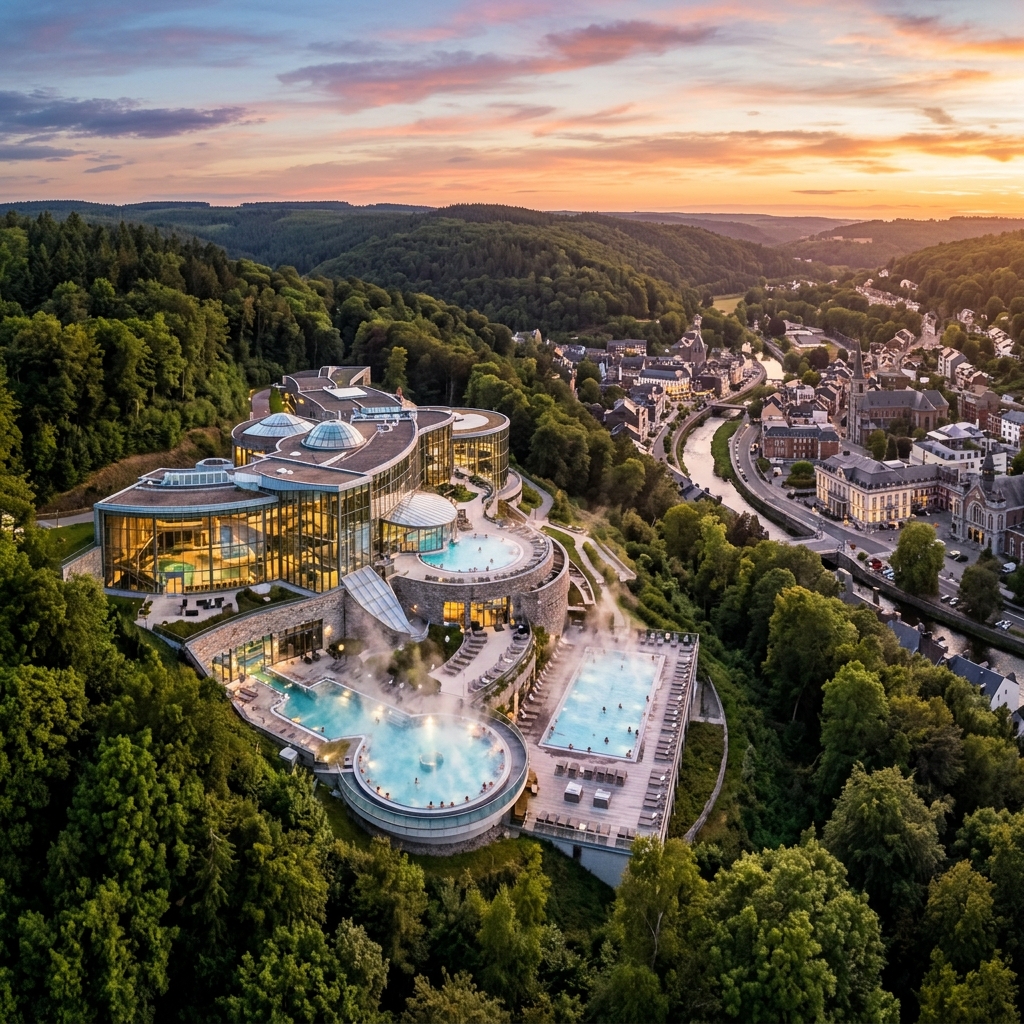
The contemporary Thermal Baths overlooking the city
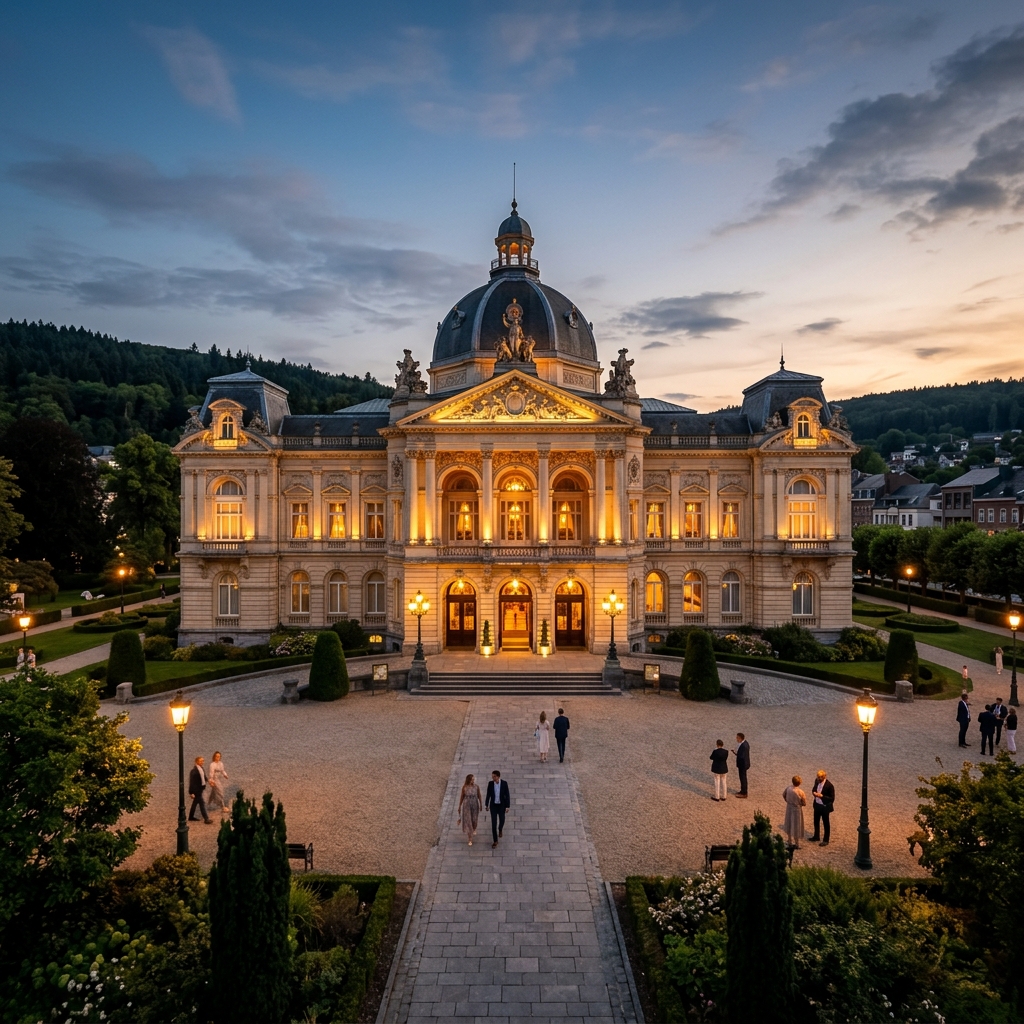
The Casino de Spa (La Redoute), a symbol of high society
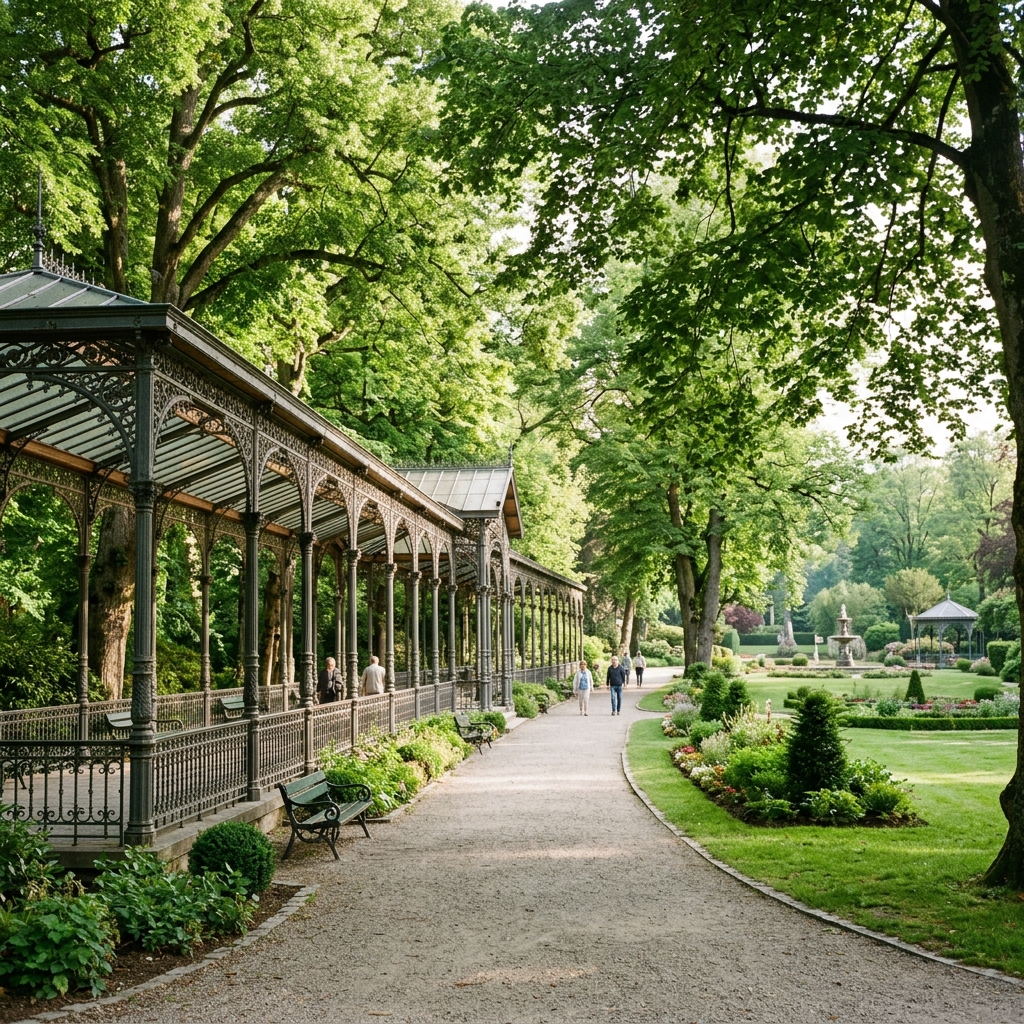
The Parc de Sept Heures and its covered galleries
Geohistory and Geopolitics: The Emergence and Mutations of the "Café of Europe"
The 18th Century: The Aristocratic Golden Age and the Diplomacy of the Spring
During the 18th century, the urban trajectory of the small town of Spa shifted to achieve a continental geopolitical dimension. The city then acquired the prestigious nickname \"Café of Europe\", an appellation that reflects its function as a neuralgic convergence point for the continent's elites. Every year, hundreds, then thousands of visitors from the high European nobility converged on this Ardennes valley.
This exceptional attractiveness was based on a very specific thermal practice, very far from our contemporary concepts: at that time, the aristocracy did not bathe in mineral water, they exclusively drank it. The drinking cure was, in reality, a medical alibi justifying highly codified social gatherings. Monarchs, high-ranking diplomats, and intellectuals met there to be seen, forge alliances, and negotiate treaties in a setting removed from the protocol rigidities of traditional European courts.
The initial impulse for this international renown is often attributed to the extended stay of Tsar Peter the Great of Russia in 1717, who came seeking relief for his liver ailments, an event that would leave a lasting mark on local toponymy and memory. The city became a true theater of European customs, welcoming Casanova or even Queen Christina of Sweden.
However, the systemic upheavals induced by the French Revolution brought a sudden halt to this aristocratic dynamic. Cosmopolitanism was supplanted by national conflicts. But it was the devastating fire of 1807 that truly marked the material end of this first period of glory, ravaging the agglomeration up to the current Rue Royale.
Chronology of Spa
-
1326Official DiscoveryCollin le Loup is cured of his ailments thanks to the Sauvenière spring.
-
1717Tsar Peter the GreatHis stay propelled Spa to the rank of a leading continental thermal resort and inaugurated the era of the \"Bobelins\".
-
1762Inauguration of La RedouteCreation of the first modern casino, the epicenter of high society and European diplomacy.
-
1807The Great FireThe fire ravaged Old Spa, accelerating the transition to neoclassical and then eclectic architecture.
-
1918German Headquarters & AbdicationEmperor Wilhelm II resided at the Neubois. The German Empire officially fell with his abdication signed at the Hôtel Britannique.
-
2021UNESCO RecognitionInscription as a World Heritage Site (The Great Spa Towns of Europe).
Hydrogeology, Ecology, and Sanctuarization: The Absolute Management of Blue Gold
The centuries-old reputation of Spa, as well as the viability of its contemporary economic model, rests entirely on the quality of the fluids originating from its subsoil. An in-depth analysis of the \"Spa model\" highlights an extremely precise hydrological and ecological management, based on an uninterrupted alliance between favorable physical geography and pioneering environmental legislation.
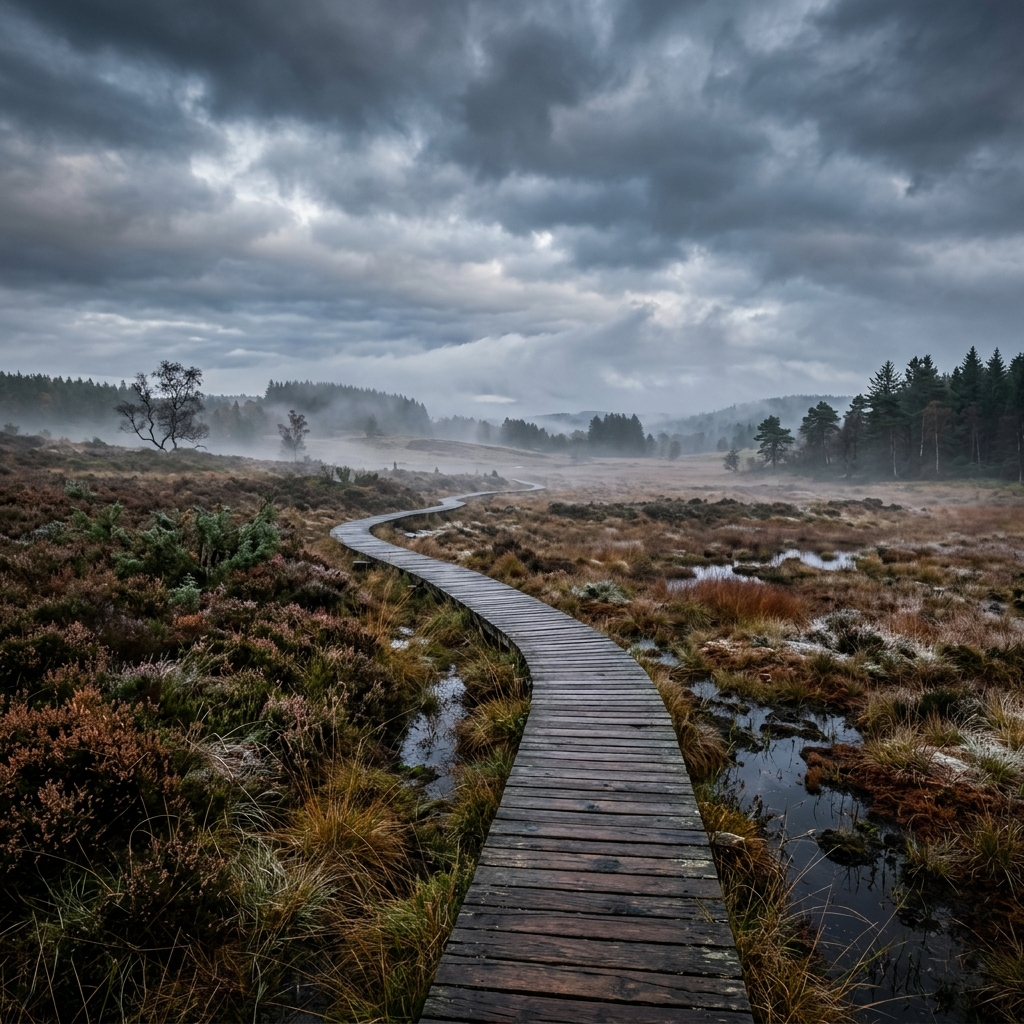
The High Fens, natural sponge and infiltration basin
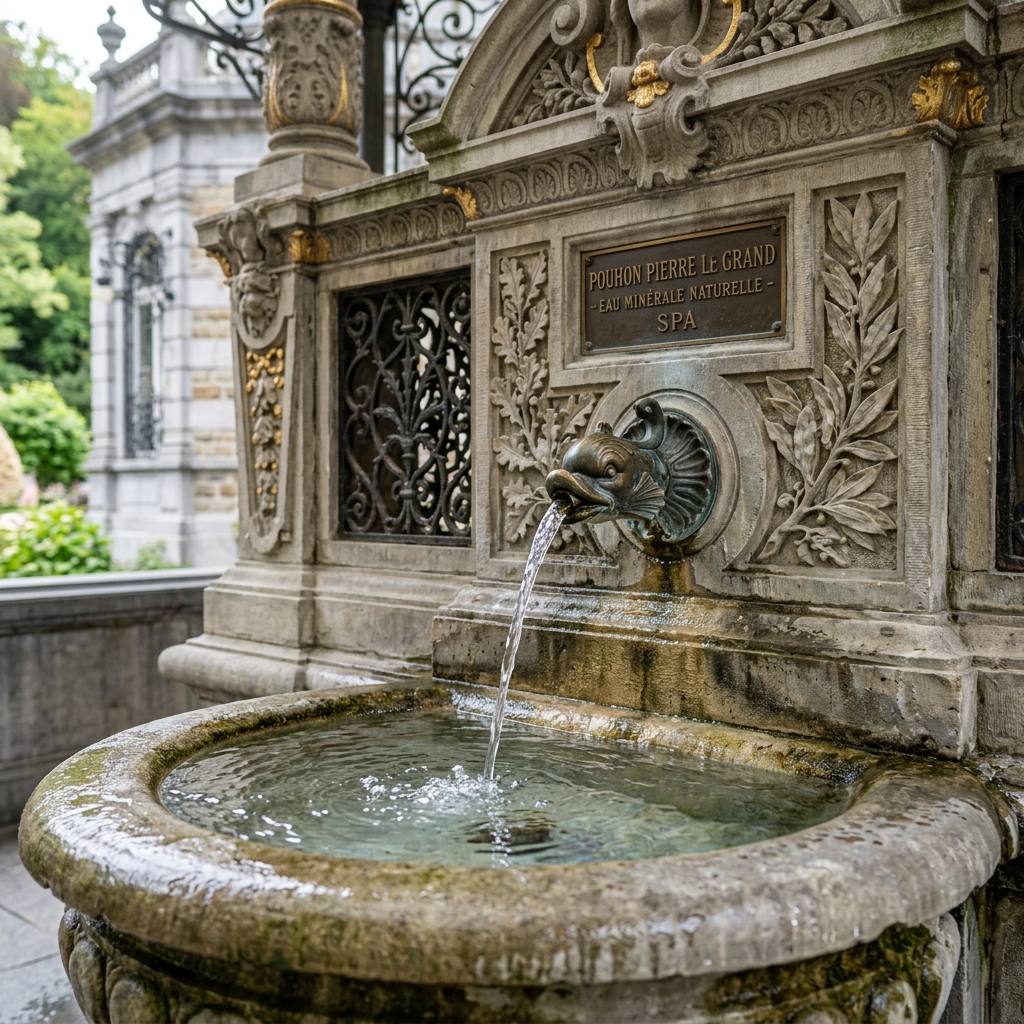
The purity of the chalybeate blue gold gushing from the depths
Exploration of Boreholes and Thermal Springs
The hydrogeochemistry of Spa offers a wide variety of therapeutic profiles. Click on a spring to explore its properties.
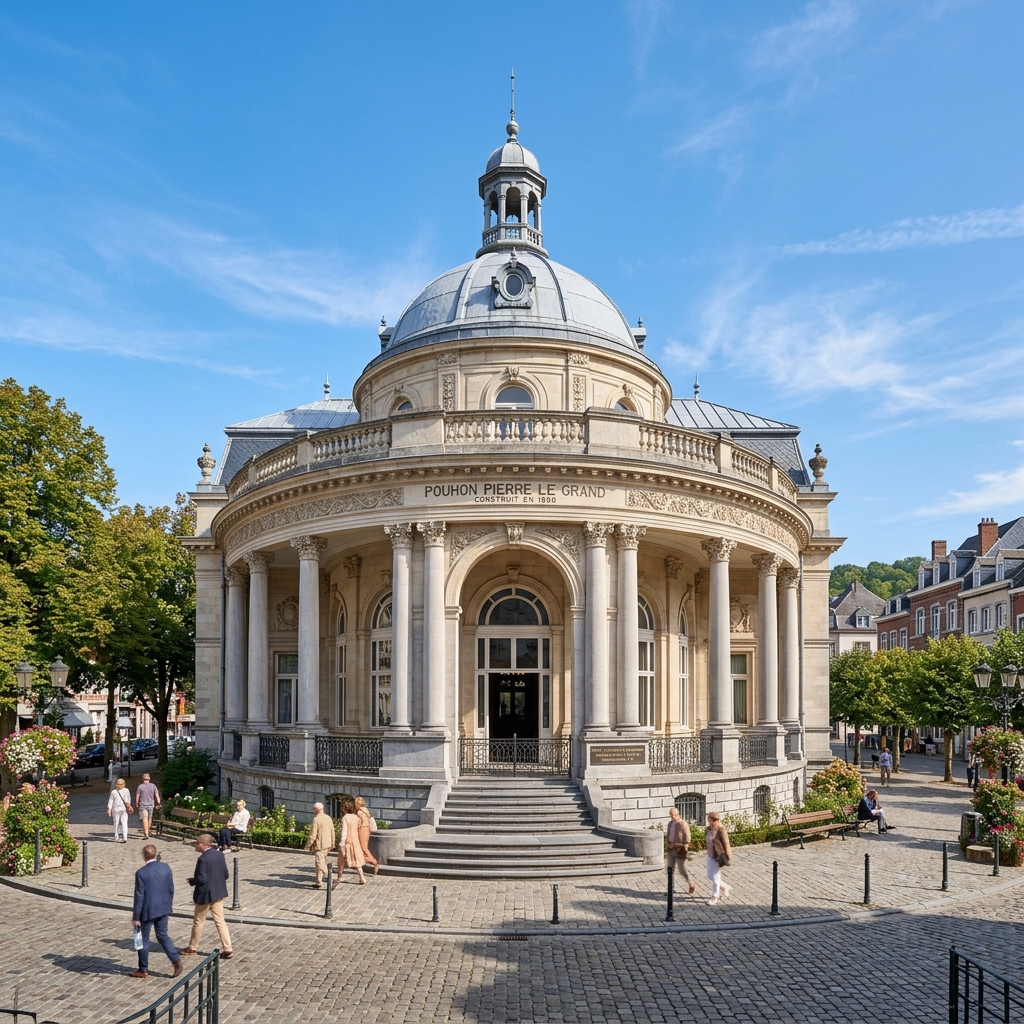
Chalybeate and naturally sparkling waters. Rich in iron and naturally effervescent, they were historically the most sought-after in the 18th and 19th centuries to treat severe anemia and iron deficiencies. The Pouhon Pierre le Grand is its iconic emergence, yielding an average of 21,000 liters per day of water with powerful invigorating properties.
Sodium and calcium bicarbonate waters. The oldest exploited spring (officially discovered in 1326). Its waters were reputed to cure sterility. These waters possess a strong anti-inflammatory and soothing effect, promoting skin healing and facilitating gastrointestinal and hepatobiliary motility, making them ideal for therapeutic baths.
Lightly mineralized (oligometallic) waters. Coming from specific boreholes (like the famous Spa Reine or Barisart spring captured in the forest), these waters do not present a predominant element. Their extreme purity and very low sodium content make them perfectly suited for daily consumption and are the preferred choice of pediatricians for preparing baby bottles and hydrating infants.
Sport and Mechanical Myth: The Evolution of the Spa-Francorchamps Circuit
It would be structurally incomplete to analyze the identity of the Spa region without addressing the impact of its most resounding sporting infrastructure. Just a few kilometers from the thermal center and the tranquility of the parks, lies the Spa-Francorchamps Circuit, universally described as the \"most beautiful circuit in the world\" by motorsport authorities and enthusiasts. The history of this ribbon of asphalt spectacularly illustrates the transition from a heroic, extreme, and deadly sport to a highly secure and technologically advanced entertainment industry.
The Genesis: The Heroic Triangle of the Ardennes
Conceived shortly after the First World War, in 1921, the original track connected the three towns of Francorchamps, Malmedy, and Stavelot. Consisting of ordinary public roads (open to civilian traffic outside of races), this circuit adhered to a rudimentary engineering philosophy: the quest for pure, uninterrupted speed, forming a triangle of nearly 15 kilometers.
Constantly seeking to increase average speeds, the designers modified the track in 1939. In order to bypass the slow \"U-turn\" of the old customs house, engineers decided to cut through the hill abruptly, creating a dizzying, blind, and winding climb. The Raidillon at Eau Rouge was born, immediately asserting itself as the ultimate test of the track and becoming one of the most formidable and studied corners in global motorsport.
The Domestication of Danger: From Open Road to Permanent Circuit
During the golden age of the post-war decades, speeds defied comprehension on a track lined with trees, ravines, and houses. In 1973, French driver Henri Pescarolo set the absolute speed record on this original \"road\" circuit, recording a staggering average of 262.461 km/h over a full lap.
However, faced with the multiplication of tragic accidents, a driver revolt led by Jackie Stewart demanded an overhaul of safety. In 1979, the circuit underwent major surgery. The dangerous southern section was abandoned in favor of a technical link winding through the forest.
Today, the circuit is a closed permanent track, measuring exactly 7.004 kilometers and featuring 19 corners. This fundamental transformation symbolizes the industrialization of motorsport. Despite these safety alterations, the track has managed the feat of preserving its dizzying elevation changes, its unpredictable microclimate, and the technical demands of its fast corners (Pouhon, Blanchimont), hosting every year the prestigious Formula 1 Belgian Grand Prix and the 24 Hours of Spa.
Track Topography: Elevation Profile
Spectacular elevation change of 104 meters between the lowest point (326m) and the highest point (432m).
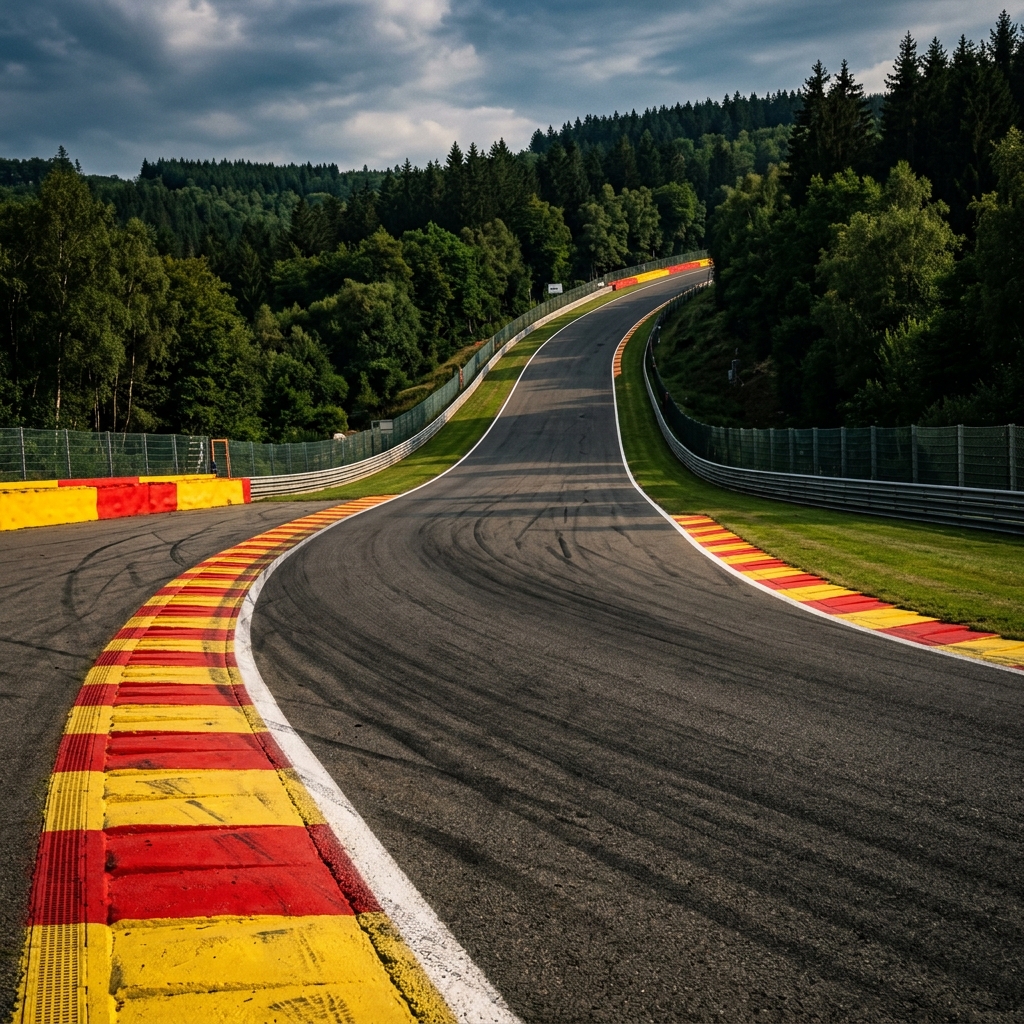
The Raidillon at Eau Rouge: The ultimate test of the track
The 1969 Boycott: The terror inspired by the old 15km grand track was such that Formula 1 drivers declared a general boycott, forcing the circuit's redesign. As driver Dan Gurney said, the old Spa \"separated the men from the boys\".
Cultural and Literary Influence: Spa at the Heart of European Romanticism
The influence of Spa was not limited to the pharmacological benefits of its chalybeate waters; it deeply marked the literary and artistic thought of the 19th century. The city became a muse for numerous writers in search of rest or inspiration. Victor Hugo, during his Ardennes wanderings, was fascinated by the contrast between the wild severity of the Fens and the urban refinement of Spa. In his notes, he describes a city where nature seems tamed by the thermal genius.
Before him, Giacomo Casanova found it an ideal playground for his gallant adventures and gambling strategies. The city was then the only place in Europe where one could encounter a future emperor, a cursed poet, and a high-flying adventurer in the same avenue of the Parc de Sept Heures. This social mix, exceptional for the time, favored the emergence of a wealth of travel literature, making Spa the setting for numerous novels of manners.
Today, this intellectual heritage is perpetuated through institutions such as the Musée de la Ville d’Eaux, housed in the former Royal Villa, which preserves the famous \"Jolités de Spa\": these painted wooden objects (Bois de Spa) bear witness to the refined local craftsmanship intended for an aristocratic clientele.
\"Landscape Therapy\": A Spadoise Urban Invention
One of the major reasons for the inscription of Spa on the UNESCO list lies in the invention of the concept of therapeutic landscape. Unlike other resorts where care remains confined to the interior of buildings, Spa projected therapy into public and natural spaces. 18th-century doctors, such as Doctor Limbourg, theorized that the effectiveness of the drinking cure was multiplied by physical exercise in the healthy open air.
Consequently, a complex network of woodland walks was drawn with the precision of a goldsmith. These paths are not the result of chance: they were designed to offer spectacular viewpoints over the valley (the \"belvédères\"), while gentle slopes were laid out suitable for cardiac patients and convalescents. The mesh of the Sauvenière, Meyerbeer, or Queen's promenades is a landscape work of art in itself, where every bench and every rest pavilion was thought out to promote psychological well-being.
This model influenced the creation of numerous urban parks in Europe and the United States, prefiguring modern hygienic urbanism. Today, those who walk these paths are not just taking a stroll; they are participating in a two-hundred-year-old medical ritual, a total immersion in an ecosystem designed for healing.
Spa and Outdoor Sports: A First-Class Adventure Destination
While motorsport dominates the media, Spa is also a major hub for strength and endurance sports disciplines. The rugged topography, with significant elevation changes and varied soils (peat, shale, sandstone), makes it a privileged training ground for high-level triathletes and trail runners. The proximity of the High Fens offers courses of rare intensity, where the changing climate adds an extra technical dimension.
Cycling holds a prominent place there. Spa is regularly crossed by the great Ardennes classics, and the mythical climbs, such as the Rosier (the longest climb in Belgium) or the Redoute (not far away), are places of pilgrimage for cyclotourists. For those who prefer water, the region offers an ideal connection to the valleys of the Amblève and the Semois. After a rest cure in Spa, many adventurers choose to head further south for a kayaking experience in the Ardennes, thus completing their water cycle with immersion in a wild river.
Hiking remains, however, the king activity. With over 200 km of marked trails, Spa allows you to switch from the deep forest to the moors of the Fens in a few hours. The \"Micro-adventure\" courses are particularly popular there, allowing one to bivouac (in authorized zones) and reconnect with a raw nature, far from the urban hustle and bustle.
The Engineering of Purity: Behind the Scenes of the Water Industry
Behind the idyllic image of the spa town hides an industrial infrastructure of extreme sophistication. The Spa Monopole bottling plant is one of the most modern in Europe, operating on principles of absolute sustainability. Every drop of water captured is electronically tracked from the borehole to the packaging. Local engineering has developed natural filtration systems that preserve mineral integrity without any chemical treatment.
The protection of the hydrographic basin is a constant challenge. Spadoise hydrologists work closely with foresters to maintain specific vegetation that promotes optimal infiltration of rainwater. This expertise in water resource management is today exported as a model of resilience against climate change. Spa does not just sell water; it produces and protects a life cycle, guaranteeing that future generations will also be able to taste the original purity of the Ardennes.
Terroir, Gastronomy, and Economic Influence: The Olfactory and Gustatory Signatures of Spa
The city's isolated geography, combined with the very specific sociology of a host resort for wealthy elites, has generated over the centuries a gastronomic terroir of great richness. Medicinal monastic traditions merged with the silvicultural resources of the surrounding Ardennes forest, giving birth to signature products that constitute an integral part of the contemporary local identity.
The Pillars of Spa Gastronomy
- The Élixir de Spa: This complex spirit is arguably the oldest heritage legacy. Its invention dates back to the 12th century, the fruit of the distillation work of the Capuchin friars. Composed of a maceration of more than 40 plants, barks, and roots, this 40° elixir was initially prized for its intense digestive properties. In 1869, it obtained the title of \"Patented Supplier to the Court of Belgium\".
- The Bobeline Beer: Taking its name from the historical term given to spa guests (\"the Bobelins\"), this top-fermented beer is the unifying drink par excellence. On a culinary level, it is used to thicken the sauce of the famous \"boulettes à la Bobeline\", a reinterpretation of the Liège meatball.
- The Baisers de Spa: Sweet treats inherited from Belle Époque bourgeois pastry-making, consisting of two crunchy shells made with almond or hazelnut powder, firmly joined by a creamy buttercream.
- The Rosée de Spa: A contemporary creation combining apple juice from the region's orchards with wild forest blueberries. This small dark blue fruit grows abundantly in the acidic soils of the Fens peat bogs.
Economy and Cultural Events
The city of Spa's tourism engineering does not stop at the thermal baths or the circuit. The flagship event of the Spa summer is undeniably the Francofolies de Spa festival. Organized continuously every July since 1994, it draws tens of thousands of festival-goers. The lineup, composed of 50% Belgian artists, transforms the urban core into a vast festive hub.
The seasonality of Spa is particularly marked. Green tourism (the Fens) ensures a continuous baseline, but it is the gigantic peaks generated by the Francofolies (in July) and the Formula 1 Grand Prix (in late August) that saturate the entire hotel infrastructure of the province of Liège.

The Terroir: Crunchy 'Baisers' and 40-herb Elixir
Monthly Evolution of Tourist Attendance
Major impact of events (F1 and Francofolies) on local tourism.
Conclusion: The Spa Model, an Archetype of Territorial Resilience
An in-depth study of the city of Spa allows us to transcend the strict definition of an Ardennes municipality. Initially the exclusive social epicenter of the Old Regime's high nobility, the city was able to capitalize on major existential crises (fire, loss of medical subsidies) to perpetually reinvent its model of attractiveness.
This extraordinarily complex intertwining between the scientific preservation of a vital natural landscape (the 13,177 protected hectares), the protection of Belle Époque urban planning, and the successful adaptation to the contemporary leisure economy (festivals, world circuit), justifies with glaring obviousness its elevation to the rank of World Heritage by UNESCO. Spa remains the unsurpassable and living paradigm of the \"spa town\" on a global scale.
Frequently Asked Questions about Spa, its History, and its Thermal Baths
Why is the city of Spa inscribed by UNESCO?
Spa has been inscribed since 2021 as part of \"The Great Spa Towns of Europe\". This recognition honors its role as the mother-city in global thermalism, its innovative concept of the \"therapeutic landscape\" combining treatments and woodland walks, and its jealously preserved eclectic and Art Nouveau architectural heritage.
What is the \"Spa model\" of the Basket of Goods?
It is an economic model where the municipality retains land ownership of the springs and entrusts industrial exploitation (mineral water bottling) to a single concessionaire. The profitability of the bottled water finances the strict ecological protection of the territory and the maintenance of public thermal infrastructures (Thermes de Spa).
How many liters of water do the Spa springs yield?
The boreholes are rigorously monitored. The famous Pouhon Pierre le Grand, in the city center, yields approximately 21,000 liters of chalybeate water per day. Overall, of the total volume captured annually (about 616,500 m³), 87% is intended for bottling and 13% is allocated to thermal tourism.
Can you visit the Spa-Francorchamps Circuit outside the F1 Grand Prix?
Absolutely. Having become a permanent 7.004 km circuit, it offers guided tours of the paddocks and amateur driving days (\"Public Driving\"). The legendary corner of the Raidillon at Eau Rouge is the flagship attraction for any mechanical engineering enthusiast.
What is the connection between Spa water and bees?
It is about biomonitoring. Nearly 400,000 bees are deployed in the Parc Naturel des Sources (mineral water infiltration basin). Analyzing their honey and pollen allows scientists to guarantee the total absence of chemical pesticides, thereby certifying the pristine purity of the High Fens springs.